The Visionary Behind the Macintosh: Jef Raskin
Introduction
Jef Raskin, a computer scientist and visionary, had a grand ambition: to create a more humane computer. He believed that technology should be accessible and user-friendly, not just for geeks. His passion led him to develop the Macintosh, which revolutionized the personal computer market. But Raskin's journey towards the humane computer was not without its challenges and setbacks.
Key Details
Raskin's vision for the Macintosh was inspired by his belief that computers should be designed for the average person, not just experts. He wanted to eliminate the technical jargon and complicated interfaces that often intimidated non-technical users. He also wanted to create a computer that could be easily integrated into our daily lives and blend seamlessly with our natural behaviors. Raskin's concept of the "humane computer" was not just about usability, but also about creating a more empathetic and intuitive relationship between humans and technology.
Impact
Despite Raskin's noble intentions, the Macintosh was met with mixed reviews and faced fierce competition from other computer companies. The initial version of the Macintosh was not as user-friendly as Raskin had envisioned, and he eventually left the project. However, his contributions to the personal computer industry cannot be ignored. The Macintosh paved the way for a more intuitive and user-friendly design, which influenced future computer models
About the People Mentioned
Jef Raskin
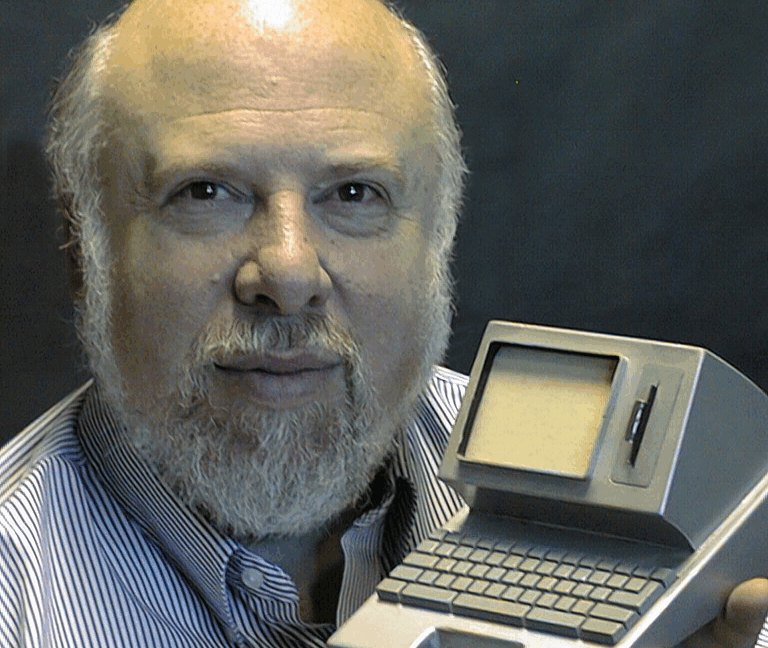
Jef Raskin (born Jeff Raskin; March 9, 1943 – February 26, 2005) was an American human-computer interface expert best known for conceiving and initiating the Macintosh project at Apple in the late 1970s. He played a foundational role in shaping the early vision for the Macintosh computer, emphasizing ease of use and accessibility for non-technical users. Raskin joined Apple as its 31st employee and served as manager of publications and later as manager of the Macintosh project from 1979 to 1982. Before Apple, Raskin taught computer science at the University of California, San Diego, and was a visiting scholar at Stanford University. He also founded the technical publishing firm Bannister & Crun, which produced the Apple II BASIC Programming Manual. His interdisciplinary background included studies in mathematics, philosophy, and computer science, as well as work as a musician, conductor, and music teacher. Raskin’s key achievement was pioneering the concept of a graphical user interface (GUI) for personal computers, inspired by his belief that computers should be designed for the average person, not just experts. He advocated for bitmapped graphics and user-friendly design, influencing the direction of personal computing. After leaving Apple, he founded Information Appliance, Inc., where he developed the SwyftCard and Swyft computer, later licensed to Canon as the Canon CAT. He also authored the influential book The Humane Interface (2000), which explored principles of user-centered design. Raskin held several patents and contributed extensively to the fields of interface design and information technology. He continued to consult, write, and lecture until his death from pancreatic cancer in 2005. His work remains relevant in discussions about usability and the evolution of personal computing.
About the Organizations Mentioned
Macintosh
The Macintosh, commonly known as the Mac, is not an organization but a line of personal computers developed by Apple Inc. Here is a summary focusing on the Macintosh computer series: ## Introduction The Macintosh is a series of personal computers introduced by Apple Inc. in 1984. It revolutionized the computer industry with its user-friendly graphical user interface (GUI), mouse navigation, and iconic design. ## History The Macintosh project began in 1979 under Jeff Raskin, an Apple employee. Steve Jobs took over the project in 1981, transforming it into a high-performance desktop machine. The first Macintosh, the Macintosh 128K, was launched on January 24, 1984, with a memorable "1984" commercial directed by Ridley Scott[2][3]. ## Key Achievements - **Innovative Design**: The Macintosh introduced a GUI and mouse navigation, making computing accessible to a broader audience[3]. - **Marketing Impact**: The "1984" commercial is considered a landmark in advertising, announcing the Macintosh as a challenger to IBM's dominance[2]. - **Software**: Initially shipped with MacPaint and MacWrite, the Macintosh supported early creative applications[4]. ## Current Status Today, the Macintosh series remains a core product line for Apple, with models like the MacBook Air and MacBook Pro. The Mac continues to be known for its sleek design and user-friendly interface, maintaining a loyal customer base. ## Notable Aspects - **Design Legacy**: The Macintosh's design philosophy has influenced Apple's product line, emphasizing elegance and user experience[3]. - **Innovation**: The Macintosh was one of the first computers to popularize the GUI, setting a new standard for personal computing[6]. - **Cultural Impact**: The Macintosh has been integral in shaping digital culture, particularly in creative fields like graphic design and video production.