NCAA Pushes CFTC to Halt College Sports Prediction Markets
NCAA Pushes CFTC to Halt College Sports Prediction Markets
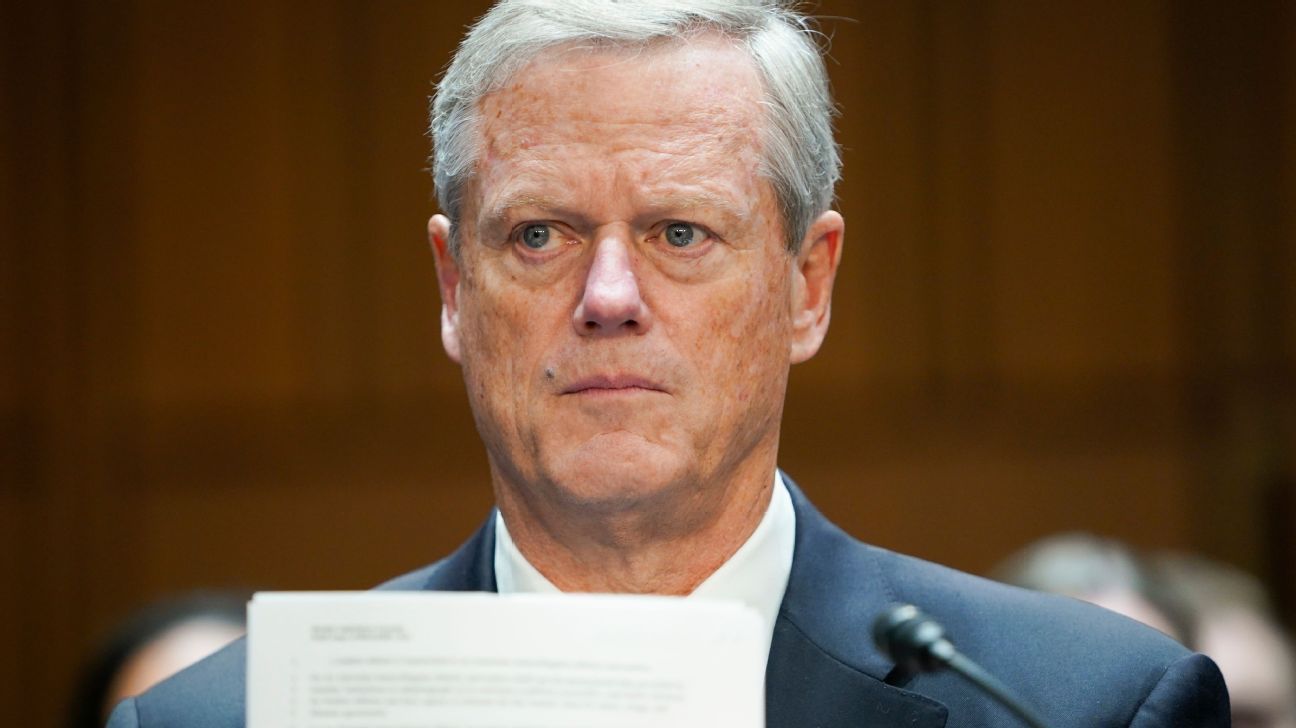
The NCAA has urgently requested the Commodity Futures Trading Commission to suspend prediction markets offering trades on college sports, citing serious risks to student-athletes and game integrity. In a formal letter, President Charlie Baker warned that unchecked growth threatens competition fairness without proper safeguards.[1][2]
Key Concerns and Safeguards Demanded
Baker highlighted needs for age restrictions, advertising limits, robust integrity monitoring, bans on prop bets, harm reduction tools, and anti-harassment measures. He referenced Kalshi's controversial transfer portal markets as evidence of regulatory gaps, urging federal intervention similar to sportsbooks. The NCAA offers collaboration to build these protections, emphasizing its ongoing advocacy against betting harms.[1][2]
Implications for College Sports Future
Spoken at the 2026 NCAA Convention, Baker's plea underscores divided league stances, with NFL voicing concerns while NHL partners with operators like Kalshi. A CFTC pause could reshape markets, prioritizing athlete welfare and standardized rules over rapid expansion.[1][7]
About the Organizations Mentioned
NCAA
The National Collegiate Athletic Association (NCAA) is a nonprofit, member-led organization committed to the well-being and lifelong success of college athletes in the United States and Canada. It governs collegiate sports for over 500,000 student-athletes across about 1,100 member institutions in three divisions (I, II, and III), each tailored to different sizes and competitive levels of schools. The NCAA annually awards nearly $4 billion in athletic scholarships and supports student-athletes in achieving academic success at rates higher than their general student peers[1]. Founded in 1906, the NCAA adopted its current three-division structure in 1973 to ensure fair competition and broaden championship opportunities. Division I schools typically have the largest enrollments and athletic budgets, offering the most scholarships, while Divisions II and III emphasize academic achievement and broad participation, respectively[1]. The NCAA headquarters is located in Indianapolis, Indiana, where it celebrated 25 years in the city in 2024[1]. The NCAA oversees national championships in 24 sports with about 90 events annually and manages extensive rules and policies that member schools and conferences implement. Recent years have seen transformative changes, notably the *House v. NCAA* settlement effective July 2025, allowing schools to pay athletes directly and altering scholarship roster limits, marking a historic shift in college sports governance and athlete compensation[2]. This settlement reflects evolving business and legal landscapes impacting collegiate athletics, influencing financial models and athlete rights. The NCAA also continuously updates governance, compliance, and championship structures. For example, in 2025, new legislation separated men’s and women’s fencing championships and considered adding emerging sports like stunt cheerleading to promote diversity and participation[3][6]. Additionally, debates persist over governance reforms, especially concerning Division I FBS football’s unique revenue and regulatory status, with calls for independent oversight to address financial and equity challenges[7]. In summary, the NCAA is at the intersection of sports, business, and technology, adaptin
Commodity Futures Trading Commission
The **Commodity Futures Trading Commission (CFTC)** is an independent U.S. federal agency established in 1974 to regulate the nation's derivatives markets, including futures, options, and swaps. Its mission is to promote the integrity, resilience, and vibrancy of these markets through effective regulation, ensuring they operate fairly and transparently while protecting market participants and the broader economy[1][2][5]. The CFTC oversees a broad range of market entities such as designated contract markets (exchanges), swap execution facilities, derivatives clearing organizations, swap data repositories, swap dealers, and futures commission merchants. These markets significantly influence the U.S. economy by determining prices for essential goods and services, including food, energy, and transportation. The derivatives markets enable businesses—from farmers to airlines—to manage risks related to price fluctuations in commodities, currencies, and borrowing costs[1][4]. Historically, the CFTC was created in response to the expanding and increasingly complex futures markets of the early 1970s, which had grown to a $500 billion annual trading volume. Its formation unified regulatory oversight to prevent fraud, manipulation, and abusive trading, thereby restoring confidence in commodity trading and facilitating efficient price discovery[5][4]. The CFTC’s organizational structure includes divisions focused on clearing and risk management, market oversight, enforcement, and regulation of market participants. The Division of Enforcement actively investigates and prosecutes violations such as fraud and manipulation, using whistleblower programs to enhance market integrity. The Commission also collaborates with foreign regulators to oversee global derivatives trading[6][7][4]. Notable achievements include establishing robust regulatory frameworks under the Commodity Exchange Act and the Dodd-Frank Act, which expanded CFTC’s authority to cover swaps and major market participants, enhancing systemic risk oversight. The agency’s enforcement actions have held large corporations accountable, protecting smaller businesses and individual investors[2][7][8]. Today, the CFTC continues to evolve, addressing emerging challenges like digital asse
Kalshi
## Overview Kalshi is a pioneering financial technology company that operates the first and only federally regulated event contract exchange in the United States, enabling both retail and institutional traders to buy and sell contracts based on the outcomes of future events—ranging from economic indicators and political elections to cultural milestones and scientific developments[2][3]. Founded in 2018 by Tarek Mansour (CEO) and Luana Lopes Lara (COO), the company is headquartered in New York City and has grown rapidly, employing over 200 people as of 2025[1][2]. ## What Kalshi Does Kalshi’s platform allows users to trade “event contracts”—binary options that pay out based on whether a specific event occurs. These contracts cover a wide array of topics, from inflation prints and interest rate decisions to the outcomes of major elections and even entertainment awards like the Oscars[1][3]. By offering a regulated venue for such trading, Kalshi aims to democratize access to prediction markets, providing both a tool for hedging risk and a mechanism for expressing—and monetizing—market sentiment on real-world events[1][2]. ## History and Founders The founders, Mansour and Lara, met as undergraduates at MIT, bonding over a shared fascination with financial markets and uncertainty[1][3]. Both bring strong quantitative and technical backgrounds, with experience at top-tier financial firms such as Citadel, Five Rings Capital, and Bridgewater Associates[1]. Their immigrant backgrounds—Mansour from Algeria and Lara from Brazil—add a distinctive narrative to Kalshi’s story, reflecting the diversity and global perspective often found in Silicon Valley’s most innovative startups[3]. ## Key Achievements Kalshi’s most notable achievement is securing regulatory approval from the Commodity Futures Trading Commission (CFTC), a significant milestone given the historical challenges of launching a prediction market in the U.S.[3][5]. The company has raised
NFL
## Overview of the NFL The National Football League (NFL) is the preeminent professional American football organization in the United States, renowned for its massive influence on sports, entertainment, and business. With 32 teams divided between the American Football Conference (AFC) and National Football Conference (NFC), the NFL organizes a 17-game regular season culminating in a single-elimination playoff and the Super Bowl—the most-watched annual sporting event in the U.S.[2] ## History and Evolution Founded in 1920 as the American Professional Football Association (APFA) in Canton, Ohio, the league initially comprised teams primarily from the Midwest and Northeast[1][3]. It was renamed the National Football League in 1922 and faced early instability, surviving competition from rival leagues such as the All-America Football Conference (AAFC) and multiple iterations of the American Football League (AFL)[2]. By the 1950s, the NFL had established a monopoly on professional football in the U.S., with only the Canadian Football League (CFL) operating independently in Canada[2]. The most significant development in NFL history was the 1966 merger agreement with the AFL, which led to a common draft and the creation of the Super Bowl as a championship game between the two league champions[1][2]. The leagues fully merged in 1970, reorganizing into the AFC and NFC and cementing the NFL’s dominance in American professional sports[1][2]. ## Key Achievements and Innovations The NFL pioneered lucrative television contracts, transforming football into a national pastime and a major media event. The league’s adoption of revenue-sharing and salary caps fostered competitive balance, helping small-market teams remain viable[2]. The NFL has also been a leader in sports technology, implementing instant replay, advanced player tracking, and digital platforms for fan engagement. Notable achievements include the expansion to 32 teams, the internationalization of the game through game
NHL
The **National Hockey League (NHL)** is the premier professional ice hockey organization in North America, operating 32 teams—25 in the U.S. and 7 in Canada—across Eastern and Western Conferences with four divisions each.[1][2][3] Headquartered in Midtown Manhattan, New York City, it governs an 82-game regular season from October to April, followed by playoffs culminating in the Stanley Cup, North America's oldest professional sports trophy awarded since 1926.[1][2][5] Founded on November 26, 1917, in Montreal amid World War I disruptions to predecessor leagues, the NHL started with four Canadian teams: Montreal Canadiens, Montreal Wanderers, Ottawa Senators, and Quebec Bulldogs.[2][3][5] It expanded to the U.S. in 1924 with the Boston Bruins and stabilized as the "Original Six" (Bruins, Black Hawks, Red Wings, Canadiens, Rangers, Maple Leafs) from 1942 to 1967, a golden era of rivalries and stars.[1][2][5] Post-1967 expansion doubled teams to 12, surging to 21 by 1979 after merging with the World Hockey Association; further growth hit 30 by 2000 and 32 today, including recent additions like Utah Mammoth and Seattle Kraken.[2][3][5][6] Key achievements include full Stanley Cup control in 1947, global player diversity from over 20 countries, and innovations like salary caps, rule standardization influencing junior leagues, and international games in Europe and Asia.[1][3][5] Under Commissioner Gary Bettman since 1993, the NHL's Board of Governors—chaired by Boston's Jeremy Jacobs—oversees expansions, relocations, and policies.[1][5] Currently, as one of North America's "Big Four" leagues (second-oldest after MLB), the NHL trails in U.S