Warren Buffett Donates $6 Billion to Foundations
Introduction
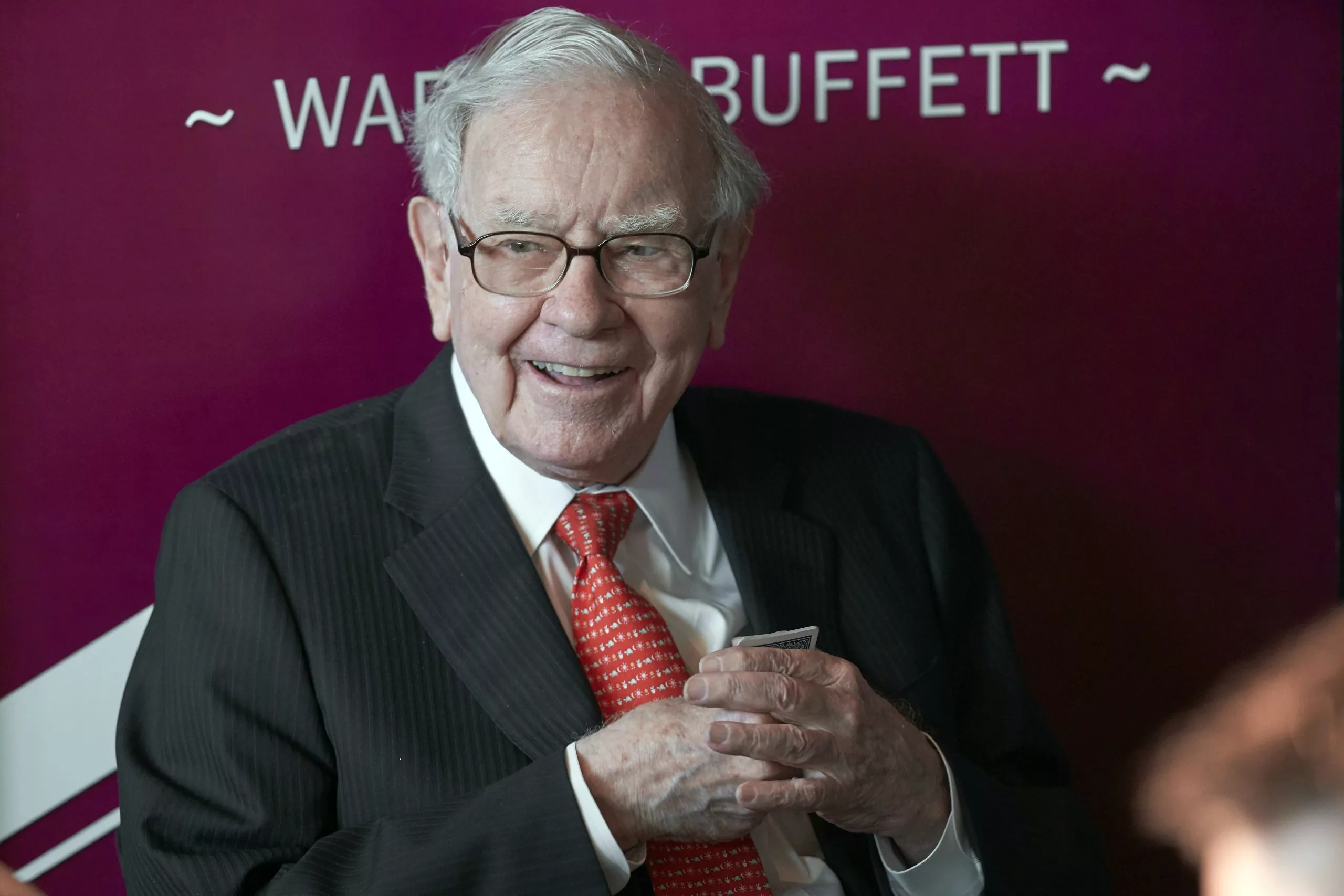
In a recent announcement, renowned investor Warren Buffett revealed that he will be donating $6 billion worth of his company's stock to five different foundations. This brings his total contributions to these organizations since 2006 to an impressive $60 billion.
Background
Warren Buffett, also known as the "Oracle of Omaha," is one of the most successful investors in the world. He is the chairman and CEO of Berkshire Hathaway, a multinational conglomerate holding company. Despite his immense wealth, Buffett is known for his philanthropy and has been a strong advocate for giving back to society.
Current Scenario
Buffett's latest donation is a part of his long-standing pledge to donate the majority of his wealth to charity. In 2006, he made a commitment to gradually give away 99% of his Berkshire Hathaway shares during his lifetime or after his death. This recent donation is a significant step towards fulfilling that promise.
The five foundations that are set to receive the donation are the Bill and Melinda Gates Foundation, the Susan Thompson Buffett Foundation, the Sherwood Foundation, the Howard G. Buffett Foundation, and the NoVo Foundation. These organizations work towards various causes such as poverty alleviation, health, education, and social justice.
Buffett's contribution to these foundations has had a significant impact, with the funds being used to support a range of initiatives and projects. For instance, the Bill and Melinda Gates Foundation has been able to provide essential healthcare services to millions of people in developing countries. The Susan Thompson Buffett Foundation has been able to provide scholarships to low-income students, and the Sherwood Foundation has been able to support various community development programs.
Conclusion
Warren Buffett's generosity and commitment to giving back to society is truly admirable. His latest donation of $6 billion will undoubtedly make a significant difference in the lives of many people and further his mission of making the world a better place. With his continuous support, these foundations will be able to continue their vital work and positively impact the world. We can all be inspired by Buffett's philanthropic efforts and strive to make a positive difference in our own communities.
About the People Mentioned
Warren Buffett
Warren Edward Buffett, born August 30, 1930, in Omaha, Nebraska, is an American investor, philanthropist, and chairman of Berkshire Hathaway, widely regarded as one of the most successful investors in history.[1][2] The son of stockbroker and U.S. Congressman Howard Buffett, he displayed entrepreneurial talent early, selling gum and magazines door-to-door as a child and purchasing his first stock at age 11.[1][2] After rejection from Harvard Business School, Buffett studied at Columbia University under Benjamin Graham, the pioneer of value investing, which shaped his strategy of buying undervalued companies for long-term holding.[1][2] In 1956, he launched Buffett Partnership Ltd. in Omaha, becoming a millionaire by 1962. He later acquired struggling textile firm Berkshire Hathaway in the 1960s, transforming it into a diversified conglomerate using insurance "float" for investments.[1][2] Charlie Munger joined as vice chairman in 1978, aiding its growth into one of the world's leading holding companies.[2] Buffett served as Berkshire Hathaway's chairman and CEO from 1970 until January 2026, when he retired as CEO at age 95, succeeded by Greg Abel, while remaining chairman.[1][2][3] His leadership amassed a personal net worth of approximately $148.9 billion as of early 2026, ranking him ninth-richest globally, with Berkshire holding a record $377 billion cash pile.[1][2][3] Dubbed the "Oracle of Omaha," Buffett's annual letters and shareholder meetings influenced generations of investors.[2] A committed philanthropist, he has donated over $50 billion, pledging his fortune—now nearing $150 billion—to charity via his children, Susie, Howard, and Peter.[4] In January 2026, CNBC premiered "Warren Buffett: A Life and Legacy," featuring exclusive interviews on his business philosophy, family, and giving plans.[4] Residing in his 1958 Omaha home, the 95-year-old focuses on Berkshire's institutional continuity.[1]
About the Organizations Mentioned
AP
The Associated Press (AP) is a **global, not-for-profit news cooperative** headquartered in New York City, founded in 1846 by five New York newspapers to provide faster news delivery during the Mexican-American War. It operates as a cooperative unincorporated association, distributing news to its members, major newspapers, broadcasters, and subscribers worldwide[1][2][4]. AP is one of the oldest and most respected news agencies with a vast global presence: it maintains about 235 bureaus in 94 countries and publishes content in English, Spanish, and Arabic. Its journalism reaches over four billion people daily, with more than 400,000 stories, 80,000 videos, and 1.2 million photos produced annually[2]. As of 2025, its website attracts over 128 million monthly visits, ranking it among the top 10 U.S. news websites[1]. Known for its **unbiased, fact-based reporting**, AP champions press freedom, journalist safety, and intellectual property protection. It has won **59 Pulitzer Prizes**, including 36 for photography, reflecting its high journalistic standards and impact[1][3][4]. AP’s content spans breaking news, sports polls, election coverage, and enterprise reports, and it also publishes the widely used *AP Stylebook*. Throughout its history, AP has been a pioneer in journalism, covering major historical events from Abraham Lincoln’s assassination to contemporary global conflicts. It has successfully navigated 21st-century challenges, including the decline of local newspapers and political controversies, while maintaining editorial independence[2][3]. Governed by an executive leadership team and board of directors, AP continues to innovate and uphold its mission to advance “the power of facts” for a worldwide audience. It also supports journalists through initiatives like the AP Emergency Relief Fund to assist colleagues affected by conflict or disaster[2][4]. Its reliability and minimal bias have been recognized by independent media rating organizations, confirming its position as a