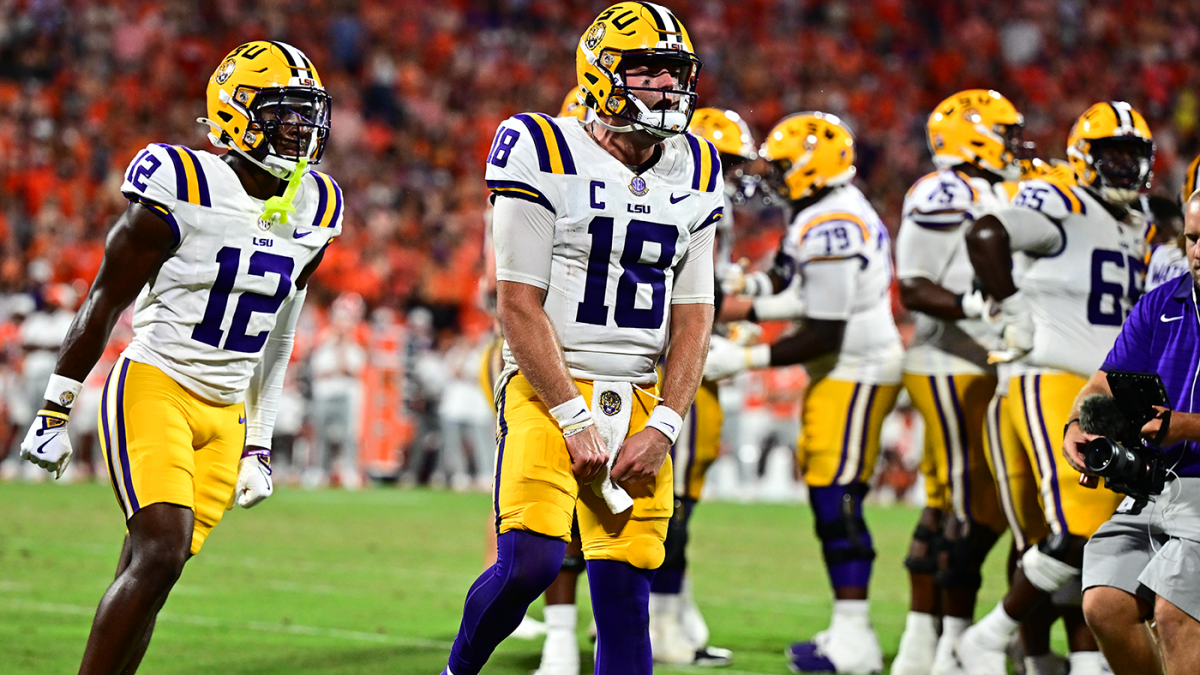
Lane Kiffin Expected to Join LSU as Head Coach
Lane Kiffin Expected to Join LSU as Head Coach
Sources confirm LSU officials are confident Lane Kiffin will officially become their next head football coach. This move marks a significant shift after Kiffin's successful tenure at Ole Miss, where he led the Rebels to an impressive 11-win regular season and a near-certain College Football Playoff berth. Despite his commitment to LSU, Kiffin reportedly wishes to continue coaching Ole Miss through their postseason games, creating a temporary complication in finalizing the transition.
Ole Miss Prepares for Coaching Change
Ole Miss has scheduled a team meeting for Sunday morning as they brace for the upcoming coaching change. Defensive coordinator Pete Golding is poised to take over as head coach, ensuring continuity for the Rebels. Golding’s promotion reflects the program’s confidence in internal leadership following Kiffin’s departure.
What This Means for LSU Football
LSU looks to revitalize its program with Kiffin, an elite offensive strategist who has amassed 55 wins over six years at Ole Miss. His arrival aims to restore LSU’s prominence after firing Brian Kelly earlier this season, with hopes of returning to College Football Playoff contention.
About the Organizations Mentioned
LSU
Louisiana State University (LSU) is a prominent public research university located in Baton Rouge, Louisiana, known for its comprehensive academic programs, cutting-edge research, and vibrant campus life. Established as a flagship institution, LSU offers a student-centered learning environment with a 20:1 student-faculty ratio, emphasizing critical thinking, practical skills, and ethical leadership[1]. It is a midsize city campus that actively engages in community involvement and fosters personal development among its students. LSU has a rich history of growth and innovation. The university is expanding its infrastructure with state-of-the-art facilities, such as the nearly 200,000-square-foot Our Lady of the Lake Health Interdisciplinary Science Building, aimed at enhancing academics, research, and industry collaboration. Additionally, new residence halls are being constructed to accommodate increasing enrollment, reflecting LSU’s commitment to providing an inclusive and modern educational environment[2]. In the realm of business and technology, LSU’s E. J. Ourso College of Business is particularly noteworthy. It has experienced a 37% enrollment increase, conferring over 1,000 bachelor's degrees in the 2024-2025 academic year, with graduates achieving an average starting salary of $76,289. The college’s popular majors include general business, finance, marketing, and business analytics[4]. The college actively recognizes outstanding alumni through its Hall of Distinction, reinforcing a strong network of accomplished professionals[5]. LSU is also a national leader in artificial intelligence and cybersecurity, securing a $25 million federal contract to develop AI tools for nuclear threat defense and partnering with Idaho National Lab to advance cybersecurity in the energy sector[2]. Its organizational structure supports diverse areas such as innovation, research, and enterprise development, led by experienced vice presidents and officers[3]. Beyond academics, LSU offers a dynamic campus life with over 400 student organizations, fostering leadership, professional development, and community service opportunities[6][7]. LSU’s commitment to innovation, academic excellenc
Ole Miss
## Overview The University of Mississippi, affectionately known as Ole Miss, is Mississippi’s flagship public research university and a member of the elite R1: Doctoral Universities—Highest Research Activity group, reflecting its commitment to high-impact research and academic excellence[5][7]. Founded in 1848, Ole Miss has grown from a regional institution to a nationally recognized university with over 24,000 students, offering more than 90 majors across 15 academic divisions, including nationally ranked programs in business, accountancy, law, pharmacy, and medicine[3][5]. ## History Ole Miss has a rich and complex history. While it is celebrated for its traditions, Southern charm, and picturesque campus in Oxford, it also played a pivotal role in the Civil Rights Movement when James Meredith became its first African American student in 1962, marking a turbulent but ultimately transformative chapter in its journey toward inclusivity and diversity[2][4]. Today, the university is noted for its efforts to foster a welcoming environment for students from all backgrounds, both within Mississippi and internationally[2][4]. ## Key Achievements Ole Miss has a legacy of innovation, notably in medicine: surgeons at its medical center performed the world’s first human lung and heart transplants in the 1960s[2]. The university’s research enterprise continues to address critical challenges in health, technology, and society, with a strong focus on community engagement and economic development[3][7]. Its Honors College is recognized for blending rigorous academics with experiential learning and community action[1][5]. ## Current Status Today, Ole Miss is a vibrant, diverse community that balances academic rigor with a lively campus culture. It is renowned for its SEC athletics, premier tailgating in “The Grove,” and a student life that regularly earns top marks for school spirit, social scene, and sense of community[1][3][5]. The university has adapted well to the digital age, offering robus
College Football Playoff
The **College Football Playoff (CFP)** is an annual knockout tournament established in 2014 to determine the national champion of NCAA Division I Football Bowl Subdivision (FBS), the highest level of college football in the U.S.[1][2]. It replaced the Bowl Championship Series (BCS), which had been criticized for its selection process. Unlike the BCS’s reliance on polls and computer rankings, the CFP uses a 13-member selection committee composed of current and former athletic directors, coaches, and other professionals to rank and seed teams, emphasizing strength of schedule and overall performance[1][3]. From its inception through the 2023 season, the CFP featured a four-team single-elimination format culminating in the College Football Playoff National Championship game, which rotates its host city annually and draws significant national attention and tourism[1][2]. Ohio State won the inaugural championship in January 2015[2]. In 2024, the playoff expanded to a **12-team format**, allowing automatic bids to the five highest-ranked conference champions and additional at-large teams, increasing opportunities and generating greater competitive excitement[1][9]. This expansion reflects the evolving business landscape of college football, aiming to enhance fan engagement, broadcasting revenues, and the sport’s overall visibility[1][9]. The CFP is governed by a Board of Managers, including commissioners from the ten FBS conferences and Notre Dame’s athletic director, who oversee the organization’s operations, budgeting, and strategic direction[4][8]. The College Football Playoff Foundation, also established in 2014, leverages the platform to support charitable initiatives and community impact[4]. Notable aspects include the committee’s influential role in shaping the postseason landscape and ongoing debates about playoff expansion size and selection criteria[1][3]. The CFP stands as a significant business and sports technology model, combining data-driven decision-making with traditional sports management to deliver a premier championship experience. Overall, the CFP represents a transformative approac