Week 1 College Football Recap

Week 1 Recap
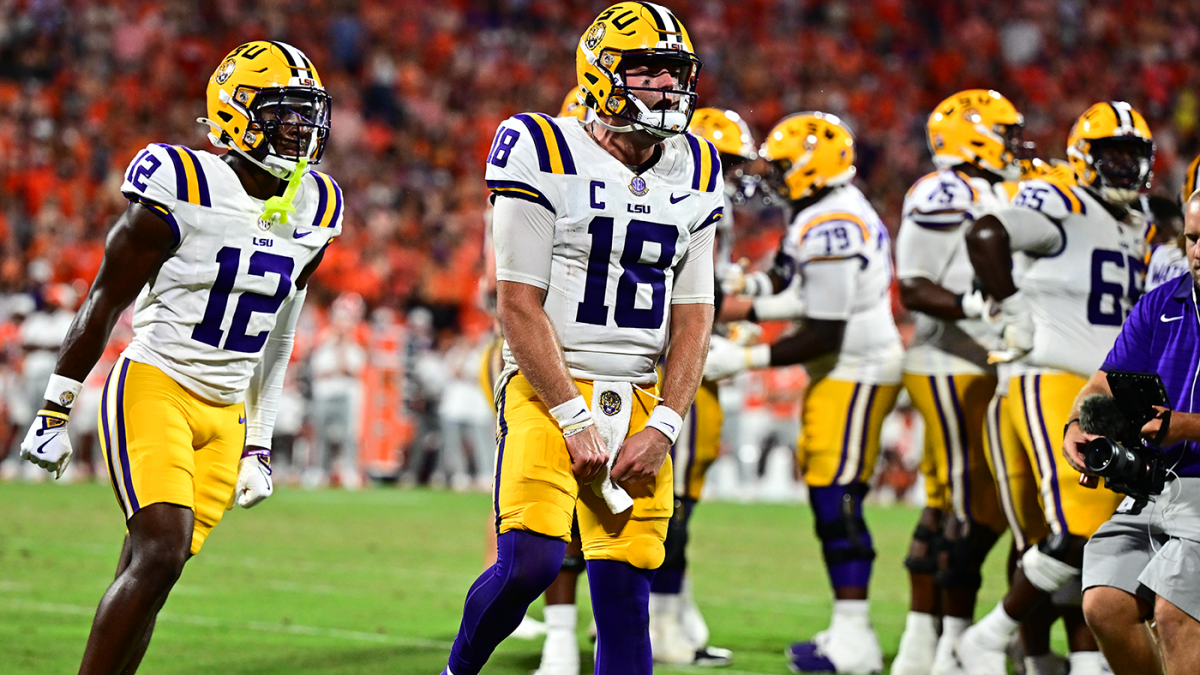
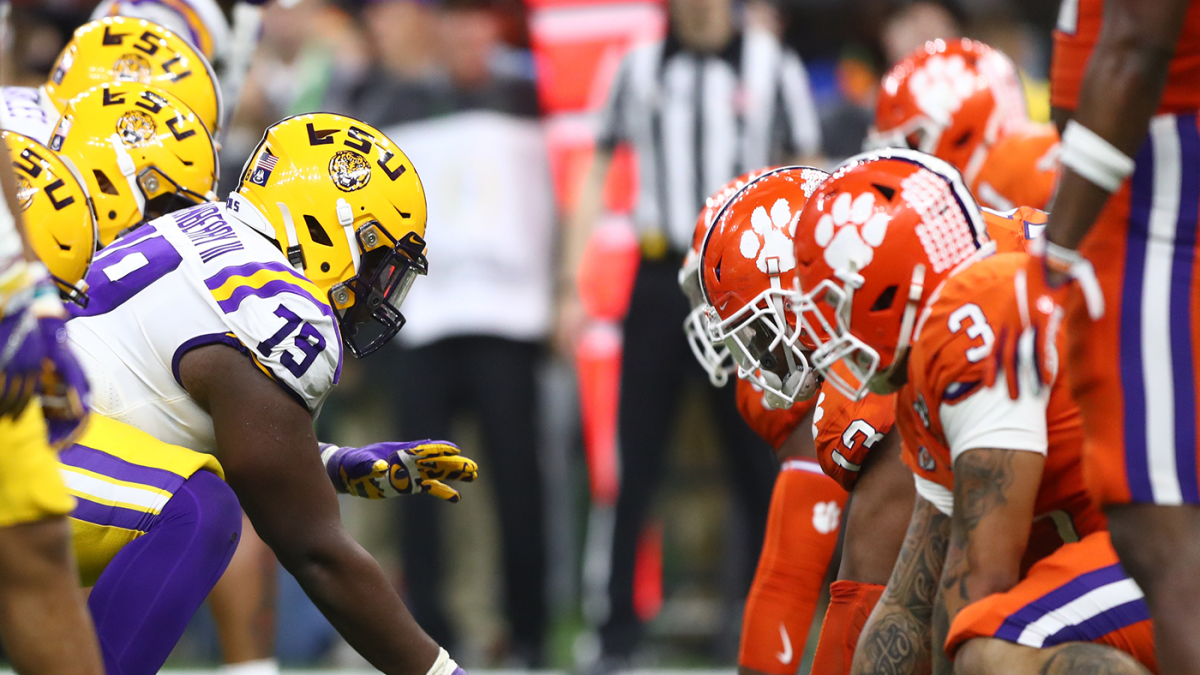
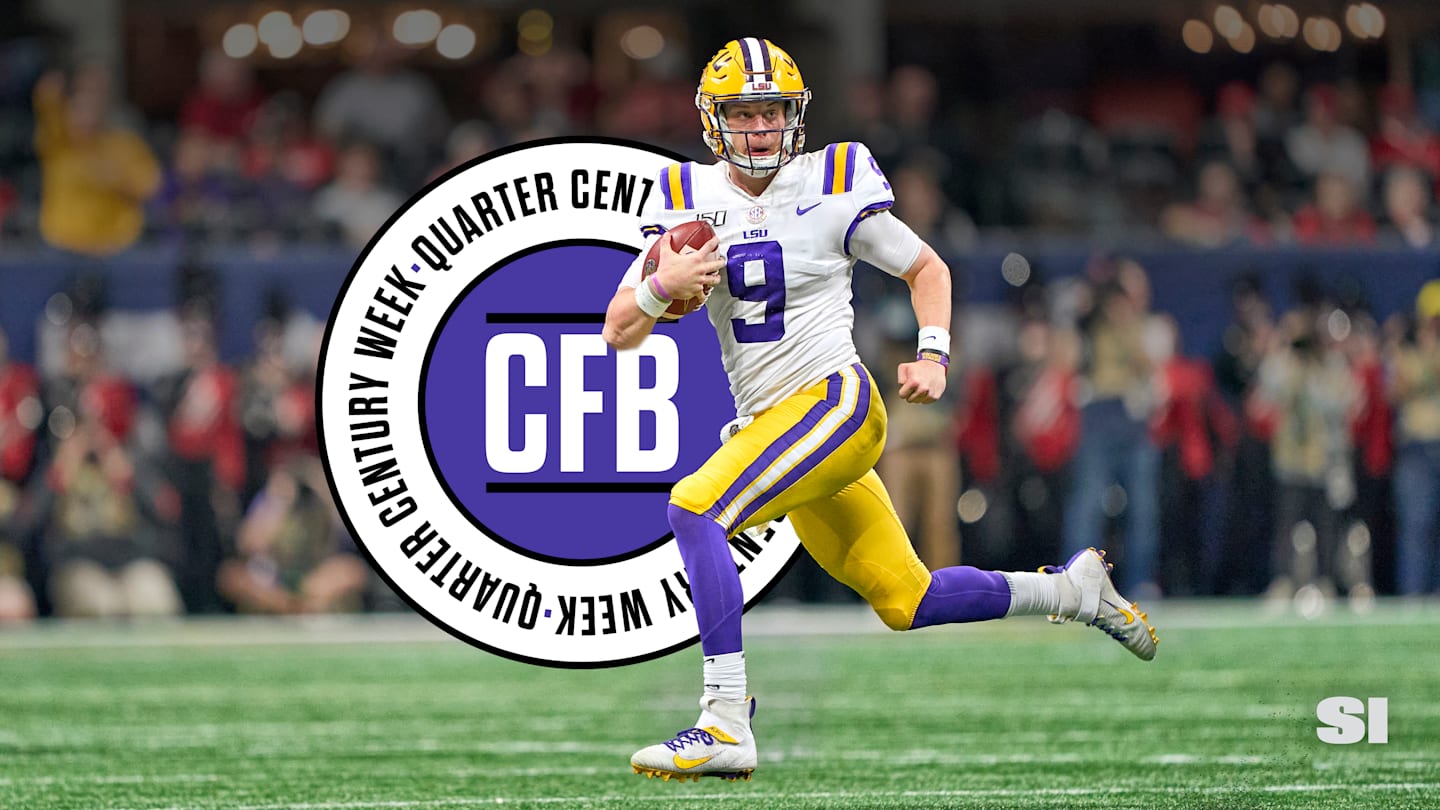
The first week of college football brought plenty of excitement and surprises, with some top teams struggling and others making a statement. The SEC, known for its dominance in the sport, didn't have the strongest showing. However, there were a few standout performances, including LSU's big win over Clemson.
Arch Manning's Debut
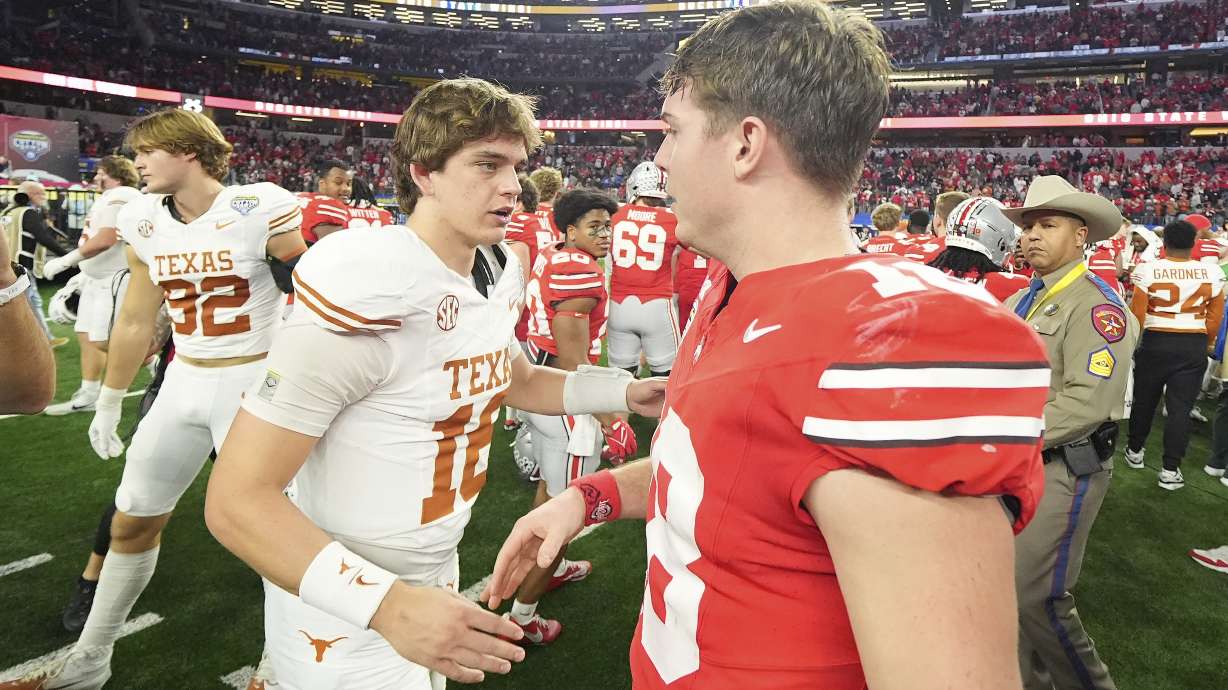
One of the most highly anticipated moments of the week was the debut of Arch Manning, the nephew of NFL legends Peyton and Eli Manning. The quarterback showed flashes of his family's talent, but also had some rookie mistakes. Regardless, he is sure to be a name to watch in the future.
Alabama's Slow Start
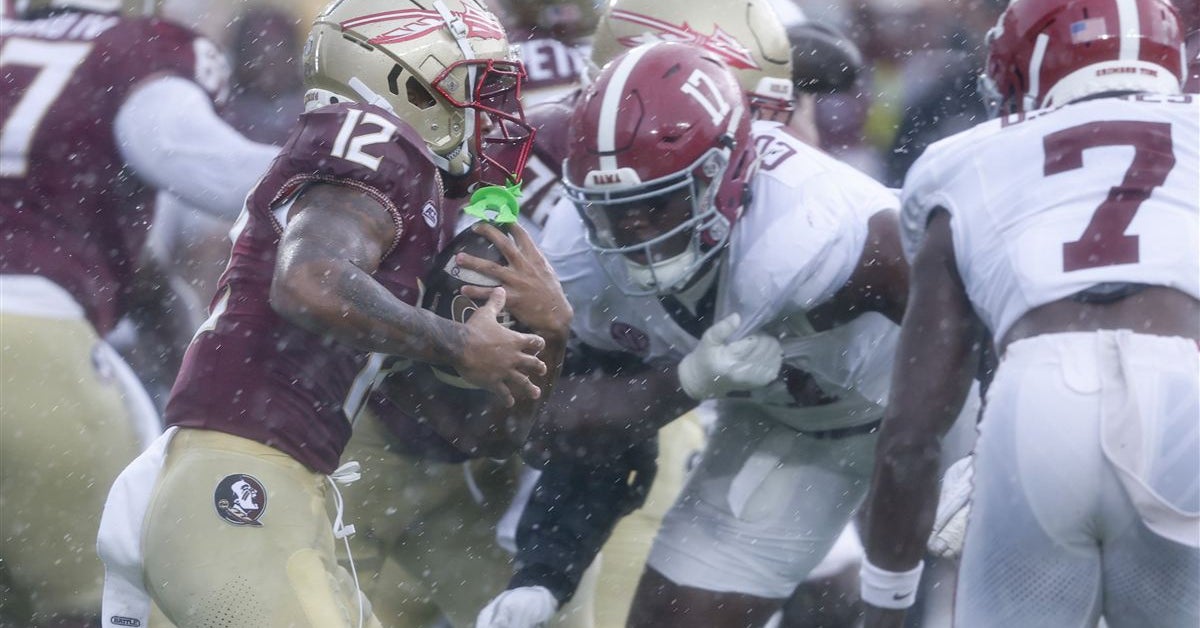
The Crimson Tide, a perennial powerhouse in college football, had a slow start to their season. Despite winning their game against Miami, they showed some areas that need improvement. With tough games ahead, they will have to work hard to maintain their spot as a top team in the SEC.
About the People Mentioned
Arch Manning
Arch Manning, born in May 2005, is an American college football quarterback currently playing for the University of Texas Longhorns. He is a member of the renowned Manning football family, which includes his grandfather Archie Manning and uncles Peyton and Eli Manning, all of whom have had distinguished NFL careers[1][5]. Arch emerged as one of the most highly touted quarterback prospects in recent years, having shattered passing records at Isidore Newman School in New Orleans, surpassing marks set by his famous uncles[1]. After joining Texas as the consensus No. 1 recruit in the 2023 class, Manning redshirted his first year before seeing limited but impressive action as a sophomore. His breakout came after stepping in for injured starter Quinn Ewers, notably delivering a dynamic performance against UTSA featuring multiple long touchdown plays both passing and rushing. In eight games, he completed 67% of his passes for 969 yards, 9 touchdowns, and only 2 interceptions, earning SEC Co-Freshman of the Week honors and a spot on the Davey O’Brien Great 8 list[1][4]. Arch has drawn significant media attention and lucrative name, image, and likeness (NIL) endorsement deals, including with Red Bull, reflecting his status as a leading college football prospect and one of the highest-paid college athletes. He is also on preseason watch lists for several major awards in 2025, such as the Johnny Unitas Golden Arm Award and the Maxwell Award[4][5][6]. Known for his quick release, strong arm, and mobility, Arch combines the skills inherited and refined within the Manning family’s quarterback legacy with his own unique playmaking ability. He is widely regarded as a potential top NFL draft pick, with considerable anticipation surrounding his collegiate and future professional career[1][5].
Peyton Manning
Peyton Manning is a former professional American football quarterback widely regarded as one of the greatest quarterbacks in NFL history. He was born in 1976 and played 18 seasons in the NFL, primarily with the Indianapolis Colts (1998–2011) and later the Denver Broncos (2012–2015). Manning was selected first overall in the 1998 NFL Draft by the Colts and quickly became the franchise’s cornerstone, leading them to consistent playoff appearances, eight division titles, three AFC Championship Games, and two Super Bowl appearances. He won his first Super Bowl title and was named Super Bowl XLI MVP after leading the Colts to a victory over the Chicago Bears in 2007[1][2][3]. Known by the nickname "The Sheriff," Manning was celebrated for his exceptional football intelligence, precision passing, and leadership. Throughout his career, he won a record five NFL Most Valuable Player (MVP) awards (2003, 2004, 2008, 2009, and 2013), the most in league history. Manning also set numerous NFL records, including single-season passing yards (5,477) and touchdown passes (55) in 2013. He finished his career with 71,940 passing yards and 539 touchdowns, ranking among the top all-time in both categories[1][3][4][5]. After a severe neck injury sidelined him for the entire 2011 season, Manning signed with the Denver Broncos in 2012, where he returned to elite form. He led the Broncos to Super Bowl XLVIII and ultimately to victory in Super Bowl 50 in 2016, marking his second championship before retiring that year[1][3][4][6]. Off the field, Manning has been recognized for his philanthropy and community involvement, including winning the Walter Payton Man of the Year Award in 2005. Since retirement, he has remained active in football-related media, business ventures, and charitable causes[5].
Eli Manning
Eli Manning is a retired American professional football quarterback who played 16 seasons in the NFL, exclusively for the New York Giants. Born on January 3, 1981, in New Orleans, Louisiana, Manning played college football at Ole Miss, where he set numerous school records and won several awards before being selected first overall in the 2004 NFL Draft by the San Diego Chargers, who then traded him to the Giants[3][5][6]. Manning became the Giants' starting quarterback in 2005 and held the position until his retirement following the 2019 season. He started 210 consecutive games, the third-longest streak among NFL quarterbacks. Over his career, he led the Giants to six playoff appearances and two Super Bowl victories (XLII in 2007 and XLVI in 2011), both against the New England Patriots. Manning was named Super Bowl MVP in both games, joining an elite group of players with multiple Super Bowl MVP honors[1][3][5]. He retired with franchise records for most passing yards, completions, and touchdown passes, accumulating 57,023 passing yards and 366 touchdowns, ranking him among the top quarterbacks in NFL history. Despite a regular-season record of 117-117, his playoff record was a strong 8-4, highlighting his effectiveness in crucial games[3][4][6][7]. After retirement, the Giants retired his number 10 jersey. In 2021, Manning transitioned to roles off the field, including a position in fan engagement and business operations with the Giants and a media career as an analyst for ESPN, hosting a college football show called "Eli's Place"[4]. He was inducted into the New Jersey Hall of Fame in 2019-2020 and the Mississippi Sports Hall of Fame in 2024, recognizing his significant contributions to football[1][6].
About the Organizations Mentioned
SEC
The **Securities and Exchange Commission (SEC)** is a U.S. federal regulatory agency established in 1934 to restore public confidence in the capital markets after the 1929 stock market crash. Its core mission is threefold: **protect investors, maintain fair, orderly, and efficient markets, and facilitate capital formation**[2][4][6]. The SEC enforces federal securities laws and regulates key market participants, including securities exchanges, brokers, dealers, investment advisors, and mutual funds. It requires companies offering securities to the public to disclose truthful and comprehensive information about their business and investment risks. It also oversees market intermediaries to prevent fraud, insider trading, and market manipulation[1][3][6]. Over time, the SEC’s role has evolved to address changing market dynamics and technological advances. It now provides investor education, facilitates capital formation especially for small businesses and fintech firms through initiatives like the Capital Raising Hub and FinHub, and actively engages in rulemaking with public input[1][6]. The SEC is led by five presidentially appointed commissioners and operates multiple divisions and offices, including a dedicated Division of Enforcement responsible for investigating violations, pursuing administrative actions, and litigating cases in federal courts[3]. It also supports whistleblowers who report fraudulent activities[1]. Notable achievements include developing comprehensive regulatory frameworks such as the Securities Act of 1933 and the Securities Exchange Act of 1934, pioneering investor protection laws, and adapting regulations to new challenges like digital asset markets. The SEC's enforcement actions and policy leadership have been crucial in maintaining market integrity and investor trust in U.S. financial markets[2][7]. Currently headquartered in Washington, D.C., the SEC continues to be a pivotal institution in U.S. financial regulation, balancing innovation with investor protection to uphold the stability and efficiency of the capital markets[5][6]. Its commitment to transparency, fairness, and accountability makes it a key player for business and technology news audiences interested in market oversight an
LSU
Louisiana State University (LSU) is a prominent public research university located in Baton Rouge, Louisiana, known for its comprehensive academic programs, cutting-edge research, and vibrant campus life. Established as a flagship institution, LSU offers a student-centered learning environment with a 20:1 student-faculty ratio, emphasizing critical thinking, practical skills, and ethical leadership[1]. It is a midsize city campus that actively engages in community involvement and fosters personal development among its students. LSU has a rich history of growth and innovation. The university is expanding its infrastructure with state-of-the-art facilities, such as the nearly 200,000-square-foot Our Lady of the Lake Health Interdisciplinary Science Building, aimed at enhancing academics, research, and industry collaboration. Additionally, new residence halls are being constructed to accommodate increasing enrollment, reflecting LSU’s commitment to providing an inclusive and modern educational environment[2]. In the realm of business and technology, LSU’s E. J. Ourso College of Business is particularly noteworthy. It has experienced a 37% enrollment increase, conferring over 1,000 bachelor's degrees in the 2024-2025 academic year, with graduates achieving an average starting salary of $76,289. The college’s popular majors include general business, finance, marketing, and business analytics[4]. The college actively recognizes outstanding alumni through its Hall of Distinction, reinforcing a strong network of accomplished professionals[5]. LSU is also a national leader in artificial intelligence and cybersecurity, securing a $25 million federal contract to develop AI tools for nuclear threat defense and partnering with Idaho National Lab to advance cybersecurity in the energy sector[2]. Its organizational structure supports diverse areas such as innovation, research, and enterprise development, led by experienced vice presidents and officers[3]. Beyond academics, LSU offers a dynamic campus life with over 400 student organizations, fostering leadership, professional development, and community service opportunities[6][7]. LSU’s commitment to innovation, academic excellenc
Clemson
Clemson University, founded in 1889 through the bequest of Thomas Green Clemson, is a prominent public land-grant institution located in South Carolina. Originally established as Clemson Agricultural College, the university was intended to advance scientific agriculture and mechanical arts, fulfilling Clemson’s vision of developing the state's material resources. The institution opened in 1893 as an all-male, all-white military school but transitioned to a coeducational, civilian university in 1955. In 1963, it became the first traditionally white institution in South Carolina to desegregate, admitting its first Black students, including Harvey Gantt, marking a pivotal moment in its history. Clemson University gained its current name in 1964, reflecting its expanded academic mission beyond agriculture[1][2][3][4]. Today, Clemson is the second-largest university in South Carolina, enrolling over 22,000 students as of fall 2023. It has evolved into a comprehensive research university with strong emphases on agriculture, engineering, science, business, and the arts. The university operates under a land-grant mission, aiming to impact both local and global communities through innovative research and education. Notably, Clemson established South Carolina’s first college of veterinary medicine, addressing critical shortages in the field and training veterinarians to serve underserved regions[5]. Clemson is recognized for academic excellence and leadership in technology and innovation. It boasts distinguished faculty, including members of the National Academies, and offers cutting-edge programs such as automotive engineering students building fully autonomous vehicles. The university emphasizes undergraduate research, with thousands of students engaged annually in projects addressing global sustainability and space exploration. Its cooperative education program is highly successful, with 75% of co-op students receiving full-time job offers post-graduation. Clemson students also achieve prestigious fellowships like Goldwater, Truman, Rhodes, and Fulbright, ranking the university among the nation’s leaders in student scholarship awards[5]. In summary, Clemson Universit
Miami
The **City of Miami** is a dynamic municipal organization focused on enhancing the quality of life for its diverse residents while positioning itself as a global leader in technology, innovation, and resiliency. As the administrative hub of Miami-Dade County’s most populous city, it operates with a robust workforce of approximately 5,031 employees and an operating budget nearing $1.8 billion for the fiscal year 2024-2025[7][3]. Established as the local government entity, Miami’s mission centers on improving public safety, housing, mobility, and community spaces, alongside fostering an efficient and transparent government[1]. The City actively pursues modernization and streamlining of its processes to deliver efficient services, strengthen public trust through excellent customer engagement, and maintain clear, timely communication with stakeholders[1]. It prioritizes enhancing shared civic spaces by maintaining and expanding parks and greenways that encourage outdoor activities, as well as improving mobility through safer pedestrian environments and affordable multi-modal transportation options[1]. Historically, Miami has evolved into a vibrant urban center, noted for its strategic downtown development initiatives led by agencies such as the Downtown Development Authority (DDA), which aims to make Downtown Miami the most livable urban center in the nation and the "Epicenter of the Americas" for commerce, culture, and tourism[8]. The City’s strategic plans emphasize resilience against climate challenges, especially hurricanes and rising sea levels, reflecting its commitment to sustainability and future-proofing urban infrastructure[1][7]. Key achievements include the successful implementation of multi-year capital plans that support infrastructure improvements, urban development, and community revitalization projects, notably in neighborhoods like Liberty City through partnerships focused on affordable housing, economic development, and safety[10]. Miami’s government structure, led by City Manager Arthur Noriega V since 2020, reflects a blend of operational expertise and community responsiveness[7]. Today, Miami remains a hub of business and technology innovation, underpinning its status as a globally connecte