Nvidia and OpenAI Partner on $100 Billion AI Infrastructure Deal
#nvidia #openai #artificial_intelligence #supercomputers #partnership

Introduction
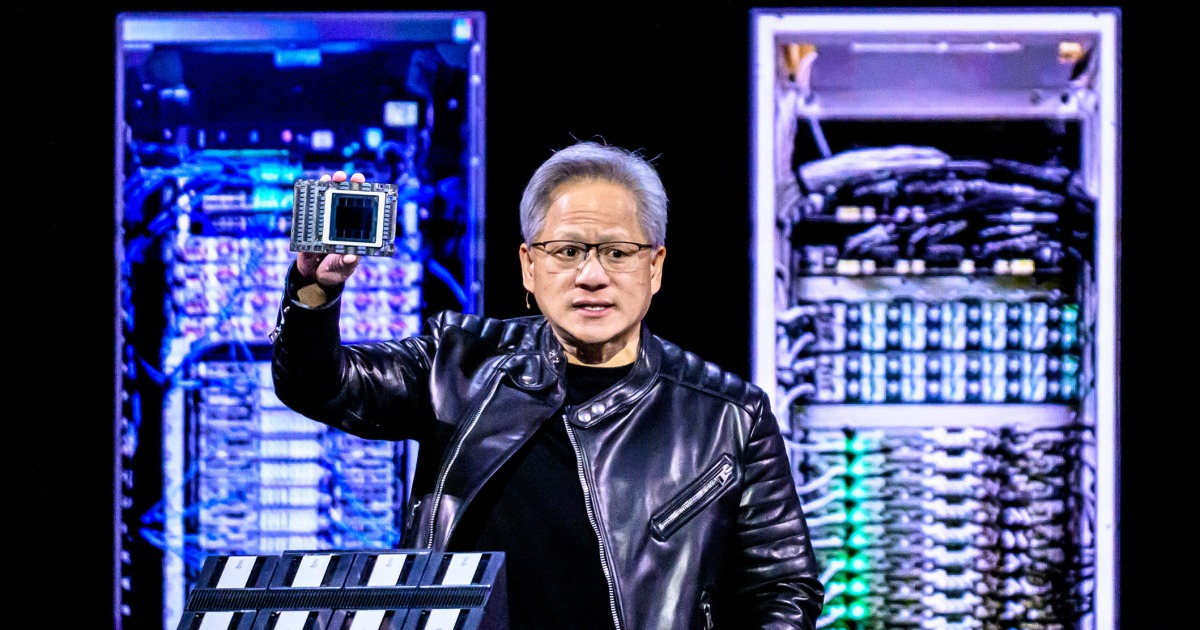
In a recent announcement, Nvidia CEO Jensen Huang revealed that the company has entered into a new 10-gigawatt AI infrastructure deal with OpenAI. This ambitious project, estimated to cost $100 billion, has been described by Huang as "a giant project" that will require massive amounts of power to run. This partnership between the two tech giants has sparked excitement and curiosity in the AI community, as it promises to push the boundaries of artificial intelligence.
Key Details
The new AI infrastructure deal will require the equivalent power of 10 nuclear reactors, according to Huang. This is a massive amount of energy that will be needed to support the advanced computing power of Nvidia's GPUs. This partnership will also involve the development of new AI supercomputers, which will be used to train and run advanced AI models. This will allow OpenAI to continue its groundbreaking research and development in the field of artificial intelligence.
Impact
The implications of this partnership are far-reaching. With the increased power and computing capabilities, we can expect to see major advancements in various industries, including healthcare, finance, and self-driving cars. This also highlights the growing importance of AI and its potential to transform the world we live in. As Huang stated, "This is a giant project that will touch every industry and every corner of the world." This is truly an exciting time for the future
About the People Mentioned
Jensen Huang
Jensen Huang is a Taiwanese-born American entrepreneur and electrical engineer best known as the co-founder, president, and CEO of NVIDIA Corporation, a leading technology company specializing in graphics processing units (GPUs) and accelerated computing. Born on February 17, 1963, in Tainan, Taiwan, Huang moved to the United States at age nine. He holds a Bachelor’s degree in Electrical Engineering from Oregon State University and a Master’s degree from Stanford University. Before founding NVIDIA in 1993 with Chris Malachowsky and Curtis Priem, he worked at LSI Logic and Advanced Micro Devices (AMD). Under Huang’s leadership, NVIDIA pioneered the development of the GPU in 1999, which revolutionized computer graphics and gaming. This innovation laid the foundation for NVIDIA’s expansion into diverse fields such as artificial intelligence (AI), autonomous vehicles, mobile computing, and scientific research. Huang foresaw the potential of GPUs beyond gaming, particularly for AI and machine learning workloads, which has positioned NVIDIA as a central player in the AI boom of the 2020s. NVIDIA’s GPUs power many of today’s major AI data centers and applications, including large language models like GPT. The company’s market capitalization briefly surpassed $4 trillion in 2024, making it the most valuable public company globally and cementing Huang’s reputation as a visionary CEO. His contributions to the semiconductor industry have earned him prestigious honors such as election to the National Academy of Engineering and the Semiconductor Industry Association’s Robert N. Noyce Award. He has also been recognized by Fortune, The Economist, and TIME magazine as one of the most influential CEOs worldwide. Huang remains deeply involved in NVIDIA’s strategic direction, product innovation, and corporate culture, maintaining a hands-on leadership style that has driven the company’s growth from a startup to a trillion-dollar technology giant.
About the Organizations Mentioned
Nvidia
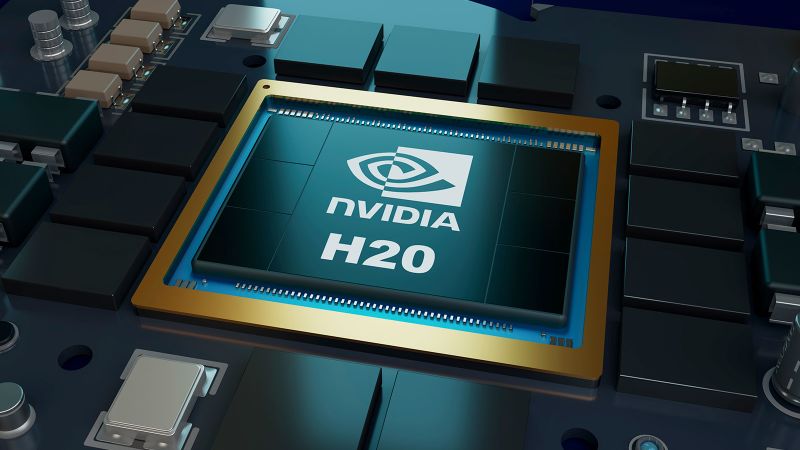
Nvidia Corporation, founded in 1993 by Jensen Huang, Chris Malachowsky, and Curtis Priem and headquartered in Santa Clara, California, is a pioneering American technology company best known for inventing the graphics processing unit (GPU) in 1999[1][2][4]. Initially focused on GPUs for video gaming, Nvidia has expanded its scope to serve diverse markets, including artificial intelligence (AI), high-performance computing (HPC), professional visualization, automotive technology, and mobile devices[1][3]. Nvidia’s GPUs, such as the GeForce series for gamers and the RTX series for professional applications, are central to its dominance, controlling over 90% of the discrete GPU market as of early 2025[1][4]. The company’s investment in CUDA, a parallel computing platform and API launched in the early 2000s, revolutionized GPU computing by enabling GPUs to accelerate a wide range of compute-intensive tasks, particularly in AI and scientific research[1][4]. By 2025, Nvidia commanded over 80% of the GPU market for AI training and inference and supplied chips to more than 75% of the world’s top 500 supercomputers[1]. Nvidia’s influence extends beyond hardware. It offers a comprehensive ecosystem including software platforms like Omniverse for 3D simulation and digital twins, AI frameworks such as MONAI for medical imaging, and Jetson for robotics and edge AI[2][3]. Its technologies power autonomous vehicle data centers, AI factories, and cloud gaming services like GeForce Now[2][7]. Financially, Nvidia achieved record full-year revenue of $130.5 billion in fiscal 2025, with a workforce of over 36,000 employees worldwide and a robust patent portfolio exceeding 8,700 applications[2]. The company is recognized for innovation and workplace excellence, topping Forbes’ "America’s Best Companies 2025" and Fast Company’s "World’s Most Innovative Companies"
OpenAI
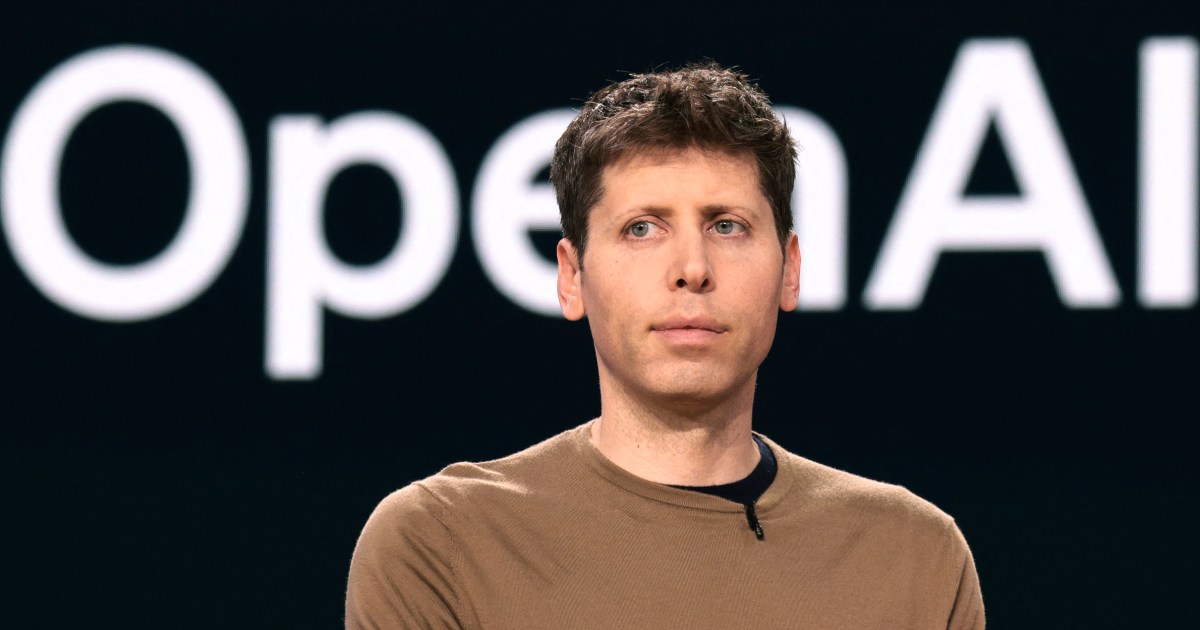
OpenAI is a leading artificial intelligence research and deployment company founded in 2015 with the mission to ensure that artificial general intelligence (AGI)—AI systems generally smarter than humans—benefits all of humanity[1][2]. Initially established as a nonprofit, OpenAI’s goal has always been to advance safe and broadly beneficial AI technologies. In 2019, OpenAI created a for-profit subsidiary to scale its research and deployment efforts while keeping mission-aligned governance. As of October 2025, this structure evolved into the OpenAI Foundation (nonprofit) governing the OpenAI Group, a public benefit corporation (PBC). This unique corporate form legally binds OpenAI Group to prioritize its mission alongside commercial success, ensuring broader stakeholder interests are considered[1]. The Foundation holds equity in the Group, aligning incentives for long-term impact and growth. Microsoft owns approximately 27% of OpenAI Group, with employees and investors holding the rest[1]. OpenAI is renowned for pioneering breakthroughs in large language models and AI applications. Its products like ChatGPT revolutionized human-computer interaction by enabling natural language conversations and task automation. OpenAI continuously innovates by integrating AI into business tools—for example, its recent launch of “company knowledge” in ChatGPT Business harnesses AI to aggregate and analyze internal company data from apps like Slack, Google Drive, and GitHub, enhancing workplace productivity and decision-making[3]. Key achievements include advancing AI safety research, reducing hallucinations in language models, and expanding AI’s accessibility through products like Codex and ChatGPT Atlas (a browser with ChatGPT integration)[2]. OpenAI’s balanced governance model and cutting-edge research position it uniquely at the intersection of technology innovation and ethical AI development, making it a focal point in business and technology news globally.