The Robot Factory Showdown
#robotics #automation #hyundai #boston_dynamics #google_deepmind

The Robot Factory Showdown
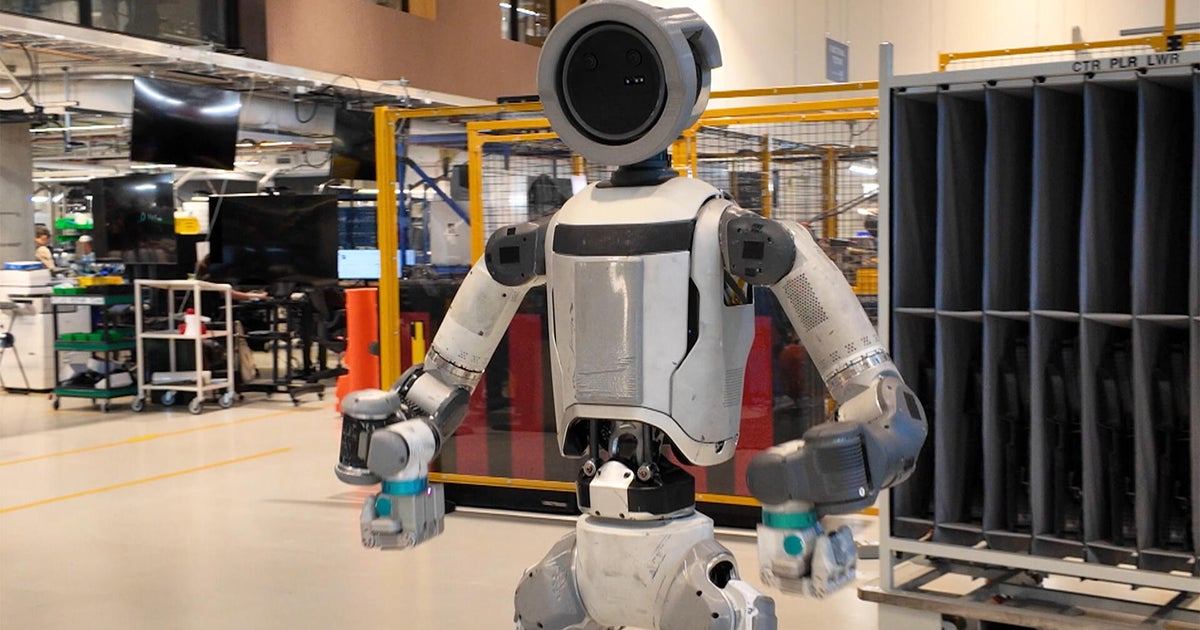
At CES 2026, Hyundai and Boston Dynamics unveiled a production-ready Atlas humanoid robot, fundamentally challenging Tesla's narrative on industrial automation. While Tesla's Optimus remains in development with late 2026 production targets, Hyundai has already begun manufacturing Atlas units with 2026 deployments scheduled at their facilities and Google DeepMind.
Manufacturing Credibility
Hyundai's advantage lies in proven manufacturing expertise combined with Boston Dynamics' advanced robotics technology. The company plans to establish a scalable production system capable of manufacturing 30,000 units annually by 2028, with Atlas robots beginning parts sequencing at their Georgia facility in 2028 and complex assembly tasks by 2030.
The Plausibility Factor
Unlike speculative timelines, Hyundai demonstrates concrete infrastructure through its Robot Metaplant Application Center and Software-Defined Factory approach. This partnership with Google DeepMind creates a comprehensive ecosystem for robot development, training, and deployment that appears substantially more achievable than purely theoretical production promises.
```About the Organizations Mentioned
Hyundai
Hyundai Motor Company, founded in 1967 and headquartered in Seoul, South Korea, is a leading global automotive manufacturer known for its broad portfolio of vehicles and technological innovation[5]. It operates the world’s second-largest automobile manufacturing plant in Ulsan, South Korea, with an annual capacity of 1.6 million units, and sells vehicles in 193 countries through 5,000 dealerships[5]. Hyundai is part of the Hyundai Motor Group, which also owns Kia Corporation and the luxury brand Genesis. Hyundai has established itself as a major player in the global auto market, ranking as the third largest carmaker worldwide by production as of late 2024[5]. The company is aggressively expanding its electric vehicle (EV) lineup, including models like the Ioniq 6 and the upcoming Ioniq 7, alongside region-specific EVs such as the IONIQ 3 for Europe, India's first locally designed EV, and China-produced Elexio and electric sedans[1][3][5]. It plans to achieve global vehicle sales of 5.55 million units by 2030, with electrified vehicles (hybrids and EVs) accounting for 3.3 million units, reflecting a strong commitment to electrification and sustainability[1][2]. Hyundai’s innovation extends beyond vehicles into software and AI, advancing its Software-Defined Vehicle platform with AI-driven features and over-the-air updates, exemplified by technologies like Pleos Connect and AI assistants Atria, Gleo, and Capora[1]. The company is also investing heavily in next-generation battery technology, extended-range EVs launching from 2027, and manufacturing expansions aimed at increasing production capacity and efficiency globally[2]. Sustainability is a core focus, with Hyundai aiming for carbon neutrality by 2045, implementing circular economy initiatives such as recycling materials from end-of-life vehicles, and investing in renewable energy[4]. Financially, Hyundai has shown strong growth
Boston Dynamics
**Boston Dynamics** is a pioneering robotics company renowned for developing advanced, dynamic mobile robots that navigate real-world environments for industrial, commercial, and research applications.[4][6] Founded in **1992** by Marc Raibert as a spin-off from MIT's Leg Lab, the company originated from groundbreaking research on legged locomotion.[1][2][3][4] Early funding came from DARPA, leading to military-focused innovations like **BigDog** (2004), a quadruped robot that carried 340 pounds at 4 mph over rough terrain but was shelved for excessive noise.[1][2] This was followed by **Atlas** (2013), a bipedal humanoid for search-and-rescue tasks, showcasing feats like parkour and recovery from falls in viral videos.[1][2] Ownership shifted dramatically: Google acquired it in 2013 amid a robotics buying spree, but sold to **SoftBank** in 2017 due to strategic mismatches and reluctance for military ties.[2] In 2021, **Hyundai Motor Group** bought a controlling stake for $1.1 billion, integrating it into smart mobility solutions.[1] Key achievements include commercial breakthroughs like **Spot** (2020), a versatile quadruped for inspection using sensors and leg motors for balance,[1] and **Stretch** (2021), a warehouse robot for truck unloading.[1] Acquisitions like Kinema Systems (2019) enhanced AI for industrial arms.[1] In 2024, a partnership with Toyota Research Institute advanced humanoid robots via Large Behavior Models on Atlas.[1] Today, under Hyundai, Boston Dynamics leads in practical automation, deploying robots that "work in the real world" for tough challenges, evolving from military roots to viral tech icons featured in ads.[5][6][7] With ongoing innovations, it redefines robotics' commercial potential, blending agility, AI, and durability for sectors like logistics and manufacturing.(298 word
Tesla
Tesla, Inc. is a pioneering American electric vehicle (EV) and clean energy company headquartered in Texas, with a mission to accelerate the world’s transition to sustainable energy[1]. Founded in 2003 by engineers Martin Eberhard and Marc Tarpenning, and later joined by Elon Musk, who became the company’s driving force and public face, Tesla has grown from a niche startup into a global leader in EVs, energy storage, and solar technology[1]. ## What Tesla Does Tesla designs, manufactures, and sells high-performance electric vehicles, including the Model S, Model 3, Model X, Model Y, Cybertruck, and the upcoming affordable model[4]. Beyond automobiles, Tesla produces large-scale battery storage systems (Powerwall, Powerpack, Megapack) and solar energy products (Solar Roof, Solar Panels), aiming to create a fully integrated sustainable energy ecosystem[1]. The company operates six massive, vertically integrated factories across three continents, employing over 100,000 people who handle everything from design to service in-house[1]. ## History and Key Achievements Tesla’s breakthrough came with the 2008 launch of the Roadster, the first highway-legal all-electric sports car. The company then disrupted the auto industry with the Model S sedan (2012), which set new standards for EV range and performance. The Model 3, introduced in 2017, became the world’s best-selling electric car, proving that EVs could be both desirable and mass-market[1]. Tesla’s Gigafactories, sprawling production facilities, have enabled rapid scaling and cost reductions, while its proprietary Supercharger network has addressed range anxiety for drivers. ## Current Status and Notable Aspects In 2025, Tesla continues to dominate the EV market, producing over 447,000 vehicles and delivering nearly 497,000 in Q3 alone[5]. The company has avoided over 20 million metric tons of CO₂
Google DeepMind
**Google DeepMind** is a leading British-American AI research laboratory and Alphabet Inc. subsidiary, dedicated to developing safe, responsible artificial intelligence systems that advance scientific discovery and solve complex real-world problems.[1][3] Founded in London in 2010 by Demis Hassabis, Mustafa Suleyman, and Shane Legg, DeepMind pioneered deep reinforcement learning, achieving early breakthroughs like DQN mastering 49 Atari games from raw pixels and WaveNet for realistic text-to-speech in Google Assistant.[1][3] Acquired by Google in 2014 for around $500 million, it gained vast resources to pursue general AI.[1][4] In April 2023, it merged with Google Brain to form Google DeepMind, accelerating efforts amid competition from OpenAI's ChatGPT, under CEO Hassabis.[1][3] Key achievements include AlphaFold (2020), which revolutionized protein folding prediction, releasing 200 million structures for global research; AlphaCode for competitive programming; AlphaDev for faster algorithms; and advances in weather forecasting, nuclear fusion plasma control, robotics (RT-2, PaLM-SayCan), and generative tools like Imagen, Veo, Lyria, and Gemini large language models.[1][3][5] These innovations span healthcare, energy, climate modeling, and speech accessibility via Project Euphonia.[3][4] Today, headquartered in London with global research centers, Google DeepMind drives Alphabet's AI strategy, powering Gemini models and tools like AlphaGenome and WeatherNext.[2][5] In December 2025, it launched a major UK government partnership targeting nuclear fusion, advanced materials (via a 2026 automated lab with Gemini and robotics), AI safety, and societal impacts like labor markets and mental health—bolstered by Google's £5 billion AI investment.[2] It also supports STEM education through scholarships and programs.[7] Ethically focused, DeepMind emphasizes AGI safety while shaping busines
Robot Metaplant Application Center
The **Robot Metaplant Application Center (RMAC)** is Hyundai Motor Group's dedicated U.S.-based facility serving as the core "engine" for advancing AI robotics, where humanoid and other robots undergo intensive training to master human collaboration in industrial settings.[1][2][4] RMAC trains robots like Boston Dynamics' next-generation electric **Atlas humanoid**—featuring 56 degrees of freedom, human-scale tactile hands, and 110-pound lifting capacity—on precise movements such as lifts, turns, recoveries, and factory navigation.[1][3][5] This occurs in authentic factory simulations before deployment to sites like Hyundai Motor Group Metaplant America (HMGMA) in Savannah, Georgia. Data from real-world operations at the Group's Software-Defined Factory (SDF) feeds back to RMAC, creating a **cyclical improvement loop** that makes robots faster, smarter, safer, and better at human-robot teamwork.[2][3][4] Announced at **CES 2026**, RMAC is slated to open in 2026, aligning with Hyundai's aggressive AI robotics roadmap.[1][2][6] By 2028, RMAC-trained Atlas units will handle repetitive sequencing tasks at HMGMA, scaling to complex assembly by 2030, while supporting mass production goals of 30,000 robots annually.[1][4][6] This builds on partnerships with Google DeepMind for safer AI-driven motions and Nvidia for simulation infrastructure, emphasizing predictable human interactions to build worker trust.[3][6] Key achievements include Atlas entering production and live demos at CES 2026, showcasing mobility, balance, and industrial potential alongside robots like Spot (for inspections) and MobED platforms.[1][3] Currently, RMAC represents Hyundai's pivot to lead the **Physical AI market**, targeting logistics, construction, energy, and beyond with end-to-end services like software updates and monitoring.[2][4] By fostering human-centered robotics