How Boston Dynamics Upgraded Atlas and What's Next: AI Breakthroughs and Partners
How Boston Dynamics Upgraded Atlas — and What's Next
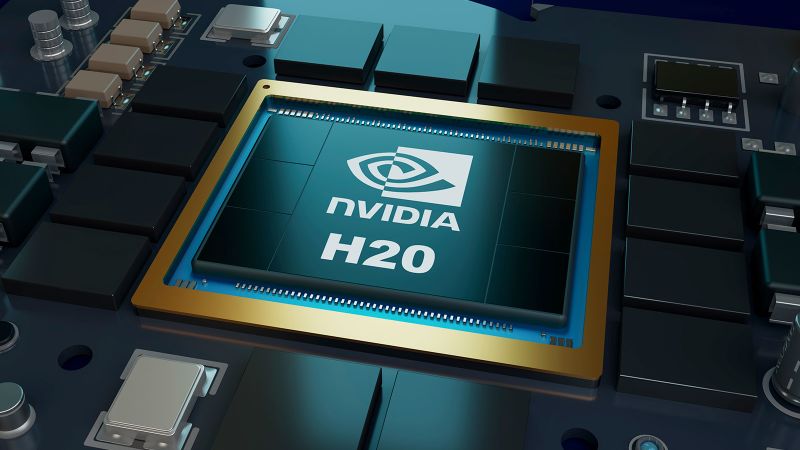
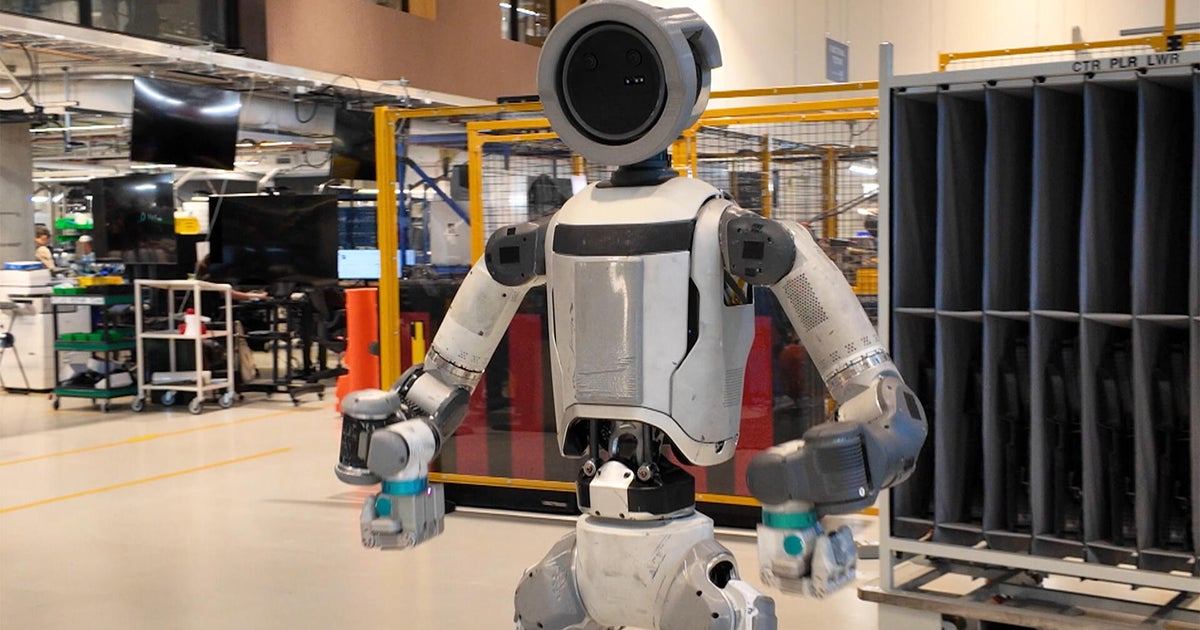
Boston Dynamics has revolutionized its iconic Atlas humanoid robot, evolving it far beyond the 2021 model seen on 60 Minutes. New fully rotating joints allow 180-degree torso turns without wiring issues, while advanced hands feature tactile sensors, opposable thumbs, and versatile grips for objects from tiny parts to 22-pound tires. Powered by Nvidia chips and large behavior models from a Toyota Research Institute collaboration, Atlas now excels in real-time reasoning and multi-step tasks like stacking cups or tying knots.[3][2]
Key Upgrades and AI Breakthroughs
Teleoperation with VR headsets trains Atlas via human demonstrations, enabling reinforcement learning for precision work such as inserting steering wheels or flipping barstools. The robot's AI brain supports end-to-end language-conditioned policies, reducing the need for expert programming and pushing beyond human limits in speed and efficiency. These enhancements deliver unprecedented balance, manipulation, and adaptability in dynamic environments.[1][3]
Future Horizons for Atlas
Looking ahead, a new partnership with Google DeepMind integrates cutting-edge AI foundation models to make Atlas more human-like in interactions, targeting general-purpose applications. Already in production for Hyundai factories, this next-gen robot promises scalable automation, blending athletic prowess with natural behavior for real-world deployment.[5][7]
About the Organizations Mentioned
Boston Dynamics
**Boston Dynamics** is a pioneering robotics company renowned for developing advanced, dynamic mobile robots that navigate real-world environments for industrial, commercial, and research applications.[4][6] Founded in **1992** by Marc Raibert as a spin-off from MIT's Leg Lab, the company originated from groundbreaking research on legged locomotion.[1][2][3][4] Early funding came from DARPA, leading to military-focused innovations like **BigDog** (2004), a quadruped robot that carried 340 pounds at 4 mph over rough terrain but was shelved for excessive noise.[1][2] This was followed by **Atlas** (2013), a bipedal humanoid for search-and-rescue tasks, showcasing feats like parkour and recovery from falls in viral videos.[1][2] Ownership shifted dramatically: Google acquired it in 2013 amid a robotics buying spree, but sold to **SoftBank** in 2017 due to strategic mismatches and reluctance for military ties.[2] In 2021, **Hyundai Motor Group** bought a controlling stake for $1.1 billion, integrating it into smart mobility solutions.[1] Key achievements include commercial breakthroughs like **Spot** (2020), a versatile quadruped for inspection using sensors and leg motors for balance,[1] and **Stretch** (2021), a warehouse robot for truck unloading.[1] Acquisitions like Kinema Systems (2019) enhanced AI for industrial arms.[1] In 2024, a partnership with Toyota Research Institute advanced humanoid robots via Large Behavior Models on Atlas.[1] Today, under Hyundai, Boston Dynamics leads in practical automation, deploying robots that "work in the real world" for tough challenges, evolving from military roots to viral tech icons featured in ads.[5][6][7] With ongoing innovations, it redefines robotics' commercial potential, blending agility, AI, and durability for sectors like logistics and manufacturing.(298 word
Nvidia
Nvidia Corporation, founded in 1993 by Jensen Huang, Chris Malachowsky, and Curtis Priem and headquartered in Santa Clara, California, is a pioneering American technology company best known for inventing the graphics processing unit (GPU) in 1999[1][2][4]. Initially focused on GPUs for video gaming, Nvidia has expanded its scope to serve diverse markets, including artificial intelligence (AI), high-performance computing (HPC), professional visualization, automotive technology, and mobile devices[1][3]. Nvidia’s GPUs, such as the GeForce series for gamers and the RTX series for professional applications, are central to its dominance, controlling over 90% of the discrete GPU market as of early 2025[1][4]. The company’s investment in CUDA, a parallel computing platform and API launched in the early 2000s, revolutionized GPU computing by enabling GPUs to accelerate a wide range of compute-intensive tasks, particularly in AI and scientific research[1][4]. By 2025, Nvidia commanded over 80% of the GPU market for AI training and inference and supplied chips to more than 75% of the world’s top 500 supercomputers[1]. Nvidia’s influence extends beyond hardware. It offers a comprehensive ecosystem including software platforms like Omniverse for 3D simulation and digital twins, AI frameworks such as MONAI for medical imaging, and Jetson for robotics and edge AI[2][3]. Its technologies power autonomous vehicle data centers, AI factories, and cloud gaming services like GeForce Now[2][7]. Financially, Nvidia achieved record full-year revenue of $130.5 billion in fiscal 2025, with a workforce of over 36,000 employees worldwide and a robust patent portfolio exceeding 8,700 applications[2]. The company is recognized for innovation and workplace excellence, topping Forbes’ "America’s Best Companies 2025" and Fast Company’s "World’s Most Innovative Companies"
Toyota Research Institute
The **Toyota Research Institute (TRI)** is a pioneering R&D organization dedicated to bridging fundamental research with practical product development, focusing on technologies that amplify human capabilities rather than replace them.[1][5] ## History and Structure Toyota established TRI in January 2016 as a dedicated enterprise with headquarters in Silicon Valley near Stanford University and a second facility near MIT in Cambridge, Massachusetts.[1] The organization was created to accelerate Toyota's innovation in artificial intelligence, robotics, and automated driving.[2] In March 2018, Toyota expanded its research efforts by establishing **TRI-Advanced Development (TRI-AD)** in Tokyo, led by Dr. James Kuffner, to provide production-quality software for automated driving with a target of 1,000 staff members.[2][3] ## Mission and Focus Areas TRI's core mission centers on improving quality of life through technology that addresses humanity's greatest challenges, from climate change and aging societies to basic human understanding.[5] The organization initially prioritized three goals: **safety**, **accessibility**, and **robotics**, with emphasis on collaborative autonomy—how people and machines can work together effectively.[1] Research spans multiple domains including mobility, materials science, electronics, battery technology, machine learning, and emerging fields like quantum science and carbon neutrality.[4][5] ## Key Achievements Since its inception, TRI's collaborative efforts have generated substantial impact. The broader Toyota Research Institute of North America (TRINA) has produced over 1,200 patents and hundreds of journal articles.[4] The organization has developed innovations in vehicle automation, advanced battery chemistries, sensors (radar and LiDAR), and energy solutions.[4] ## Current Status TRI operates as a global research hub collaborating with 16 world-class universities and maintains Toyota Ventures, an investment arm established in July
Google DeepMind
**Google DeepMind** is a leading British-American AI research laboratory and Alphabet Inc. subsidiary, dedicated to developing safe, responsible artificial intelligence systems that advance scientific discovery and solve complex real-world problems.[1][3] Founded in London in 2010 by Demis Hassabis, Mustafa Suleyman, and Shane Legg, DeepMind pioneered deep reinforcement learning, achieving early breakthroughs like DQN mastering 49 Atari games from raw pixels and WaveNet for realistic text-to-speech in Google Assistant.[1][3] Acquired by Google in 2014 for around $500 million, it gained vast resources to pursue general AI.[1][4] In April 2023, it merged with Google Brain to form Google DeepMind, accelerating efforts amid competition from OpenAI's ChatGPT, under CEO Hassabis.[1][3] Key achievements include AlphaFold (2020), which revolutionized protein folding prediction, releasing 200 million structures for global research; AlphaCode for competitive programming; AlphaDev for faster algorithms; and advances in weather forecasting, nuclear fusion plasma control, robotics (RT-2, PaLM-SayCan), and generative tools like Imagen, Veo, Lyria, and Gemini large language models.[1][3][5] These innovations span healthcare, energy, climate modeling, and speech accessibility via Project Euphonia.[3][4] Today, headquartered in London with global research centers, Google DeepMind drives Alphabet's AI strategy, powering Gemini models and tools like AlphaGenome and WeatherNext.[2][5] In December 2025, it launched a major UK government partnership targeting nuclear fusion, advanced materials (via a 2026 automated lab with Gemini and robotics), AI safety, and societal impacts like labor markets and mental health—bolstered by Google's £5 billion AI investment.[2] It also supports STEM education through scholarships and programs.[7] Ethically focused, DeepMind emphasizes AGI safety while shaping busines
Hyundai
Hyundai Motor Company, founded in 1967 and headquartered in Seoul, South Korea, is a leading global automotive manufacturer known for its broad portfolio of vehicles and technological innovation[5]. It operates the world’s second-largest automobile manufacturing plant in Ulsan, South Korea, with an annual capacity of 1.6 million units, and sells vehicles in 193 countries through 5,000 dealerships[5]. Hyundai is part of the Hyundai Motor Group, which also owns Kia Corporation and the luxury brand Genesis. Hyundai has established itself as a major player in the global auto market, ranking as the third largest carmaker worldwide by production as of late 2024[5]. The company is aggressively expanding its electric vehicle (EV) lineup, including models like the Ioniq 6 and the upcoming Ioniq 7, alongside region-specific EVs such as the IONIQ 3 for Europe, India's first locally designed EV, and China-produced Elexio and electric sedans[1][3][5]. It plans to achieve global vehicle sales of 5.55 million units by 2030, with electrified vehicles (hybrids and EVs) accounting for 3.3 million units, reflecting a strong commitment to electrification and sustainability[1][2]. Hyundai’s innovation extends beyond vehicles into software and AI, advancing its Software-Defined Vehicle platform with AI-driven features and over-the-air updates, exemplified by technologies like Pleos Connect and AI assistants Atria, Gleo, and Capora[1]. The company is also investing heavily in next-generation battery technology, extended-range EVs launching from 2027, and manufacturing expansions aimed at increasing production capacity and efficiency globally[2]. Sustainability is a core focus, with Hyundai aiming for carbon neutrality by 2045, implementing circular economy initiatives such as recycling materials from end-of-life vehicles, and investing in renewable energy[4]. Financially, Hyundai has shown strong growth
60 Minutes
**60 Minutes** is America's premier prime-time television newsmagazine on CBS, delivering hard-hitting investigative reports, newsmaker interviews, in-depth profiles, and feature stories that set the standard for broadcast journalism.[1][2][3][4] Launched on September 24, 1968, by legendary producer **Don Hewitt**, the show pioneered the TV newsmagazine format, blending rigorous investigations with compelling narratives on politics, business, technology, and culture.[1][2][3][4] Its signature structure typically features two serious probes alongside a human-interest piece, occasionally including point-counterpoint debates or commentaries like Andy Rooney's witty closers from 1979 to 2011.[3] Key achievements abound: **60 Minutes** has topped Nielsen ratings as America's #1 news program for 51 consecutive years through the 2024-25 season, with 25 seasons in the annual top 10—a record unmatched by any other show.[1][2][4] It boasts more Emmy Awards than any primetime program and 25 Peabody Awards, cementing its influence on U.S. culture and journalism.[1][3][4] Iconic correspondents like Mike Wallace and Morley Safer built its reputation for fearless access to sources, from world leaders to whistleblowers.[3] Today, in its **58th season** (airing Sundays at 7 p.m. ET/PT), it remains dominant, averaging 8.32 million viewers in season 57 and reaching over one in three Americans.[4][5] Executive producer **Tanya Simon** oversees a powerhouse team: correspondents **Lesley Stahl, Scott Pelley, Bill Whitaker, Anderson Cooper, Sharyn Alfonsi, Jon Wertheim, and Cecilia Vega**, with **Norah O'Donnell** contributing.[4][5] Recent episodes tackle timely business-tech topics like AI risks to kids, Polymarke