Silver Plunge: 16% Drop Erases Recovery Amid Market Turmoil

Silver's Dramatic 16% Plunge Erases Recovery
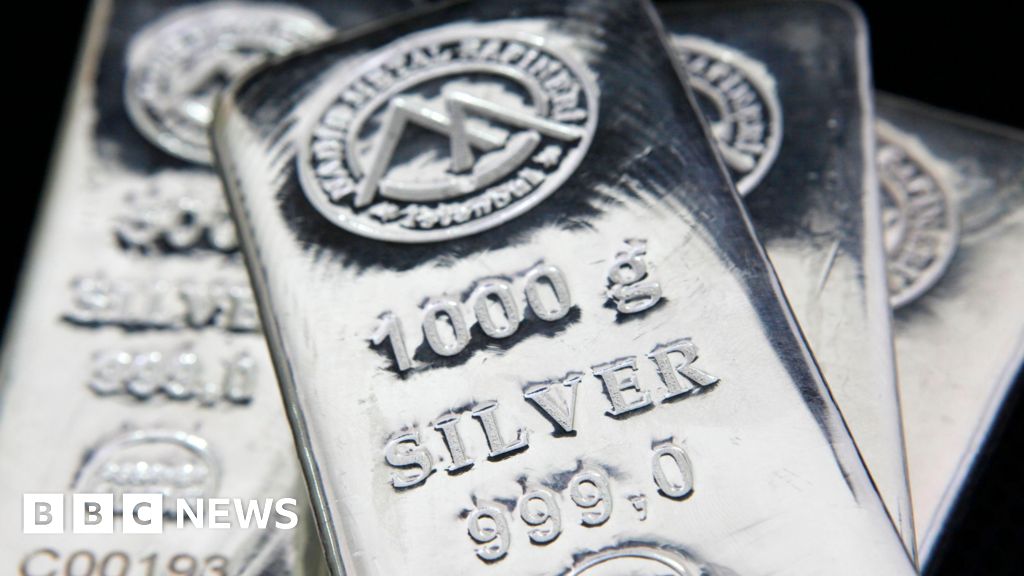
Silver prices tumbled over 16% in a stunning reversal, completely wiping out a fragile two-day recovery amid a brutal market rout. The white metal, often seen as an industrial powerhouse and safe-haven asset, struggled to find support as investor panic deepened. This sharp decline follows a historic selloff, with benchmark indices like the S&P 500 dropping 2% and the VIX volatility index surging, signaling widespread fear.[1]
Market Turmoil and Broader Impacts
The plunge comes amid tariff fears rattling stocks, while gold also retreated from recent record highs. Geopolitical tensions from Russia, Venezuela, and Iran add pressure on commodities, depressing sentiment further. Tech selloffs and cautious outlooks from firms like Maersk highlight a volatile environment, reminiscent of 2025's unexpected swings that tested even strong years.[1]
What Lies Ahead for Investors
Traders now eye potential bargain opportunities or deeper corrections, as silver battles to stabilize. With session lows persisting, this rout underscores precious metals' vulnerability in turbulent times. Staying vigilant amid volatility remains key for navigating these unpredictable markets.[1]
About the Organizations Mentioned
Maersk
**A.P. Moller - Maersk (Maersk)** is a global leader in integrated logistics, simplifying supply chains for over 100,000 customers across 130 countries with 100,000+ employees. It operates a reliable ocean network, advanced container terminals at 60+ locations, and comprehensive logistics services including landside, forwarding, and solutions.[1] Founded in 1904 as a steamship company by Arnold Peter Møller and his father, Maersk evolved into a shipping powerhouse, expanding into containerization in the 1960s and diversifying into terminals, logistics, and energy. Today, it leverages owned vessels and hubs for operational agility amid disruptions like Red Sea rerouting.[1][3] Key achievements include its **Gemini network**, delivering over 90% on-time arrivals and cost savings, plus record terminal performance in 2025 with peak volumes, revenue, and EBIT. In 2025, Maersk posted **USD 54 billion revenue**, **USD 9.5 billion EBITDA**, and **USD 3.5 billion EBIT**—topping guidance despite freight rate pressures from overcapacity. Ocean volumes grew 4.9% in line with markets, while Logistics & Services boosted profitability through refocusing.[1] As of early 2026, Maersk faces headwinds: it forecasts **2-4% global container volume growth**, but expects **EBITDA of USD 4.5-7 billion**—a sharp drop—due to new vessels adding 5% capacity, Red Sea reopening (e.g., MECL service transited December 2025), and reduced scrapping (extending vessel life to 25 years). To counter, it's cutting corporate overhead by **USD 180 million**, trimming 1,000 admin jobs, scaling back share buybacks from USD 1 billion, and emphasizing network flexibility.[1][2][3][