Sony LinkBuds Clip Opens Open-Era in Clip-On Earbuds
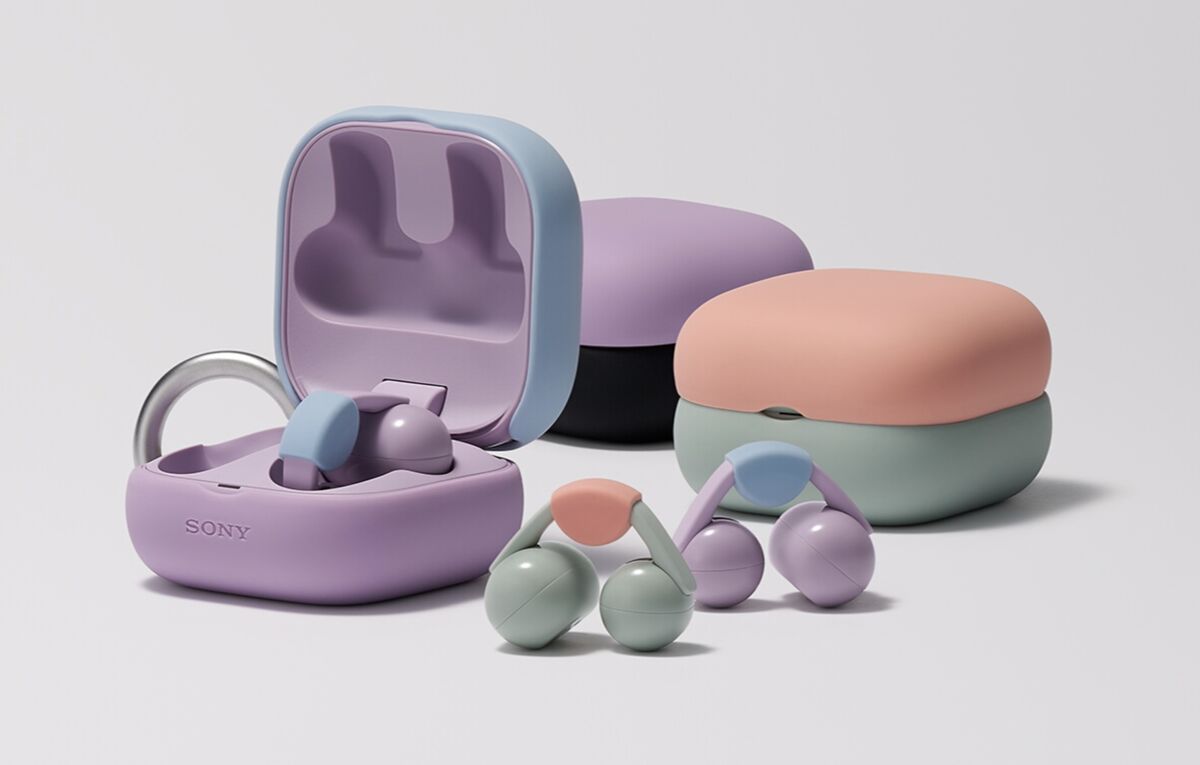
Sony Enters Clip-On Earbuds Arena with LinkBuds Clip
Sony has launched the LinkBuds Clip, innovative open-ear earbuds priced at $230, tapping into the surging popularity of clip-on designs popularized by Bose, Motorola, and Huawei. This move positions Sony as a key player in blending music with environmental awareness, offering a secure fit for all-day wear.[1][3]
Standout Features and Performance
Featuring 10mm drivers, DSEE upscaling for enhanced audio, and a 10-band EQ via the Sony Sound Connect app, these earbuds deliver rich, balanced sound. Three modes—Standard, Voice Boost for noisy spots, and Sound Leakage Reduction—adapt to any scenario. AI noise reduction and bone conduction sensors ensure crystal-clear calls, while multipoint pairing and IPX4 resistance add versatility. Battery life impresses with 9 hours from the buds and 37 total with the case, plus quick charging for an hour's playtime in three minutes.[2][4][6]
Why It Matters in the Market
As clip-on earbuds gain traction for comfort and safety, Sony's LinkBuds Clip stand out with premium tuning akin to their flagship headphones, supporting 360 Reality Audio. Available now in multiple colors, they challenge competitors by prioritizing open-ear immersion without isolation, appealing to active users seeking quality and convenience.[5][9]
About the Organizations Mentioned
Sony
## Overview Sony Group Corporation is a Japanese multinational conglomerate headquartered in Tokyo, renowned for its innovation in technology, entertainment, and media[6]. The company operates across diverse sectors, including electronics (Sony Corporation), imaging and sensing (Sony Semiconductor Solutions), entertainment (Sony Pictures Entertainment, Sony Music Entertainment), and video games (Sony Interactive Entertainment)[6]. ## History Founded in 1946 as Tokyo Tsushin Kogyo K.K. by Masaru Ibuka and Akio Morita, Sony began as an electronics manufacturer and quickly became a symbol of Japan’s post-war industrial resurgence[6]. Renamed Sony Corporation in 1958, the company achieved global recognition with pioneering products such as the TR-55 transistor radio, the Trinitron color television, the Walkman, and the compact disc[6]. Sony’s strategic acquisitions—Columbia Records (1988) and Columbia Pictures (1989)—marked its expansion into entertainment, while the 1994 launch of the PlayStation signaled entry into the gaming industry[6]. In 2021, the company restructured as Sony Group Corporation, a holding company for its various businesses, with its electronics arm continuing as Sony Corporation[6]. ## Key Achievements Sony’s legacy is defined by technological and creative milestones. The Walkman revolutionized portable music, the PlayStation became a dominant force in gaming, and the Trinitron set industry standards for television quality[6]. In recent years, Sony has focused on maximizing the value of its intellectual property (IP) through cross-business synergies, extending franchises into games, films, anime, and real-world experiences[5]. The company’s ability to adapt—spinning off financial services and doubling down on gaming, sensors, and content—has kept it resilient and profitable in a rapidly evolving digital landscape[5]. ## Current Status and Strategy Under President and CEO Hiroki Totoki, Sony’s current strategy centers on its “
Bose
## Overview Bose Corporation is a globally recognized leader in the development, manufacturing, and marketing of high-quality audio equipment, including speakers, headphones, and professional sound systems for both consumer and commercial markets[1]. Headquartered in Massachusetts, Bose is known for its relentless focus on innovation, engineering excellence, and a commitment to delivering immersive sound experiences[6]. The company’s products are widely used in homes, automobiles, aviation, and professional settings, making Bose a defining force in the audio industry. ## History Bose was founded in 1964 by Dr. Amar G. Bose, an MIT professor whose dissatisfaction with a newly purchased hi-fi system led him to research the science of sound reproduction[2][5]. Rather than licensing his patents, Bose started his own company with support from MIT and angel investors[3]. In its early years, Bose Corporation developed power-regulating systems for the U.S. military while simultaneously pursuing breakthroughs in acoustics during off-hours[3][5]. The company’s first major consumer product, the Bose 901 Direct/Reflecting speaker, launched in 1968 and became an instant classic, establishing Bose as a leader in home audio[1][3]. The 901’s success was followed by other iconic products, including the 301 bookshelf speakers and, later, the Acoustic Wave Music System and Lifestyle home theater systems[1][3]. Bose also pioneered the integration of premium audio systems in automobiles, partnering with major manufacturers such as General Motors, Honda, and Audi[1]. ## Key Achievements Bose’s reputation for innovation is highlighted by several industry firsts. The company introduced the world’s first factory-installed, premium car audio systems and developed groundbreaking noise-canceling technology, initially for military and aviation applications before adapting it for consumer headphones like the QuietComfort series[5][6]. Bose’s research into psychoacoustics—how humans perceive sound—has been central to its product
Motorola
**Motorola** operates as two distinct entities: Motorola Solutions, a **communication equipment company** serving government and public safety sectors, and Motorola (under Lenovo ownership), a **smartphone and mobile device manufacturer** competing in consumer markets. ## Company History and Overview Founded in 1928 and headquartered in Chicago, Motorola Solutions has established itself as a prominent player in mission-critical communications[1]. The company maintains a strong global presence, particularly in the United States, United Kingdom, and Canada[1]. Motorola's consumer smartphone division, now part of Lenovo, continues the legacy of iconic devices like the original Razr. ## Business Operations Motorola Solutions operates through two primary segments[1]: - **Products and Systems Integration**: Provides infrastructure, two-way radios, video security devices, base stations, and access control solutions for government and commercial customers - **Software and Services**: Offers technical support, cybersecurity services, command center software, and unified communications applications ## Recent Achievements and Current Status In January 2026, Motorola unveiled significant innovations at Lenovo Tech World[2][3]. The company debuted its **first foldable device, the motorola razr fold**, designed for productivity and entertainment[3]. The flagship **motorola signature** series represents Motorola's ultra-premium franchise, featuring four 50MP cameras, a 3nm Snapdragon 8 Gen 5 processor, and up to seven years of Android OS updates[2][5]. Additionally, Motorola introduced **Lenovo | Motorola Qira**, a unified AI ecosystem spanning both companies' devices[3]. The company expanded its accessory ecosystem with the **moto watch**, **moto pen ultra**, and **moto tag 2**[3]. ## Financial Position
Huawei
Huawei Technologies Co., Ltd. is a Chinese multinational technology company headquartered in Shenzhen, Guangdong, and one of the world’s leading providers of telecommunications equipment and consumer electronics[1]. Founded in 1987 by Ren Zhengfei, a former People’s Liberation Army officer, Huawei began as a modest manufacturer of phone switches before rapidly expanding into a global powerhouse with operations in over 170 countries and regions, serving more than three billion people worldwide[1][8]. Today, Huawei’s main business lines include telecommunications infrastructure, smartphones and consumer devices, electric vehicle autonomous driving systems, and rooftop solar power products[1]. ## Key Achievements and Innovations Huawei’s rise to prominence was marked by its 2012 overtaking of Ericsson as the world’s largest telecommunications equipment manufacturer[1]. The company became a top-three global smartphone vendor, with annual shipments exceeding 200 million units at its peak[4]. Huawei has been a pioneer in 5G technology, launching end-to-end solutions based on 3GPP standards, and has developed its own AI chips (Ascend series) and smartphone processors (Kirin series)[4]. In a notable display of technological resilience, Huawei launched the Mate 60 Pro 5G smartphone in 2023 using advanced Chinese-made chips, and followed up with HarmonyOS Next, a fully in-house operating system, in late 2024[3]. These moves demonstrated Huawei’s capacity to innovate despite stringent U.S. sanctions aimed at curtailing China’s access to advanced semiconductor technology[3]. ## Current Status and Strategy As of 2025, Huawei is the largest smartphone vendor in China, holding an 18.1% market share, even as overall smartphone demand in the country has softened[1][5]. The company’s revenue grew 4% year-on-year in the first half of 2025, although net profit fell by 32%, partly due to increased R&D