SpaceX Valuation Surges to $800 Billion Ahead of 2026 IPO

SpaceX Valuation Soars to $800 Billion
SpaceX is advancing an insider share sale that pegs Elon Musk's pioneering rocket company at an astonishing $800 billion valuation, outpacing rivals like OpenAI's $500 billion mark. This tender offer, detailed in a shareholder memo by CFO Bret Johnsen, sets shares at $421 each—nearly double the prior $212 price from a $400 billion assessment. As the world's most valuable private firm, SpaceX conducts these biannual sales to let employees and investors trade shares liquidity.
Funding Ambitious Space Ventures
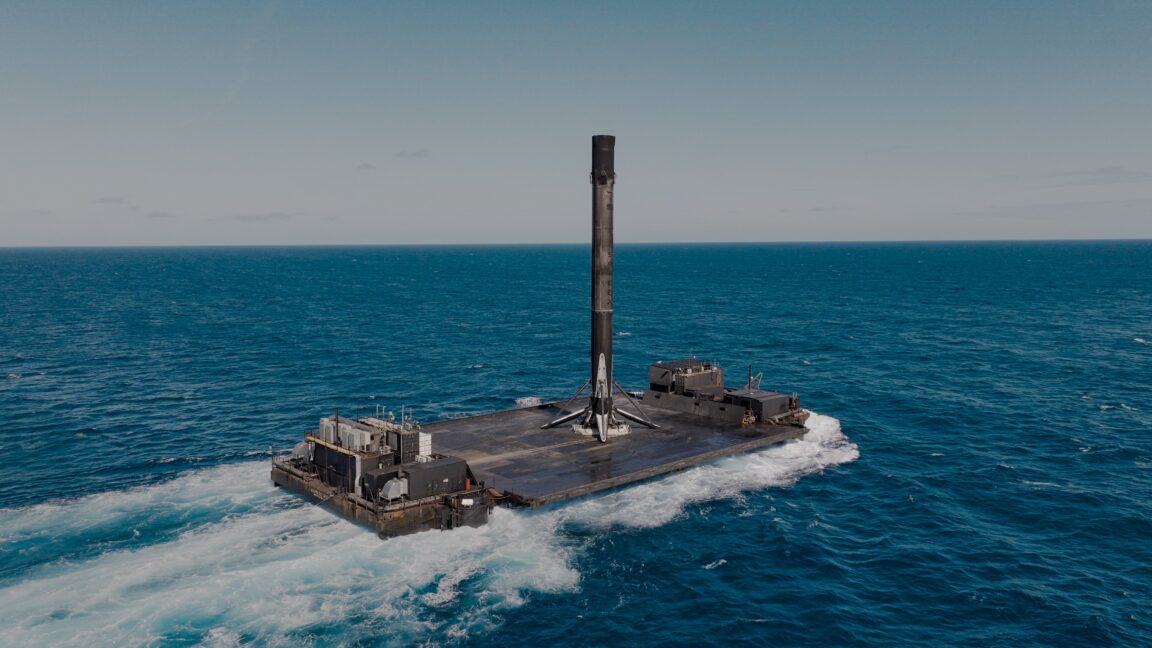
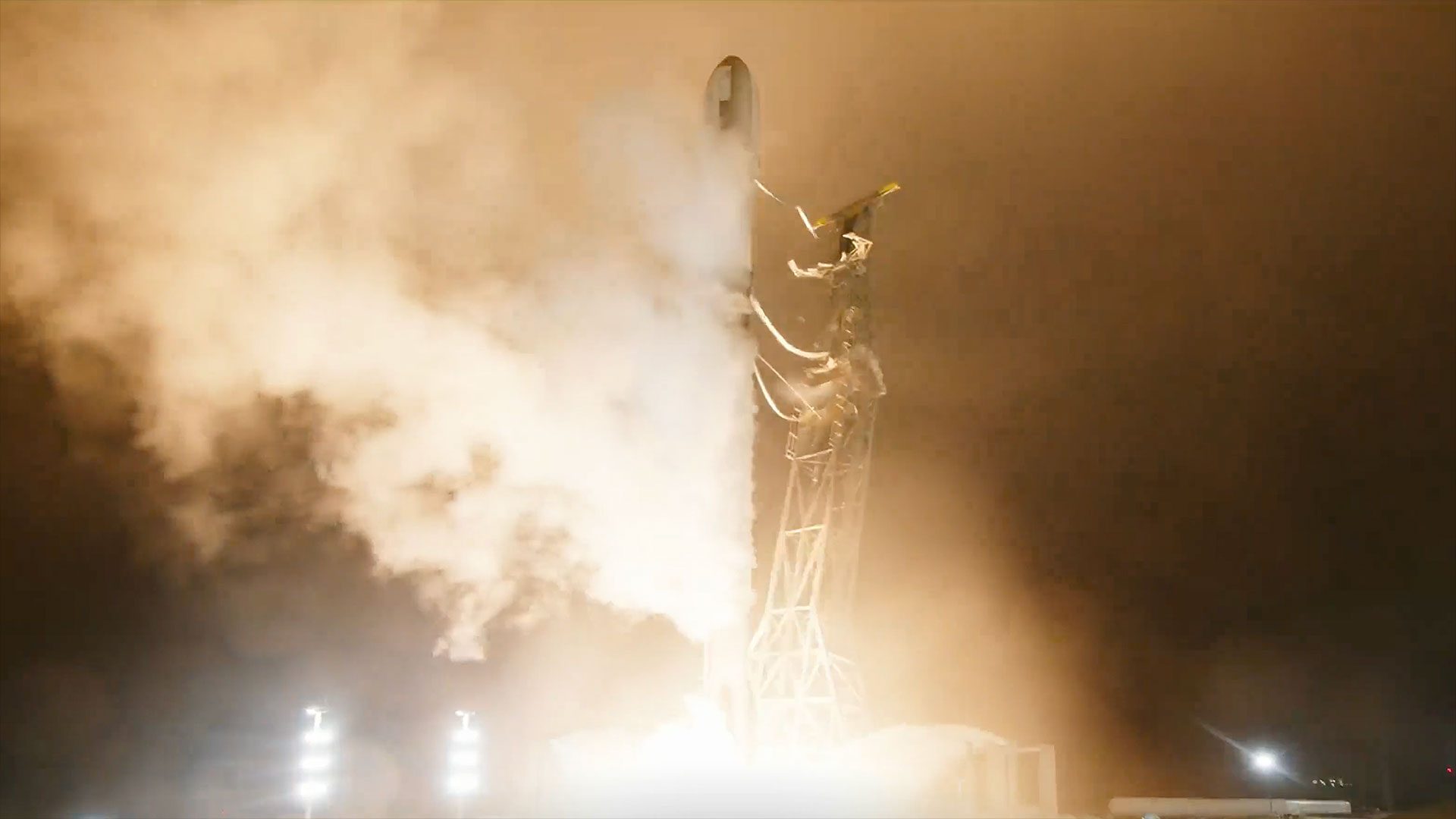
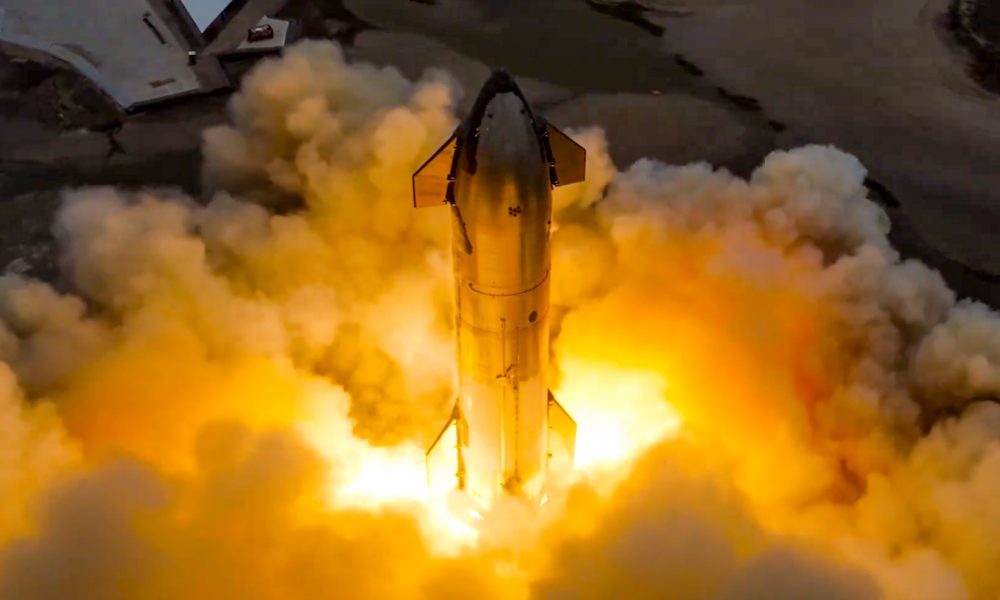
The move signals preparations for a potential 2026 IPO, possibly the largest ever, targeting up to $1.5 trillion overall. Funds would fuel Starship's rapid testing flights, orbital AI data centers, and a lunar outpost. SpaceX's Falcon 9 dominates launches, while Starlink satellites deliver broadband to millions worldwide, solidifying its industry lead.
Implications for Future IPO
Though timing remains fluid and the IPO unconfirmed, this valuation underscores investor faith in Musk's vision. Success could rival Saudi Aramco's record debut, reshaping space commerce and public markets profoundly.
About the People Mentioned
Elon Musk
Elon Reeve Musk, born on June 28, 1971, in Pretoria, South Africa, is a prominent entrepreneur and business magnate known for founding and leading several transformative technology companies. He holds dual citizenship in Canada and the United States and earned bachelor's degrees in physics and economics from the University of Pennsylvania in 1997. Musk began his entrepreneurial career in the 1990s by co-founding Zip2, a software company, and later X.com, which evolved into PayPal, an online payment system acquired by eBay in 2002. In 2002, Musk founded SpaceX, a pioneering aerospace manufacturer and space transport services company, where he serves as CEO and chief engineer. SpaceX is notable for its advancements in reusable rocket technology and commercial spaceflight. In 2004, he joined Tesla Motors as an early investor and took on the roles of CEO and product architect in 2008, driving the company to the forefront of electric vehicle manufacturing. Musk also co-founded Neuralink in 2016, focusing on neurotechnology, and founded The Boring Company in 2017, which develops tunneling and infrastructure projects. In 2015, Musk co-founded OpenAI to promote artificial intelligence research but later left due to differences in vision, subsequently founding xAI. In 2022, he acquired the social media platform Twitter, rebranding it as X in 2023, and has been involved in various business and political activities, including a brief advisory role in the Trump administration's Department of Government Efficiency in early 2025. Musk is recognized as one of the wealthiest individuals globally, with an estimated net worth of $500 billion as of October 2025. His career is marked by significant influence across sectors including space exploration, electric vehicles, AI, social media, and infrastructure development, with ongoing legal and regulatory scrutiny related to his business practices and investments. He is also known for his complex personal life, including fathering 14 children[1][2][3].
About the Organizations Mentioned
SpaceX
SpaceX is a private aerospace manufacturer and space transportation company founded in 2002 by Elon Musk with the mission to revolutionize space technology and enable human life to become multiplanetary[3]. It designs, manufactures, and launches advanced rockets and spacecraft, pioneering reusable rocket technology to dramatically reduce the cost of access to space. One of SpaceX’s key achievements includes the development and operational success of the Falcon 9 and Falcon Heavy rockets, both featuring reusable first-stage boosters. This reusability has significantly lowered launch costs and increased reliability, enabling frequent commercial, scientific, and government missions. SpaceX has launched over 95 national security missions with these rockets, demonstrating maturity and trust from the U.S. Space Force and other agencies[2]. Another major milestone is the Starlink satellite constellation, with nearly 6,900 satellites currently in orbit as of 2025. Starlink aims to provide global broadband internet service, especially in underserved regions, making it one of the largest satellite constellations in history[1]. This ambitious project also serves as a revenue stream to fund SpaceX’s broader goals. Looking ahead, SpaceX is developing Starship, a next-generation fully and rapidly reusable super heavy-lift launch system designed to carry large payloads and humans to the Moon, Mars, and beyond. Elon Musk envisions Starship enabling mass transport to Mars, with the potential to launch multiple times a day, dramatically increasing total mass sent to orbit annually, far surpassing all previous space launch capabilities combined[1][2]. Pending environmental reviews, Starship’s first launch from Florida’s LC-39A is planned for late 2025[2]. Despite these advances, SpaceX remains privately held, with limited public insight into its financial health. Questions persist around the profitability of Falcon launches, Starlink operations, and future Starship missions, especially given the enormous funding required for Mars colonization[1]. Nonetheless, SpaceX continues to inspire both enthusiasm and debate in the business and technology
OpenAI
OpenAI is a leading artificial intelligence research and deployment company founded in 2015 with the mission to ensure that artificial general intelligence (AGI)—AI systems generally smarter than humans—benefits all of humanity[1][2]. Initially established as a nonprofit, OpenAI’s goal has always been to advance safe and broadly beneficial AI technologies. In 2019, OpenAI created a for-profit subsidiary to scale its research and deployment efforts while keeping mission-aligned governance. As of October 2025, this structure evolved into the OpenAI Foundation (nonprofit) governing the OpenAI Group, a public benefit corporation (PBC). This unique corporate form legally binds OpenAI Group to prioritize its mission alongside commercial success, ensuring broader stakeholder interests are considered[1]. The Foundation holds equity in the Group, aligning incentives for long-term impact and growth. Microsoft owns approximately 27% of OpenAI Group, with employees and investors holding the rest[1]. OpenAI is renowned for pioneering breakthroughs in large language models and AI applications. Its products like ChatGPT revolutionized human-computer interaction by enabling natural language conversations and task automation. OpenAI continuously innovates by integrating AI into business tools—for example, its recent launch of “company knowledge” in ChatGPT Business harnesses AI to aggregate and analyze internal company data from apps like Slack, Google Drive, and GitHub, enhancing workplace productivity and decision-making[3]. Key achievements include advancing AI safety research, reducing hallucinations in language models, and expanding AI’s accessibility through products like Codex and ChatGPT Atlas (a browser with ChatGPT integration)[2]. OpenAI’s balanced governance model and cutting-edge research position it uniquely at the intersection of technology innovation and ethical AI development, making it a focal point in business and technology news globally.
Saudi Aramco
**Saudi Aramco** is one of the world's largest integrated energy and chemicals companies, specializing in exploring, producing, refining, and marketing hydrocarbons like crude oil, natural gas, NGLs, and petrochemicals.[1][2][3] Headquartered in Dhahran, Saudi Arabia, its roots trace back over 90 years to a consortium that struck oil in the Arabian desert, evolving into a state-controlled giant managing over 100 oil and gas fields, including the colossal Ghawar (world's largest onshore) and Safaniya (largest offshore).[3][4][5][6] Upstream operations focus on Saudi-based exploration and production, boasting unrivaled reserves of 258.8 billion barrels of oil equivalent (200.8 billion barrels crude/condensate, 25.2 billion barrels NGL), while global downstream includes 7.1 million barrels per day refining capacity and 56.31 million tons annual chemicals output.[1][3] The Master Gas System, the planet's largest single hydrocarbon network, underscores its infrastructure prowess, linking reservoirs via pipelines to refineries like Ras Tanura—the world's biggest—and export terminals.[2][3] Key achievements include 2023's 10.62 million barrels daily crude production, dwarfing rivals and stabilizing global energy markets amid price volatility.[3] Aramco drives innovation with hi-tech exploration, unconventional gas development for lower-carbon needs, and U.S.-based R&D in smart facilities, robotics, and sustainable tech via Aramco Americas.[2][4][5] Recent moves—like Jafurah midstream deals, Petro Rabigh stake hikes, and ExxonMobil refinery upgrades—highlight expansion.[2] Today, Aramco employs over 70,000, generates massive revenues (tens to hundreds of billions annually), and invests in energy transition tech for reliable, lower-emission supply.[1][3]