Minnesota GOP Shakeup: Candidate Bows Out Over Immigration Tensions
Minnesota GOP Shakeup: Candidate Bows Out Over Immigration Tensions
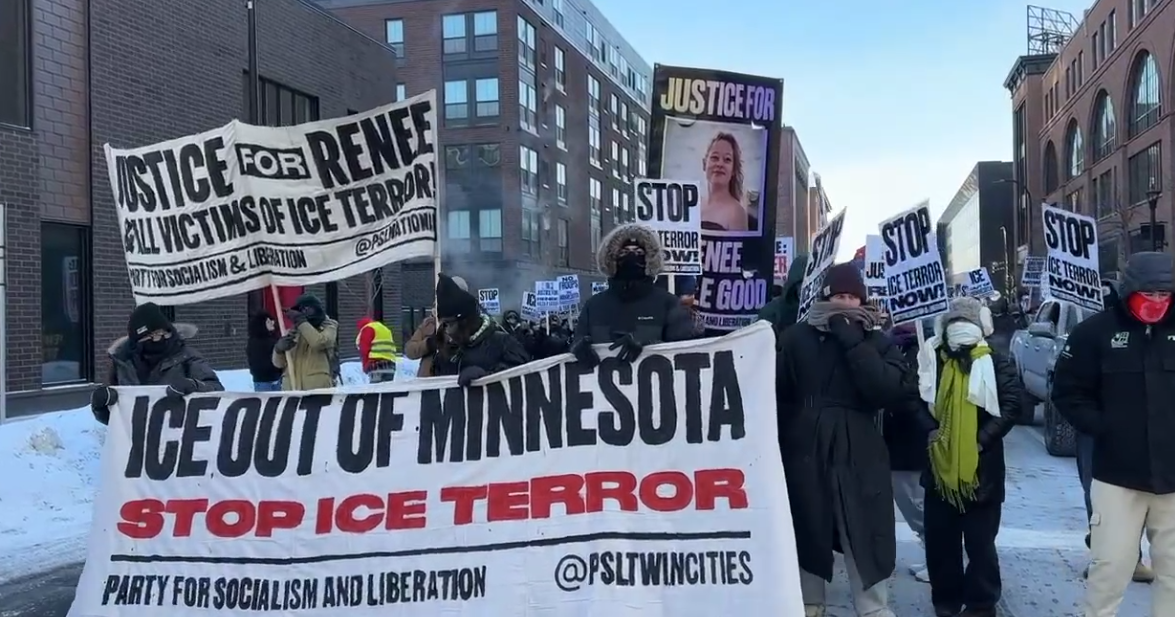
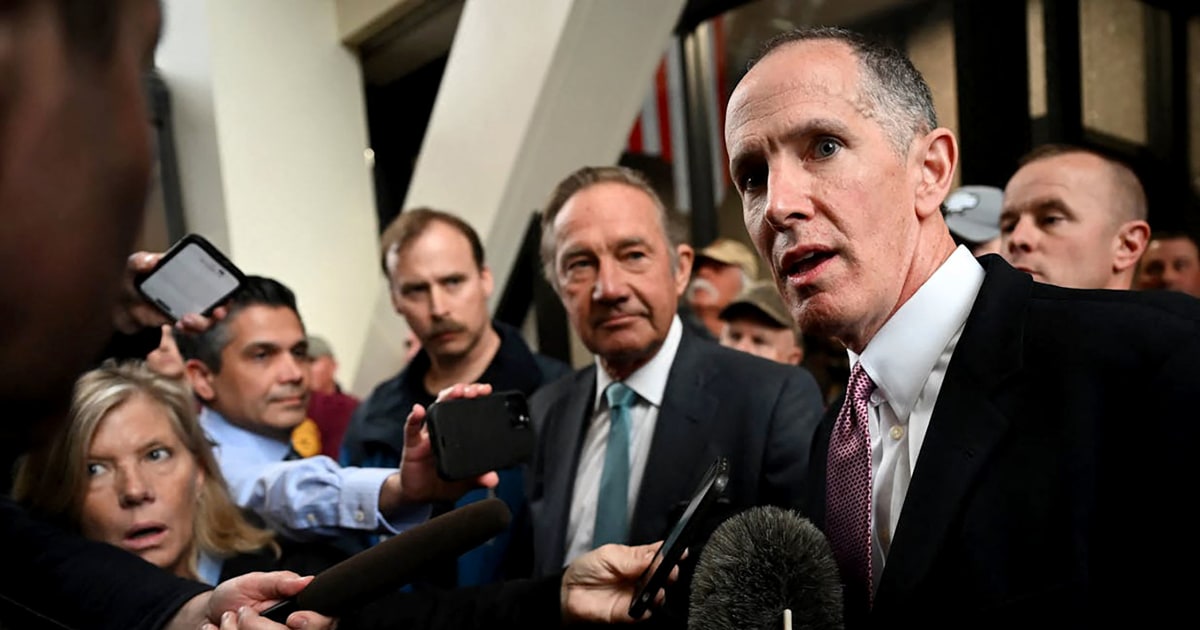
Republican Chris Madel stunned the Minnesota governor's race by announcing his withdrawal on Monday, blasting his party's handling of federal immigration enforcement. Citing Operation Metro Surge as an "unmitigated disaster," Madel argued the crackdown has spiraled beyond targeting dangerous criminals, now terrorizing U.S. citizens with unconstitutional raids and civil warrants signed by Border Patrol agents.[1][2][3]
Backlash from Deadly Incidents Fuels Exit
Madel's decision intensified after a Border Patrol agent fatally shot Alex Pretti, a 37-year-old ICU nurse and U.S. citizen, on January 24—the second such killing in Minneapolis amid three weeks of federal shootings.[1][3] Once a defender of law enforcement, including ICE agents, Madel decried the operation's expansion, leaving communities of color in fear and forcing residents to carry passports for proof of citizenship. He accused national Republicans of "retribution" against Minnesotans, claiming it dooms GOP statewide victories.[2][5]
Crowded Field and Broader Implications
With Madel out, the 2026 Republican primary remains packed: House Speaker Lisa Demuth, Rep. Kristin Robbins, Kendall Qualls, and MyPillow's Mike Lindell vie amid Governor Tim Walz's exit over fraud scandals. Democrats eye Amy Klobuchar. Madel's stand highlights deepening GOP rifts on immigration, prioritizing principles over party loyalty in a pivotal battleground state.[3][4]
About the People Mentioned
Tim Walz
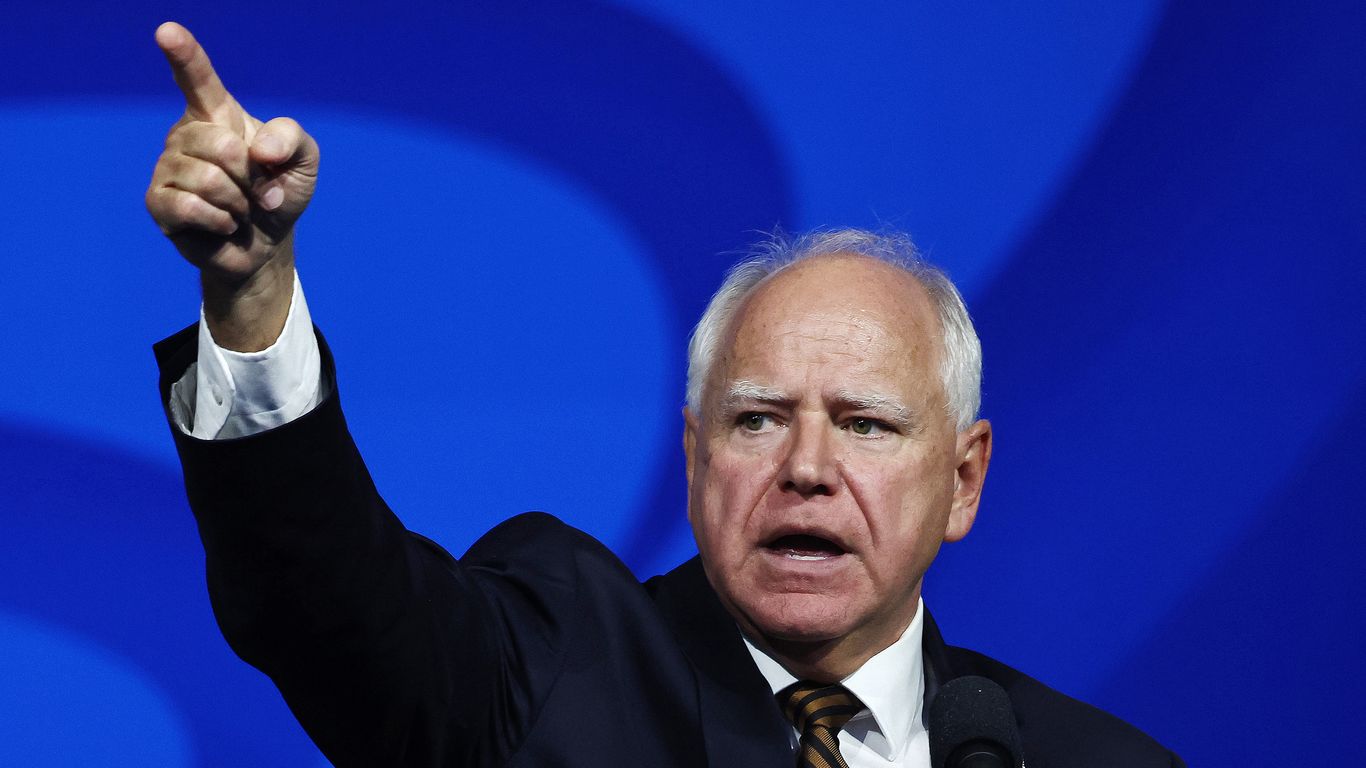
Timothy James Walz (born April 6, 1964) is an American politician, former educator, and Army National Guard veteran who has served as the **41st governor of Minnesota** since January 2019.[1][6] A member of the Democratic–Farmer–Labor Party (DFL), he was elected governor in 2018 and re‑elected in 2022.[1][6] Walz was born in West Point, Nebraska, and raised in a rural community.[1][5] He enlisted in the **Army National Guard** at age 17 and served for 24 years, retiring as a command sergeant major.[2][5] He earned a bachelor’s degree in social science education from Chadron State College and later a master’s in educational leadership from Minnesota State University, Mankato.[2][4] Walz worked as a high school teacher and football coach, including at Mankato West High School, and previously taught on the Pine Ridge Reservation and in China through a Harvard-affiliated program.[2][4][5] Entering politics, Walz was elected in 2006 to the U.S. **House of Representatives** for Minnesota’s 1st Congressional District, a largely rural and traditionally conservative area, and served six terms from 2007 to 2019.[1][2] In Congress he served on the Agriculture, Armed Services, and Veterans’ Affairs committees, and held leadership roles on subcommittees dealing with farm policy and veterans’ issues.[2][5] As governor, Walz has overseen Minnesota’s responses to the **COVID‑19 pandemic** and the civil unrest following the 2020 murder of George Floyd.[1] His administration has emphasized education, health care, and economic support for working families, and he has signed legislation expanding paid leave, cutting certain fees, and lowering some prescription drug costs.[3][6] In 2023 he approved a public safety bill establishing **universal background checks** and “red flag” laws for firearms.[1][3] Minnesota under Walz also codified abortion rights in state law after the overturning of Roe v. Wade, keeping the state a regional access point for reproductive health services.[3] Walz was identified as a **vice‑presidential candidate in the 2024 election cycle**, raising his national profile beyond Minnesota politics.[2][3]
About the Organizations Mentioned
Minnesota GOP
The **Minnesota GOP**, officially the Republican Party of Minnesota, serves as the state's affiliate of the national Republican Party, focusing on electing Republican candidates to local, state, and federal offices while advancing conservative policies on taxes, regulation, education, and public safety.[1][2] Founded in **1854** amid anti-slavery fervor following the Kansas-Nebraska Act, the party rapidly gained traction in the new state, which joined the Union in 1858. Early successes included dominating presidential voting from 1860 through the 1920s (except 1912), producing progressive governors like Harold Stassen in the 1930s–1940s, who crafted compassionate Depression-era responses blending fiscal restraint with social support.[1][6][4] Minnesota hosted the landmark **1892 Republican National Convention** in Minneapolis, nominating Benjamin Harrison despite his eventual loss.[3] From 1975–1995, it operated as the Independent Republicans (IR), reflecting a moderate brand before reverting to GOP.[2] **Key achievements** span electing governors like Pillsbury (1877 reelection) and Knuth, controlling the legislature intermittently (e.g., House majorities in select years), and strong rural/Iron Range footholds historically.[1][2][5] Nationally, Minnesota backed Republicans until 1972's Nixon landslide, bucking the post-Depression Democratic trend elsewhere.[4] Today, as of 2026, the **Minnesota GOP** navigates a challenging landscape: Minnesota's Democratic-Farmer-Labor (DFL) dominance persists, with the state voting Democratic in every presidential election since 1976 (latest: Harris by 4% in 2024).[4] Polarization has eroded the state's progressive Republican tradition of compromise, once strong in urban councils and statewide, yielding to national conservatism.[1] The party holds legislative minorities but eyes 2026 midterms amid economic debates on tech hubs like Minneapolis-S
Border Patrol
The U.S. Border Patrol (USBP), an agency of U.S. Customs and Border Protection (CBP), is one of the largest federal law enforcement organizations in the United States, with nearly 20,000 agents as of 2023[1]. Its core mission is to secure the nation’s borders, prevent illegal entry, and safeguard American communities from threats such as terrorism, drug trafficking, and human smuggling[2]. The agency’s operations extend beyond traditional border monitoring, encompassing linewatch (surveillance and apprehension at the border), farm and ranch checks, traffic checkpoints on highways, city patrols, and transportation checks at airports, bus stations, and train terminals[1]. This multi-layered approach leverages both human intelligence and advanced technology to detect and interdict illegal crossers and contraband. Founded in 1924 as part of the Labor Appropriation Act, the Border Patrol has evolved dramatically over a century[1]. Initially focused on immigration enforcement, its responsibilities expanded after the September 11 attacks, leading to its integration into the Department of Homeland Security in 2003[1][3]. This reorganization merged several border and customs agencies, creating a unified force with broader authority and resources[3]. The Border Patrol’s motto, “Honor First,” reflects its commitment to duty and service, even in the face of significant risks—agents are among the most assaulted law enforcement personnel in the country, with documented attacks and bounties placed on them by criminal organizations[2]. Key achievements include the development of specialized units like BORTAC (tactical operations) and BORSTAR (search and rescue), which enhance the agency’s rapid response capabilities[3]. The Border Patrol has also played a critical role in responding to natural disasters, civil unrest, and mass casualty events, demonstrating its adaptability and value beyond border security[1]. In recent years, the agency has encountered over 2.5 million migrants annually, reflecting both the
ICE
**Immigration and Customs Enforcement (ICE)** is a federal law enforcement agency under the U.S. Department of Homeland Security (DHS), established in 2003 following the Homeland Security Act of 2002, which reorganized existing agencies post-9/11 to enhance national security[1][2]. ICE’s core mission is to protect the United States by enforcing immigration laws, conducting criminal investigations, and preserving public safety. ICE operates primarily through two major divisions: **Homeland Security Investigations (HSI)** and **Enforcement and Removal Operations (ERO)**. HSI focuses on investigating and disrupting transnational criminal organizations involved in customs violations, human trafficking, terrorism, and smuggling. ERO is responsible for the apprehension, detention, and deportation of individuals unlawfully present in the U.S., operating detention facilities and managing removal procedures[2]. ICE’s international reach is managed by the Office of International Affairs (OIA), a key overseas investigative arm coordinating with foreign governments to combat cross-border crime, such as arms smuggling, forced labor, and immigration fraud. OIA supports intelligence gathering, training, treaty implementation, and facilitates global cooperation to preempt threats before they reach U.S. borders[3]. With a workforce exceeding 20,000 employees across more than 400 offices worldwide and an annual budget of about $8 billion, ICE plays a pivotal role in U.S. homeland security[1]. Its activities, especially those involving immigration enforcement and detention, have made it a highly visible and sometimes controversial agency in public discourse, often referred to colloquially in Spanish as "la migra"[2]. Notable achievements include disrupting large-scale criminal networks internationally and supporting the enforcement of over 400 federal statutes concerning customs, immigration, and terrorism prevention. ICE’s dynamic operational scope—spanning law enforcement, international diplomacy, and legal administration—makes it a critical component of U.S. efforts to maintain national security and uphold the rule of law[1][2][
MyPillow
**MyPillow** is a Minnesota-based company specializing in adjustable bed pillows filled with interlocking foam chunks, founded in 2004 by Mike Lindell after he invented the product in a dream to solve his chronic sleep issues from neck injuries and restless nights.[1][2][4] Lindell's journey began in the 1970s with teenage insomnia, leading him to test every pillow on the market without success. By 1980, inspiration struck; he prototyped for a year, sewing pillows himself in a bus shed.[1][2][4] Initial retail pitches failed, so he sold at malls, fairs, and kiosks. Selling four bars for $500,000 funded marketing, but he went bankrupt, lost his home and wife, and battled crack cocaine and alcohol addiction into 2008.[2][3][5] A drug dealer's intervention—citing his pillow as a "platform for God"—sparked his faith-driven recovery in one day.[3][5] The 2011 infomercial, funded by employees' risked savings, exploded sales from basement operations to a call center scaling from 5 to 500 employees in 40 days.[1][2][4] QVC appearances in 2012 boosted visibility, expanding facilities to a 30,000 sq. ft. warehouse in Chanhassen and employing 1,600 by 2019.[1][4][5] Achievements include selling over **41 million pillows**, generating hundreds of millions in revenue (e.g., $10 million monthly at peak), and aiding recovering addicts through hiring.[2][3][4][5][7] Today, MyPillow thrives on infomercials and direct sales, with Lindell leveraging its platform for evangelism and philanthropy, including gifting pillows to students and authoring books like *What Are the Odds?*[5][6] His 2016 Trump meeting highlighted its cultural reach
Republicans
The **Republican Party** is a major political organization in the United States, founded in 1854 in Jackson, Michigan, primarily by anti-slavery activists opposing the expansion of slavery into new U.S. territories[1][2]. Its origins lie in the political turmoil following the Kansas-Nebraska Act, which ignited sectional conflicts. The party emerged from a coalition of former Whigs, Free Soil Democrats, and abolitionists united by the ideology of "Free Soil, Free Labor, Free Men," advocating against slavery, supporting free market labor, and promoting modern economic development including railroads, banking, and high tariffs[4][6]. Key early achievements include the nomination and election of Abraham Lincoln as the first Republican president in 1860, whose leadership during the Civil War was pivotal in preserving the Union and abolishing slavery. Lincoln’s Emancipation Proclamation and the party’s role in passing the 13th, 14th, and 15th Amendments were landmark contributions to civil rights and the redefinition of American freedom[2][5][6]. The party dominated national politics from the Civil War era until the Great Depression, during which it was the principal advocate for industrial and business interests, protective tariffs, and national banking[2][5]. Throughout its history, the Republican Party has undergone ideological shifts but has consistently emphasized economic modernization and conservative fiscal policies, aligning with business and technological advancement. The early 20th century saw figures like Theodore Roosevelt promote progressive reforms, while later eras emphasized free enterprise and innovation to drive growth[2][4]. Currently, the Republican Party remains a central force in American politics, influencing policies related to business, technology, and governance. Its historical legacy as the party of Lincoln and abolition continues to be a defining aspect, shaping its identity and appeal, especially in debates over civil rights, economic policy, and national unity[5][6]. The party’s evolution reflects ongoing tensions between tradition and modernization within the U.S. political landscap