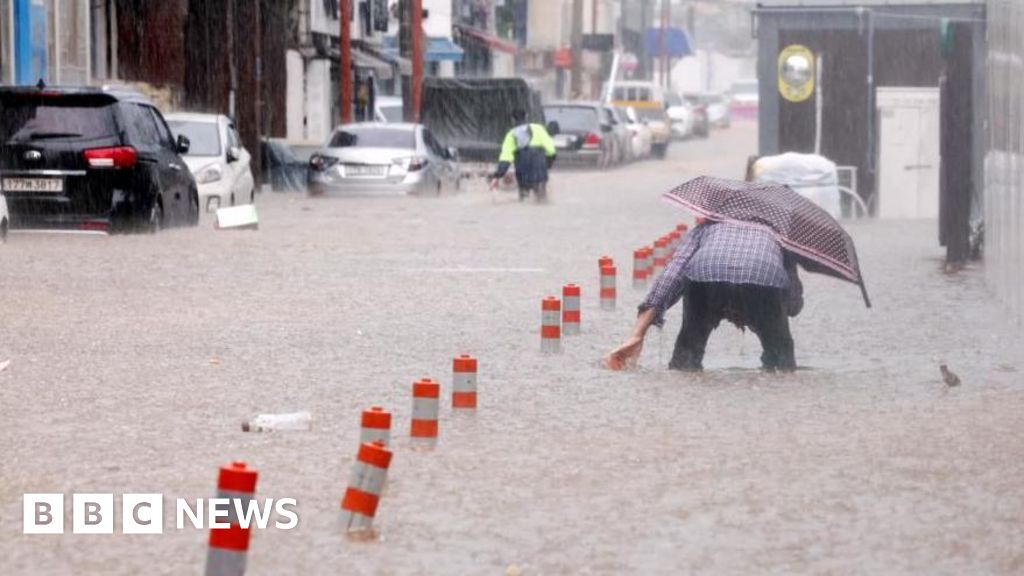
Record Rainfall Causes Chaos in South Korea
#rainfall #south_korea #extreme_weather
Learn about the impact of extreme weather and the causes of the heavy rain in South Korea.
The **Korean Peninsula Energy Development Organization (KEDO)** was established on March 9, 1995, as an international consortium primarily aimed at implementing the 1994 U.S.-DPRK Agreed Framework. Its core mission was to provide energy assistance to North Korea by constructing light-water nuclear reactors (LWRs) and supplying heavy fuel oil to meet interim energy needs, in exchange for North Korea freezing and ultimately dismantling its nuclear weapons program[1][3][5]. KEDO’s founding members included the United States, Japan, and the Republic of Korea, with additional contributions from countries like Argentina, Australia, Canada, the European Union, and others. The organization was designed to promote peace and stability on the Korean Peninsula by addressing the nuclear threat, thus contributing to regional security and global nonproliferation efforts[1][3][4][5]. Key achievements of KEDO include delivering over one million tons of heavy fuel oil to North Korea and initiating a multi-billion-dollar project to build two light-water reactors near the Yongbyon nuclear complex, which were intended to replace North Korea’s graphite-moderated reactors—facilities associated with nuclear weapons development[3][5][7]. This effort was seen as a significant diplomatic and technical initiative to curb nuclear proliferation while fostering cooperation among multiple nations. Despite these efforts, KEDO faced significant challenges. In 2002, revelations about North Korea’s undisclosed uranium enrichment activities strained the Agreed Framework and KEDO’s mission, leading to delays and eventual suspension of the reactor project[5]. The organization’s work highlighted both the complexities of energy diplomacy and the difficulties of verifying compliance in highly sensitive security environments. KEDO remains a notable example of international collaboration intersecting business, technology, and diplomacy, underscoring the role of energy infrastructure projects in geopolitical conflict resolution and nonproliferation regimes on the Korean Peninsula[3][6][8].
#rainfall #south_korea #extreme_weather
Learn about the impact of extreme weather and the causes of the heavy rain in South Korea.