Taiwanese Recall Election Could Shift Balance of Power
#taiwan #politics #china-friendly #recall election
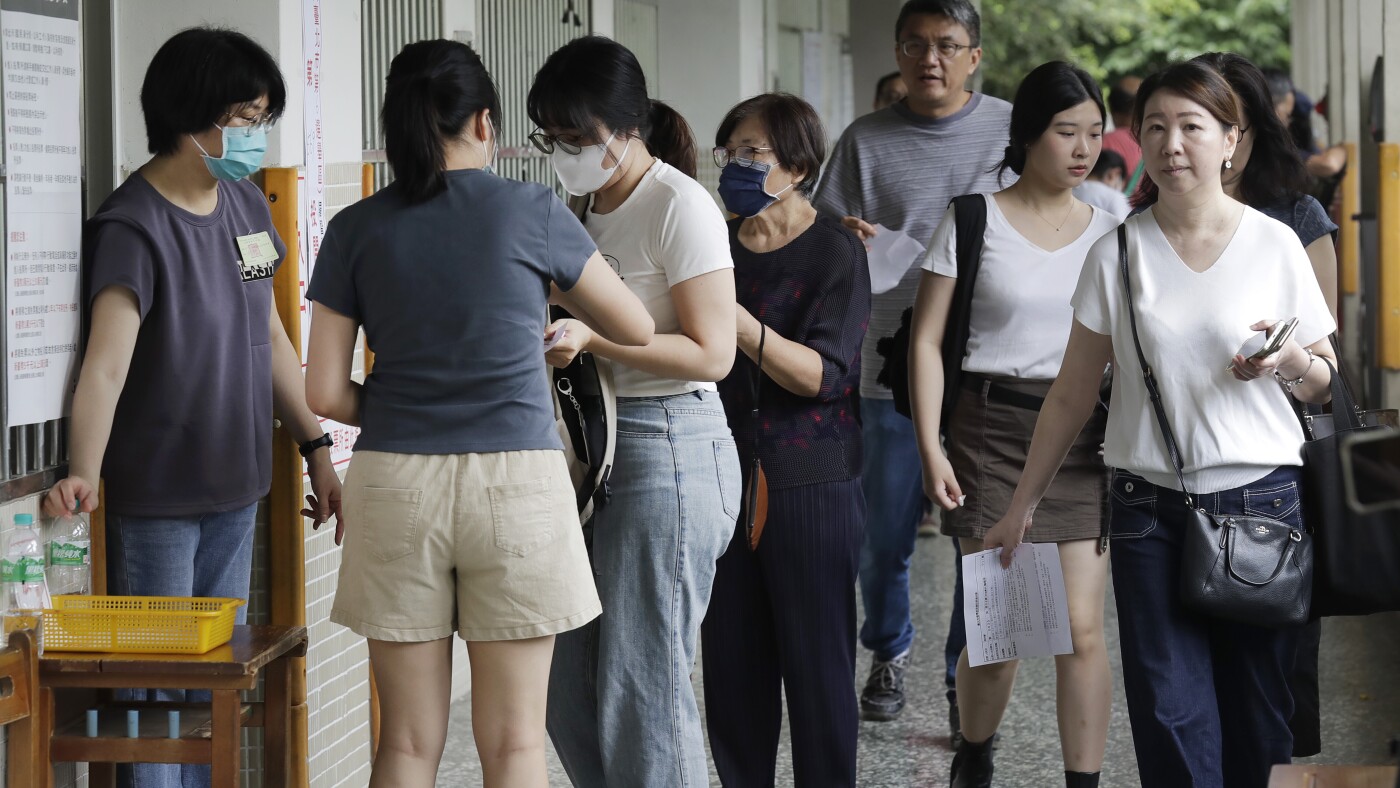
Taiwanese voters head to the polls to decide on removing China-friendly lawmakers and potentially strengthen President Tsai Ing-wen's position.
The **Kuomintang (KMT)**, also known as the Chinese Nationalist Party, is a major political party in Taiwan with a rich history dating back to its origins in 1894. Founded by Dr. Sun Yat-sen during a period of Chinese revolutionary activity, the KMT emerged from the merger of several revolutionary groups aiming to modernize China and overthrow imperial rule. It officially formed as the Kuomintang in 1912 and played a critical role in shaping modern Chinese and Taiwanese politics[2][4]. Historically, the KMT led the Republic of China (ROC) government and was the ruling party in mainland China before retreating to Taiwan after losing the Chinese Civil War to the Chinese Communist Party. In Taiwan, the KMT ruled under a one-party authoritarian system until political reforms in the late 20th century introduced democratic processes. The party implemented significant land reforms, economic development policies, and modernization efforts, contributing to the "Taiwan economic miracle"[1]. It has since transitioned into a democratic political party, currently holding the largest single party presence in Taiwan's Legislative Yuan as of 2025[1]. The KMT’s ideology is rooted in Sun Yat-sen’s "Three Principles of the People," emphasizing nationalism, democracy, and the welfare of the people. The party has historically positioned itself as a proponent of Chinese nationalism and seeks peaceful cross-Strait relations based on the 1992 Consensus, advocating dialogue with mainland China[2][5]. In recent developments, the KMT held its 2025 chairmanship election where reform-minded Cheng Li-wun won the leadership, becoming only the third woman to lead the party. Her victory symbolizes a call for renewal and transformation within the party, amidst ongoing cross-Strait tensions and complex domestic political challenges. Cheng's leadership is expected to steer the party through critical upcoming elections in 2026 and 2028, focusing on uniting the party an
#taiwan #politics #china-friendly #recall election
Taiwanese voters head to the polls to decide on removing China-friendly lawmakers and potentially strengthen President Tsai Ing-wen's position.