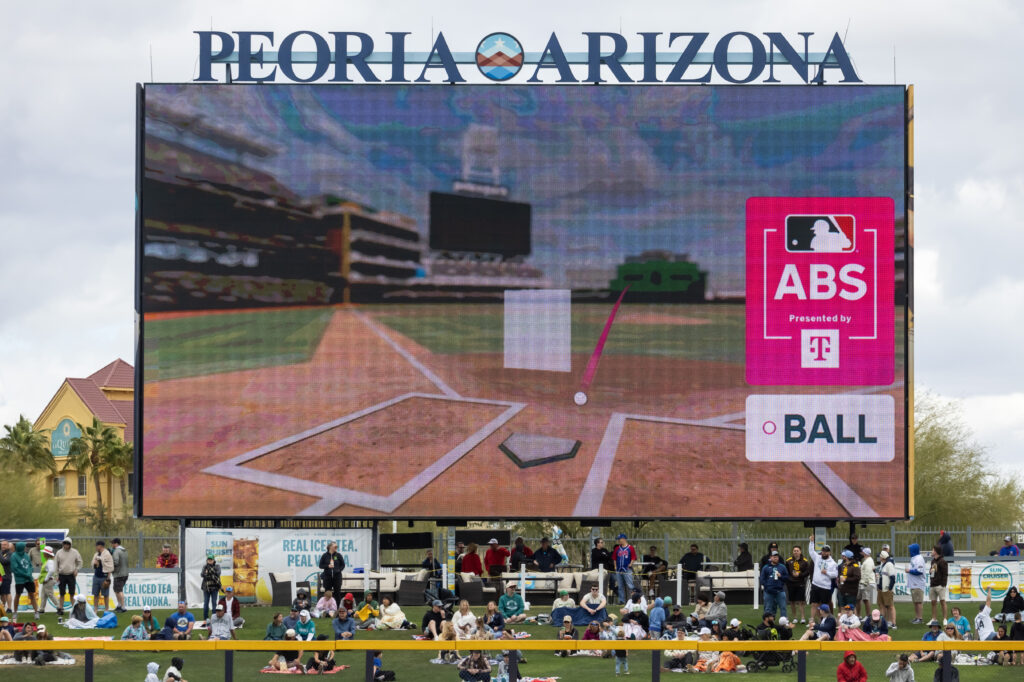
MLB to Adopt Automated Ball-Strike System for 2026 Season
The MLB has approved the implementation of an Automated Ball-Strike system to improve accuracy and consistency of umpire calls.
The **MLB Competition Committee** is a governing body within Major League Baseball (MLB) responsible for reviewing, proposing, and approving rule changes intended to improve the sport's integrity, pace, and overall competitiveness. It consists of six club representatives, four players from the MLB Players Association (MLBPA), and one umpire representative, with team owners holding the majority of voting power on decisions[1][2]. Formed as part of MLB's ongoing efforts to modernize and refine the game, the committee plays a critical role in balancing tradition with innovation. It regularly evaluates rule proposals based on input from team executives, players, umpires, and fans. Notably, the committee recently approved reducing the pitch clock from 20 to 18 seconds when runners are on base to accelerate gameplay starting in the 2024 season. It also approved widening the base path along the first baseline to enhance player safety and base-running dynamics[1]. In 2025, the committee voted to introduce the Automated Ball-Strike (ABS) Challenge System, a technology-assisted umpiring tool, for full MLB use starting in 2026. This system, tested extensively in minor leagues, aims to improve accuracy and fairness in calling balls and strikes while preserving the human element of umpiring through a challenge mechanism rather than fully automated calls. The committee’s adoption of ABS represents a significant technological advancement in baseball officiating, reflecting MLB's embrace of innovation to enhance the fan and player experience[2][6]. The committee’s composition, including influential MLB executives such as Seattle’s John Stanton and Boston’s Tom Werner, and prominent players like Corbin Burnes and Zac Gallen, ensures a diverse perspective in decision-making[2]. However, some player representatives have expressed dissent, notably opposing certain pace-of-play rules like defensive shift restrictions and pitch timers, emphasizing the negotiation challenges within the committee[3]. Overall, the MLB Competition Committee stands as a vital institution at the intersection of baseball tradition, technology, and governanc
The MLB has approved the implementation of an Automated Ball-Strike system to improve accuracy and consistency of umpire calls.