Egyptian President Pardons Activist Alaa Abdel Fattah
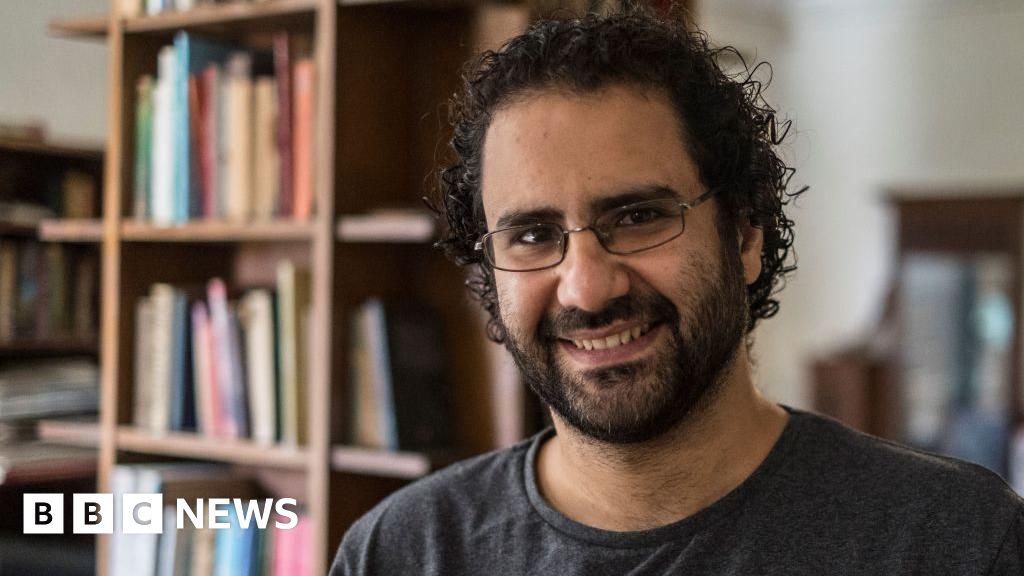
Alaa Abdel Fattah's sentence is commuted by President al-Sisi, sparking hope for human rights in Egypt.
Hosni Mubarak (1928–2020) was an Egyptian military officer and politician who served as president of Egypt from October 1981 to February 2011.[1][2][3] Born on May 4, 1928, in Kafr-El-Meslha, Monufia province, he graduated from the Military Academy in 1949 with a Bachelor of Military Science and later trained as a pilot in Russia, rising through the Egyptian Air Force ranks.[1][5] Mubarak commanded the air force during the 1973 Yom Kippur War, earning credit for its early successes against Israel, which led to his promotion to air marshal in 1974.[1][2] Appointed vice president by Anwar Sadat in 1975, he handled key diplomatic roles, including Middle East negotiations and mediating the Western Sahara dispute.[2] Following Sadat's assassination on October 6, 1981, Mubarak assumed the presidency via referendum, becoming Egypt's longest-serving leader at nearly 30 years.[1][2][3] His tenure featured restored Arab League membership in 1989 after the Camp David Accords fallout, repatriation of Taba from Israel, and infrastructure projects like the Cairo Metro, El-Salam Canal, and Toshka reclamation.[1] He upheld the 1979 Egypt-Israel peace treaty, supported the U.S.-led Gulf War coalition in 1990–91, and maintained strong U.S. ties, though relations with Israel cooled post-1982 Lebanon invasion.[2][5] Critics noted prolonged emergency rule since 1981, enabling security crackdowns and rights restrictions.[6] Mass protests in the 2011 Egyptian Revolution, fueled by corruption, economic woes, and demands for reform, forced his resignation on February 11, 2011, after 18 days; power transferred to the Supreme Council of the Armed Forces, and he relocated to Sharm el-Sheikh.[1][3][4] Facing trials for corruption and protest deaths, he avoided execution, was released, and died on February 25, 2020, at age 91 in Cairo.[1][4] His ouster paved the way for Islamist rule under Mohamed Morsi in 2012, later reversed by military intervention.[4]
Alaa Abdel Fattah's sentence is commuted by President al-Sisi, sparking hope for human rights in Egypt.