Egyptian President Pardons Activist Alaa Abdel Fattah
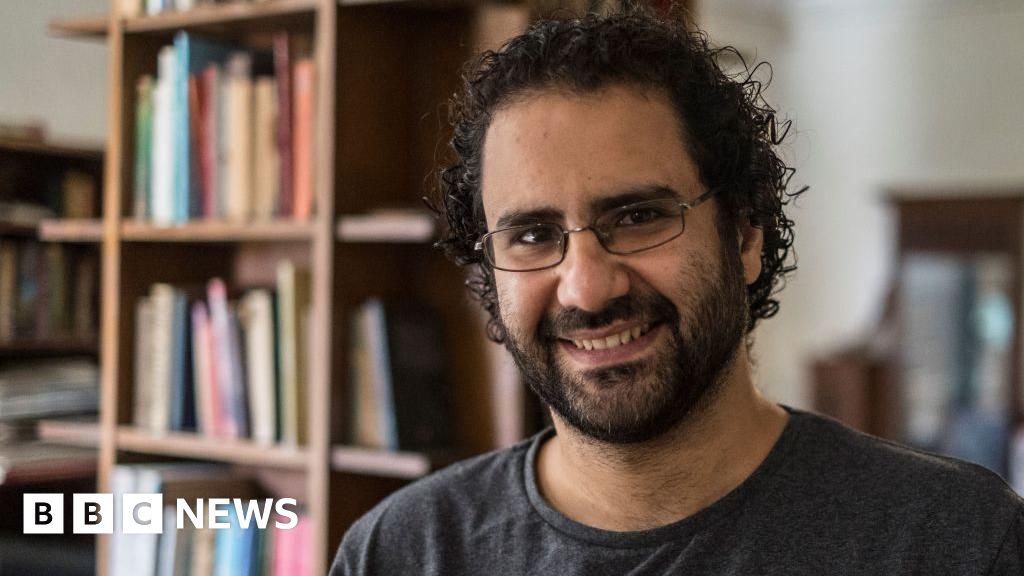
Alaa Abdel Fattah: Egypt's president pardons prominent activist
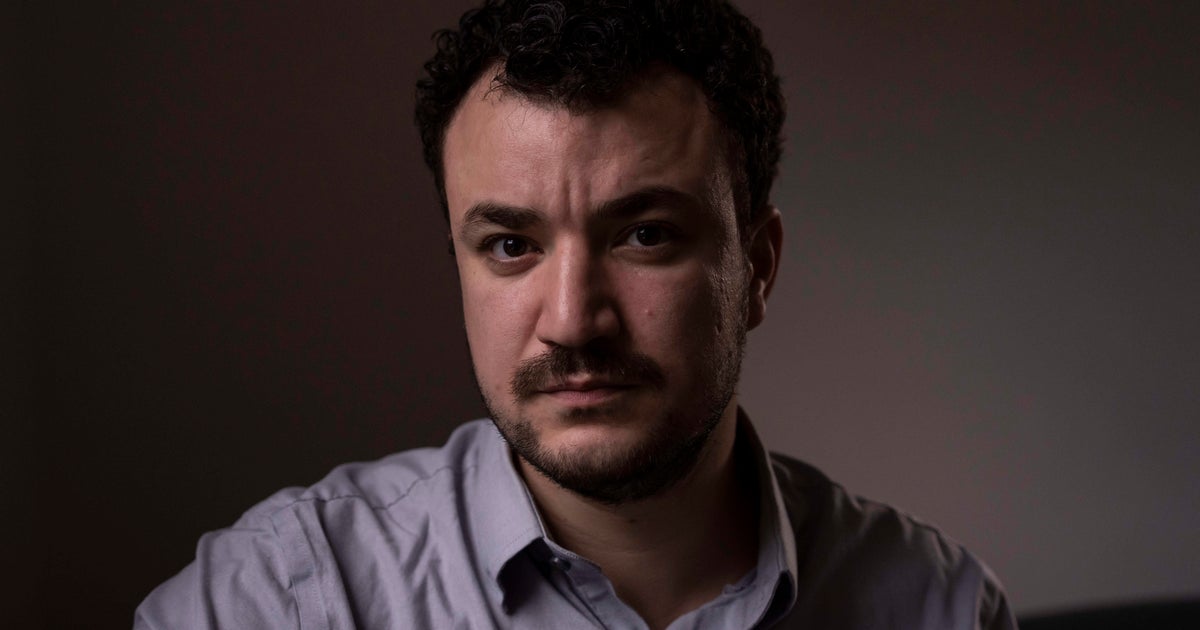
British-Egyptian activist Alaa Abdel Fattah is one of six people whose sentences were commuted by President Abdul Fattah al-Sisi, according to state media. This comes as a surprise to many, as Fattah was considered a prominent figure in the 2011 uprising against former President Hosni Mubarak and has been a vocal critic of al-Sisi's government.
The Case Against Fattah
Fattah was sentenced to 15 years in prison in 2015 for violating a protest law and assaulting a police officer. The charges were widely believed to be politically motivated, and his imprisonment sparked international outcry and calls for his release. Fattah's case highlights the ongoing crackdown on dissent and human rights in Egypt, where hundreds of activists and journalists have been imprisoned in recent years.
Hope for Change
The president's decision to commute Fattah's sentence has been seen as a glimmer of hope for human rights in Egypt. However, many are calling for true reform and the release of other political prisoners. The move has also been seen as a strategic move by al-Sisi, who is seeking re-election and may be trying to improve his image in the international community. Only time will tell if this act of clemency will lead to real
About the People Mentioned
Alaa Abdel Fattah
Alaa Abdel Fattah is an Egyptian-British activist, blogger, writer, and software developer whose life and work have become emblematic of Egypt’s struggle for democracy and free expression. Born in 1981, he is the son of the late human rights lawyer Ahmed Seif al-Din and academic Laila Soueif, and comes from a family deeply involved in activism and intellectual life[2]. He first gained prominence in the mid-2000s as a co-founder (with his wife, Manal Hassan) of pioneering Arabic blog aggregators Manalaa and Omraneya, which became platforms for free speech and political discourse in a tightly controlled media environment[1]. His work earned him the Special Reporters Without Borders Award in 2005[1]. Abdel Fattah’s activism intensified in the lead-up to and during the 2011 Egyptian Revolution, where he became a leading voice among the youth movement, both online and on the ground in Tahrir Square[1][4]. His name became closely associated with the uprising, and he was repeatedly targeted by authorities for his outspoken criticism of successive governments—first under Hosni Mubarak, then the military council, the Muslim Brotherhood’s Mohamed Morsi, and later under President Abdel Fattah el-Sisi[2][3]. He was arrested multiple times, often on charges widely criticized by international human rights groups as politically motivated, including “spreading false news” and “belonging to a terrorist group”[2][6]. Between 2014 and 2025, Abdel Fattah spent most of his time in prison, with his most recent detention beginning in September 2019 after sharing a Facebook post about torture in Egyptian prisons[2][6]. In December 2021, he was sentenced to five years in prison after a trial that UN experts described as unfair[6]. Throughout his imprisonment, he became a symbol of resilience, enduring harsh conditions—including solitary confinement and a hunger strike—while his case drew widespread international attention and advocacy from human rights organizations[3][5]. His sister, Sanaa Seif, also an activist, was detained in 2020 after protesting outside the prison where he was held[5]. Abdel Fattah was finally released on September 22, 2025, after nearly six years in prison, marking a significant moment for human rights advocacy in Egypt[6]. His release has been welcomed globally as a milestone, though concerns persist about the broader context of political repression in the country[6]. Throughout his career, Abdel Fattah has remained a central figure in Egypt’s pro-democracy movement, celebrated for his unwavering commitment to free speech, justice, and the rights of political prisoners[1][2][6].
Hosni Mubarak
Hosni Mubarak (1928–2020) was an Egyptian military officer and politician who served as president of Egypt from October 1981 to February 2011.[1][2][3] Born on May 4, 1928, in Kafr-El-Meslha, Monufia province, he graduated from the Military Academy in 1949 with a Bachelor of Military Science and later trained as a pilot in Russia, rising through the Egyptian Air Force ranks.[1][5] Mubarak commanded the air force during the 1973 Yom Kippur War, earning credit for its early successes against Israel, which led to his promotion to air marshal in 1974.[1][2] Appointed vice president by Anwar Sadat in 1975, he handled key diplomatic roles, including Middle East negotiations and mediating the Western Sahara dispute.[2] Following Sadat's assassination on October 6, 1981, Mubarak assumed the presidency via referendum, becoming Egypt's longest-serving leader at nearly 30 years.[1][2][3] His tenure featured restored Arab League membership in 1989 after the Camp David Accords fallout, repatriation of Taba from Israel, and infrastructure projects like the Cairo Metro, El-Salam Canal, and Toshka reclamation.[1] He upheld the 1979 Egypt-Israel peace treaty, supported the U.S.-led Gulf War coalition in 1990–91, and maintained strong U.S. ties, though relations with Israel cooled post-1982 Lebanon invasion.[2][5] Critics noted prolonged emergency rule since 1981, enabling security crackdowns and rights restrictions.[6] Mass protests in the 2011 Egyptian Revolution, fueled by corruption, economic woes, and demands for reform, forced his resignation on February 11, 2011, after 18 days; power transferred to the Supreme Council of the Armed Forces, and he relocated to Sharm el-Sheikh.[1][3][4] Facing trials for corruption and protest deaths, he avoided execution, was released, and died on February 25, 2020, at age 91 in Cairo.[1][4] His ouster paved the way for Islamist rule under Mohamed Morsi in 2012, later reversed by military intervention.[4]
Abdul Fattah al-Sisi
Abdel Fattah al-Sisi, born November 19, 1954, in Cairo's El-Gamaleya district, is Egypt's president, a former military officer who rose through the ranks to lead the nation.[1][3][4] He graduated from the Egyptian Military Academy in 1977, earning advanced degrees from Egypt's Command and Staff College (1987), the UK Joint Services Command and Staff College (1992), Nasser Higher Military Academy (2003), and the US Army War College (2006).[1][4] His military career included commands of infantry battalions and divisions, roles as military attaché in Saudi Arabia, head of military intelligence, and commander of the Northern Military Zone.[2][4] Sisi emerged prominently after the 2011 uprising ousted President Hosni Mubarak, serving as the youngest member of the Supreme Council of the Armed Forces (SCAF).[1] Appointed defense minister and armed forces commander by President Mohammed Morsi in 2012 amid tensions, Sisi issued an ultimatum to Morsi in July 2013 following mass protests, leading the military to depose him on July 3.[1][2] Sisi then served as deputy prime minister before winning the presidency in May 2014 with 96.9% of the vote, securing re-election in 2018.[1] As president, Sisi has prioritized stability and economic reform, overseeing the Suez Canal expansion (completed 2015) and construction of the New Administrative Capital east of Cairo to alleviate urban pressures.[1] His administration pursued infrastructure investments and financial reforms, boosting approval ratings despite slow improvements in living standards.[1] A 2019 constitutional amendment extended presidential terms to six years, allowing potential tenure until 2030.[1] Sisi chaired the African Union in 2019-2020 and holds numerous military decorations.[4] Married to Entissar Ahmed Amer, he has four children: Moustafa, Mahmoud, Hassan, and Aya.[3][4] Sisi remains Egypt's current leader as of 2026, emphasizing national service and military loyalty.[2][4] (298 words)