Former French President Sarkozy Sentenced to Five Years: A Landmark Case for Accountability
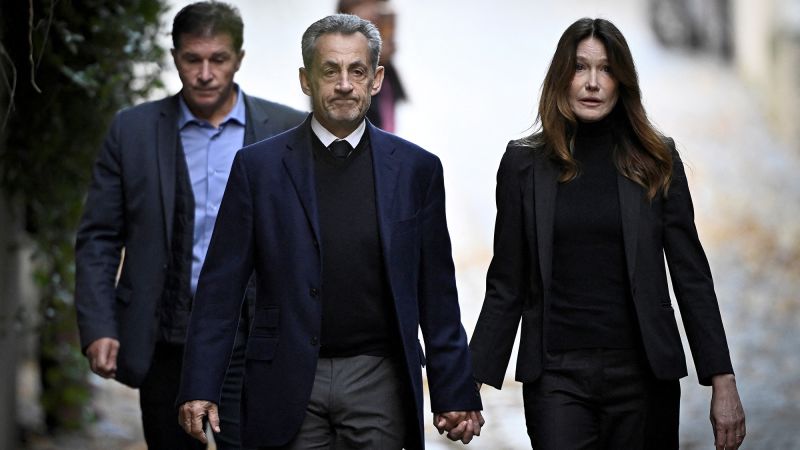
Former French president Nicolas Sarkozy receives a five-year sentence for criminal conspiracy, signaling accountability at the highest level.
Philippe Pétain (1856–1951) was a French military officer and statesman renowned as the "Hero of Verdun" for his World War I leadership but later infamous as head of the collaborationist Vichy regime during World War II.[1][3][5] Born on April 24, 1856, in Cauchy-à-la-Tour, Pas-de-Calais, to a farming family, Pétain rose through the ranks during World War I. He commanded the Second Army at the Battle of Verdun in 1916, organizing a rotational troop system via the "Voie Sacrée" supply route and stabilizing defenses against German assaults, which earned him national acclaim.[1][2][3][4] Promoted to commander-in-chief in 1917 after mutinies, he restored troop morale through improved conditions, limited offensives, and discipline, minimizing executions while awaiting U.S. and tank support, contributing to Allied victory.[2][3][4] Postwar, Pétain became Marshal of France, led the Conseil Supérieur de la Guerre advocating defensive strategies like the Maginot Line, commanded in the 1925 Rif War, served as War Minister (1934–1940), and was ambassador to Spain in 1939.[1][4][5] In 1940, at age 84, after France's defeat, Pétain became vice-premier then head of state, signing an armistice with Nazi Germany on June 22 and establishing Vichy France with near-absolute powers. His regime collaborated with Germany, including anti-Jewish laws and meetings like Montoire with Hitler in 1940, though he resisted some German demands.[1][3][5][6] After Allied landings in North Africa, his ambiguous orders highlighted internal conflicts.[1] Liberated Paris in 1944 led to his transfer to Germany by the Nazis. Tried for treason in 1945, he received a death sentence commuted to life imprisonment on Île d’Yeu, where he died on July 23, 1951.[1][3] Pétain's legacy divides French history: celebrated for WWI valor, condemned for WWII collaboration, symbolizing duty's complexities.[3][5][8]
Former French president Nicolas Sarkozy receives a five-year sentence for criminal conspiracy, signaling accountability at the highest level.

