Apple Shakes Up Leadership as AI and Legal Chiefs Depart
#apple #leadership #artificial_intelligence #executive_turnover #technology
Apple Faces Unprecedented Executive Turnover
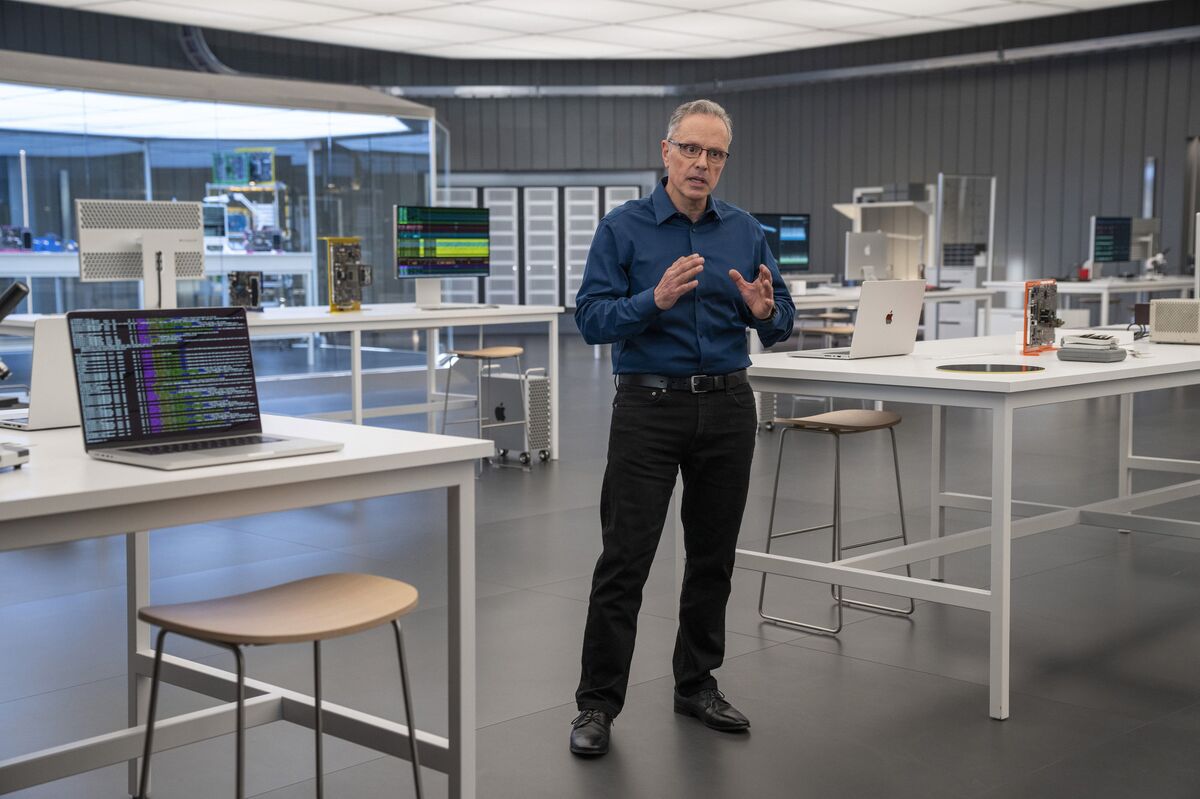
Apple Inc., known for its executive stability, is experiencing a significant shake-up rarely seen in recent decades. Key figures including the heads of artificial intelligence, interface design, general counsel, and government affairs have all announced departures, signaling a major transition within the company’s leadership. This wave of exits is impacting some of the highest levels of Apple's management, all reporting directly to CEO Tim Cook.
The Future of Apple’s Chip and AI Leadership
Among those at risk of leaving is Johny Srouji, Apple's longtime head of chip development, whose departure could impact Apple's hardware innovation. Meanwhile, John Giannandrea, senior vice president of Machine Learning and AI, is set to retire by spring 2026 but will advise during the transition. Apple has already brought in AI expert Amar Subramanya from Microsoft to strengthen its AI division, emphasizing its commitment to advancing intelligent technologies.
Strategic Transitions and Leadership Renewal
Apple is also preparing for changes in legal and governmental affairs leadership, with Jennifer Newstead announced as the incoming general counsel starting March 2026. These transitions reflect a broader strategic renewal, as the company reshapes its executive team to continue driving innovation and upholding its core values in a competitive tech landscape.
About the People Mentioned
Tim Cook
Tim Cook, born November 1, 1960, in Mobile or Robertsdale, Alabama, is an American business executive and the chief executive officer (CEO) of Apple Inc. since August 2011, succeeding co-founder Steve Jobs.[1][3][5] He holds a bachelor's degree in industrial engineering from Auburn University (1982) and an MBA from Duke University's Fuqua School of Business.[3][7] Cook began his career at IBM (1982-1994), followed by roles at Intelligent Electronics and Compaq (1994-1997).[3][6][7] He joined Apple in March 1998 as senior vice president of worldwide operations during a period of financial distress, where he streamlined the supply chain, slashing inventory from 30 days to 6 days and enabling profitability.[1][2][4] Promoted to executive vice president of worldwide sales and operations in 2002, he became chief operating officer (COO) in 2005, overseeing global sales, supply chain, and the Macintosh division while serving as interim CEO during Jobs's medical leaves.[1][3][4][5] As CEO, Cook has driven Apple's expansion beyond hardware, launching the Apple Watch (2015), AirPods (2016), and services like Apple Music, Apple TV+, Apple Pay, and iCloud subscription bundles.[1][2][7] He spearheaded the 2014 Beats acquisition, emphasized privacy as a core strategy, advanced environmental goals including carbon neutrality and recycled materials, and introduced proprietary Apple silicon chips in 2020 for greater production control.[1][2] Under his leadership, Apple achieved unprecedented growth, becoming the world's first trillion-dollar company.[8] Cook serves on Apple's board of directors and is recognized for operational expertise, philanthropy, social justice advocacy, and environmental commitment.[3][4] His methodical style has sustained innovation while broadening markets in regions like China and India.[2][3]
Jennifer Newstead
Jennifer G. Newstead is a prominent American lawyer who most recently served as Chief Legal Officer at Meta (formerly Facebook), overseeing global legal matters and corporate governance from 2019 until late 2025.[1][2][4] In December 2025, she joined Apple as its new General Counsel, succeeding Kate Adams in a significant executive transition amid ongoing regulatory scrutiny in tech.[6][7] Newstead graduated magna cum laude from Harvard University in 1991 with an A.B. in Government and earned her J.D. from Yale Law School in 1994, where she was Managing Editor of the Yale Law Journal.[1][2][3] She clerked for U.S. Supreme Court Justice Stephen Breyer and Judge Laurence Silberman of the U.S. Court of Appeals for the D.C. Circuit, and later taught as an Adjunct Professor at Georgetown University Law Center.[1][2][4] Her career spans high-level government and private sector roles. From 2018 to 2019, she was Senate-confirmed Legal Adviser at the U.S. Department of State, managing domestic and international legal issues for U.S. foreign policy.[1][2][3] Earlier, she served as General Counsel of the White House Office of Management and Budget, Principal Deputy Assistant Attorney General at the Department of Justice—where she contributed to drafting the USA PATRIOT Act—and Associate White House Counsel.[1][2][3][5] She spent 12 years (2006-2018) as a partner at Davis Polk & Wardwell LLP, specializing in litigation, regulatory, and cross-border matters for tech, media, and financial clients.[1][2][3] Newstead's expertise in navigating complex global regulations positions her as a key figure in Big Tech leadership, particularly as Apple faces antitrust challenges and AI governance issues.[6][7] She currently serves on the National Constitution Center's Board of Trustees.[1]
About the Organizations Mentioned
Apple Inc.
## Overview Apple Inc. is a global technology leader renowned for its innovative hardware, software, and services. Headquartered in Cupertino, California, Apple designs, manufactures, and markets smartphones (iPhone), personal computers (Mac), tablets (iPad), smartwatches (Apple Watch), digital media players, and a suite of accessories and wearables[2]. The company also operates a vast ecosystem of services, including Apple Music, iCloud, Apple Pay, and the App Store, which collectively form a significant and growing portion of its revenue[3]. ## History and Key Achievements Apple was founded in 1976 by Steve Jobs and Steve Wozniak, quickly making history with the Apple II, one of the first mass-produced personal computers[2]. The company pioneered the graphical user interface (GUI) with the Macintosh in 1984, setting new standards for user experience. After a period of decline, Apple’s resurgence in the late 1990s and 2000s was marked by groundbreaking products like the iPod (2001), iPhone (2007), and iPad (2010), which redefined entire industries. Apple’s integration of hardware, software, and services created a seamless ecosystem that fostered customer loyalty and drove industry transformation[2]. Apple became the first publicly traded U.S. company to reach a $1 trillion valuation in 2018, a milestone reflecting its dominant market position[1]. The company’s emphasis on design, privacy, and user experience has consistently set it apart from competitors. ## Current Status As of October 2025, Apple is valued at over $4 trillion, with annual revenue exceeding $400 billion and a share price around $270[1][2]. Despite a record year for services revenue and the launch of new products like the iPhone 16e and M4 MacBook Air, Apple faces challenges: a 19% year-to-date stock decline, heightened antitrust scrutiny, and intensifying competition in artificial
Microsoft
Microsoft is a global technology leader that develops, licenses, and supports a broad range of software, services, devices, and solutions. Founded in 1975 by Bill Gates and Paul Allen, Microsoft initially gained prominence through its MS-DOS operating system and later Windows, which became the dominant PC operating system worldwide. Over time, the company expanded into cloud computing, productivity software, gaming, and AI, evolving from a software vendor into a comprehensive technology ecosystem[2][4]. Today, Microsoft’s core business revolves around its cloud platform, Azure, which supports enterprise digital transformation and AI innovation. In fiscal year 2025, Microsoft reported a strong financial performance with revenue reaching $76.4 billion, an 18% increase year-over-year, driven largely by a 27% growth in Microsoft Cloud revenue to $46.7 billion. Operating income rose 23%, and net income increased 24%, underscoring robust profitability. The company’s strategic focus on cloud and AI is central to its growth, with Azure surpassing $75 billion in revenue, reflecting broad adoption across industries[3][5]. Microsoft also leads in cybersecurity solutions, with Microsoft Sentinel recognized as a leader in Gartner’s 2025 Magic Quadrant for Security Information and Event Management (SIEM). This AI-powered cloud service enhances threat detection and response, reflecting Microsoft’s commitment to innovation in security and hybrid cloud environments[6]. The company employs over 220,000 people worldwide and continues to drive digital transformation both internally and for its customers. Its vision embraces the integration of AI and human intelligence, pioneering the “Frontier Firm” model—organizations that blend AI agents with human judgment to scale rapidly and innovate continuously[1][4]. With a diversified portfolio including Office 365, LinkedIn, Xbox, and Surface devices, Microsoft remains a dominant force in technology, shaping the future of work, security, and AI-enabled business transformation[2][3][6].