Asia Markets Mixed as China Inflation Data Boosts Regional Sentiment
#asia_pacific #markets #china_inflation #fast_retailing #economy

Asia Markets Mixed as Investors Eye China Inflation
Asia-Pacific stocks opened mixed as traders weighed upcoming China inflation figures against resilient corporate earnings. Investors are watching consumer price trends for clues on the strength of domestic demand and the pace of Beijing’s stimulus efforts. A modest pickup in prices could reassure markets that deflation risks are easing, while an unexpected downside surprise may revive concerns about sluggish household spending and weak industrial activity across the region.
China Data and Fast Retailing Lift Regional Sentiment
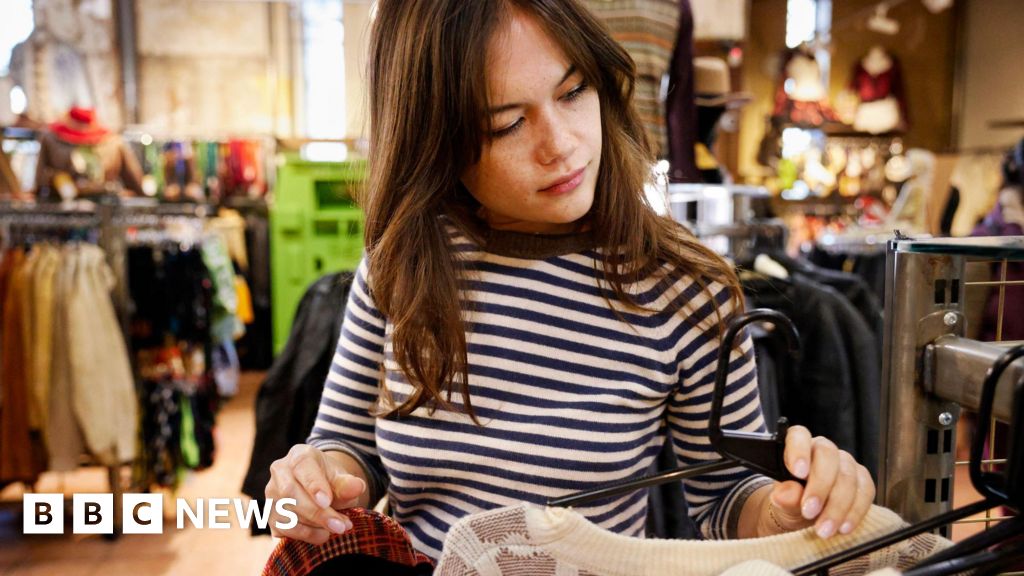
China’s inflation release is especially important for sectors tied to tourism, technology, and commodities, which depend heavily on mainland demand. Even with the cautious mood, select names outperformed. Shares of Fast Retailing, the owner of Uniqlo, jumped after upbeat guidance signaled robust apparel sales and successful cost controls. That rally helped support Japanese benchmarks and highlighted how solid corporate execution can offset macro uncertainty, drawing global attention back to Asia’s consumer growth story.
About the Organizations Mentioned
Fast Retailing
Fast Retailing Co., Ltd. is a **global apparel powerhouse** best known as the parent company of **Uniqlo**, the minimalist clothing brand that has reshaped casualwear with functional, tech-infused basics like Heattech, AIRism, and ultra‑light down.[4][5] Headquartered in Yamaguchi, Japan, it designs, manufactures, and retails clothing for men, women, children, and babies through UNIQLO Japan, UNIQLO International, GU, and Global Brands segments.[4][5] The business traces its roots to **1949** as Ogori Shoji, a small menswear shop.[4][5] In 1984, founder **Tadashi Yanai** opened the first Uniqlo store in Hiroshima, positioning it as a low‑priced casualwear outlet.[2] The company adopted the name **Fast Retailing** in 1991 as it expanded beyond a single chain.[4][5] A landmark fleece campaign in the 1990s sparked explosive growth in Japan, and the first overseas Uniqlo store opened in London in 2001, followed by rapid expansion into China, Europe, and the United States.[2][3] Today, Fast Retailing ranks among the **world’s largest apparel retailers**, with thousands of Uniqlo stores worldwide and additional brands including **GU, Theory, PLST, Comptoir des Cotonniers, J Brand, and Princesse tam.tam**.[4][5][3] Uniqlo alone accounts for the vast majority of group revenue, driven by a model that emphasizes **few, timeless styles**, high volume, and advanced materials rather than trend‑chasing “fast fashion.”[7] Key achievements include its rise into the global top tier of apparel by sales, influential collaborations with designers and cultural figures, and recognition for sustainability, such as repeated “A List” climate ratings and “supplier engagement
Uniqlo
Uniqlo is a global **apparel retailer** known for high-quality, minimalist everyday wear, positioned as a “technology-driven” clothing company rather than a traditional fashion label.[4][7] It operates under parent company **Fast Retailing Co., Ltd.**, using a vertically integrated SPA model (design-to-retail control) to deliver affordable basics at scale.[3][5][7][8] The business traces its roots to a menswear shop founded in Yamaguchi, Japan, in 1949.[1][3][5] In 1984, president **Tadashi Yanai** opened a new casual-wear store in Hiroshima called **Unique Clothing Warehouse**, later shortened to Uniqlo.[1][2][3][5] During Japan’s early-1990s recession, Yanai moved production to China to cut costs, aligning with demand for cheaper goods and enabling rapid domestic expansion.[1][2][3] By the late 1990s and early 2000s, Uniqlo had hundreds of Japanese stores and began overseas expansion in the UK, China, the US, and other Asian markets.[1][3][5] Strategically, Uniqlo adopted The Gap-style **SPA model**, controlling design, production, and retail to focus on standardized essentials rather than seasonal trends.[2][3][5][7][8] A pivotal shift in brand perception came with its 2004 **Global Quality Declaration**, promising to stop making low-priced, low-quality garments and emphasizing durable, well-made basics.[5] Uniqlo’s key achievements center on **material innovation** and global scale. Its partnership with Toray Industries produced **HEATTECH**, a fabric that generates and retains warmth and has sold hundreds of millions of units.[4][6] Other innovations include ultra-light down jackets, quick-drying and moisture-wicking fabrics, and seamless knitwear.[4][6] The