Asia Stocks Hold Steady Ahead of Fed Meeting as Japan GDP Slows
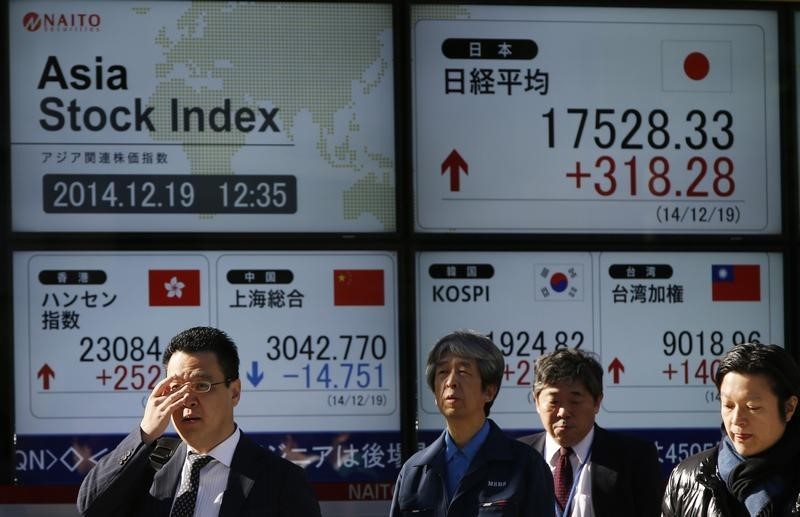
Asia Stocks Hold Steady Ahead of Fed Meeting
Asian stock markets showed mixed movements as investors awaited the U.S. Federal Reserve’s upcoming policy decision. Market participants are cautious ahead of the Fed meeting, hopeful for signals of a potential interest rate cut in 2026. Japan’s Nikkei edged slightly lower, weighed down by losses in financial and technology sectors, despite gains from exporters and automakers.
Japan’s Q3 GDP Underlines Economic Pressure
Japan’s third-quarter GDP contracted by 0.6%, missing expectations and reflecting a 2.3% annualized decline. Weak capital expenditure and external demand contributed to this slowdown, while bank lending rose modestly. The weakening yen and rising inflationary pressures add complexity to the economic outlook, challenging the Bank of Japan’s accommodative monetary stance.
Regional Market Dynamics
Elsewhere in Asia, markets were mixed with modest gains in China, Taiwan, and New Zealand offset by declines in Hong Kong, South Korea, and Malaysia. Investors remain cautious amid geopolitical tensions and await further clarity from central banks across the region, including Australia’s Reserve Bank meeting.
About the Organizations Mentioned
Federal Reserve
## Overview and Mission The Federal Reserve, often called the "Fed," is the central bank of the United States, established by Congress in 1913 to provide the nation with a safer, more flexible, and stable monetary and financial system[1]. Its mission centers on a dual mandate from Congress: to promote maximum employment and maintain price stability, ensuring the dollar retains its value over time[1]. The Fed operates through a unique hybrid structure, combining a national Board of Governors in Washington, D.C., with 12 independent regional Reserve Banks, including institutions like the Cleveland Fed[1]. This decentralized setup allows the Fed to closely monitor economic conditions across diverse regions, industries, and communities, while maintaining independence from short-term political influences[1]. ## Key Functions The Fed’s responsibilities are broad and vital to the U.S. economy. It conducts monetary policy—primarily by influencing interest rates—to achieve its employment and inflation goals[2]. The Fed also supervises and regulates banks to ensure the safety and soundness of the financial system, works to minimize systemic risks, and fosters efficient payment and settlement systems[2]. Additionally, it promotes consumer protection and community development, addressing emerging issues through research, supervision, and enforcement of consumer laws[2]. ## History and Evolution The Federal Reserve is the third central bank in U.S. history, following two failed attempts in the 19th century[1]. Its creation was a response to the financial turbulence of the early 20th century, aiming to prevent crises and stabilize the economy. Over time, the Fed has evolved, adopting more transparent and inclusive policymaking processes. For example, it now conducts regular reviews of its monetary policy framework, engaging with academics, businesses, and the public to refine its strategies and communications[3][5]. ## Recent Developments and Achievements In 2025, the Fed completed its second major review of its monetary policy strategy, tools, and communications, reaffirming its commitment to transparenc
Bank of Japan
## Overview The Bank of Japan (BoJ), established in 1882, is the nation’s central bank and the sole issuer of the Japanese yen[1][6][7]. Its primary missions are to maintain price stability and ensure the stability of the financial system, roles it fulfills through monetary policy, currency issuance, and oversight of financial institutions[5]. The BoJ is headquartered in Tokyo and plays a central role in shaping Japan’s economic landscape, influencing everything from inflation and interest rates to foreign exchange markets[5][7]. ## History The BoJ was founded to unify and stabilize Japan’s previously fragmented monetary system, which was plagued by numerous private banks issuing their own currencies[3]. Modeled after European central banks, the BoJ gained a monopoly on money supply control in 1884 and began issuing banknotes in 1885[1]. Its early years were marked by Japan’s adoption of the gold standard in 1897 and the gradual consolidation of national currency issuance[1]. The bank underwent significant reorganization during the 20th century, especially after World War II, when its functions were briefly suspended during the Allied occupation[1][4]. The 1942 and 1949 reforms redefined its structure, including the establishment of the Policy Board[2]. For much of the post-war period, the BoJ relied on “window guidance” credit controls, which were later criticized for contributing to the asset bubble of the 1980s[1]. The 1997 Bank of Japan Act granted the BoJ greater independence while emphasizing collaboration with the government[1][2]. ## Key Achievements The BoJ has navigated numerous economic challenges, including the oil shocks of the 1970s, the asset bubble and subsequent bust of the late 1980s and 1990s, and the prolonged deflationary period that followed[3][4]. In response, it pioneered unconventional monetary policies, such as the
Reserve Bank of Australia
The **Reserve Bank of Australia (RBA)** is the nation's central bank, established by the Reserve Bank Act 1959 with a mission to promote the economic prosperity and welfare of Australians through effective monetary policy, financial stability, and currency issuance[1][2][3]. Its core responsibilities include setting the cash rate—Australia's key interest rate—which influences economic activity, inflation, and employment levels. The RBA targets an inflation rate of 2-3% over the economic cycle to maintain price stability and sustainable growth[3][9]. The RBA governs monetary policy through its Monetary Policy Board, which meets monthly (except January) to adjust the cash rate based on economic conditions[5][8]. It also operates the Payments System Board, responsible for ensuring efficient, competitive, and secure payment systems, including support for the New Payments Platform facilitating real-time transactions[5]. The bank issues Australia’s banknotes via its subsidiary, Note Printing Australia, which also produces currency for other countries[3]. Beyond monetary policy, the RBA manages Australia's gold and foreign exchange reserves, acts as banker to the Australian government and some overseas central banks, and plays a key role in maintaining financial system stability by intervening in financial markets when necessary[1][2][5]. It represents Australia in global financial forums such as the G20, IMF, and Bank for International Settlements, reflecting its international financial stewardship[5]. Headquartered in Sydney, the RBA employs over 900 staff across Australia and international offices, emphasizing both operational capacity and governance independence from the government[3][5]. Its notable achievements include formalizing inflation targeting in the 1990s, which has been pivotal in anchoring inflation expectations and supporting economic resilience. In summary, the Reserve Bank of Australia blends monetary policy, financial system oversight, payment innovation, and currency management to sustain Australia's economic health and adapt to evolving global and technological challenges, making it a cornerstone institution in the business and technology landscape.