Trump's Federal Reserve Leadership Decision: Hassett as Next Fed Chair

Trump's Federal Reserve Leadership Decision
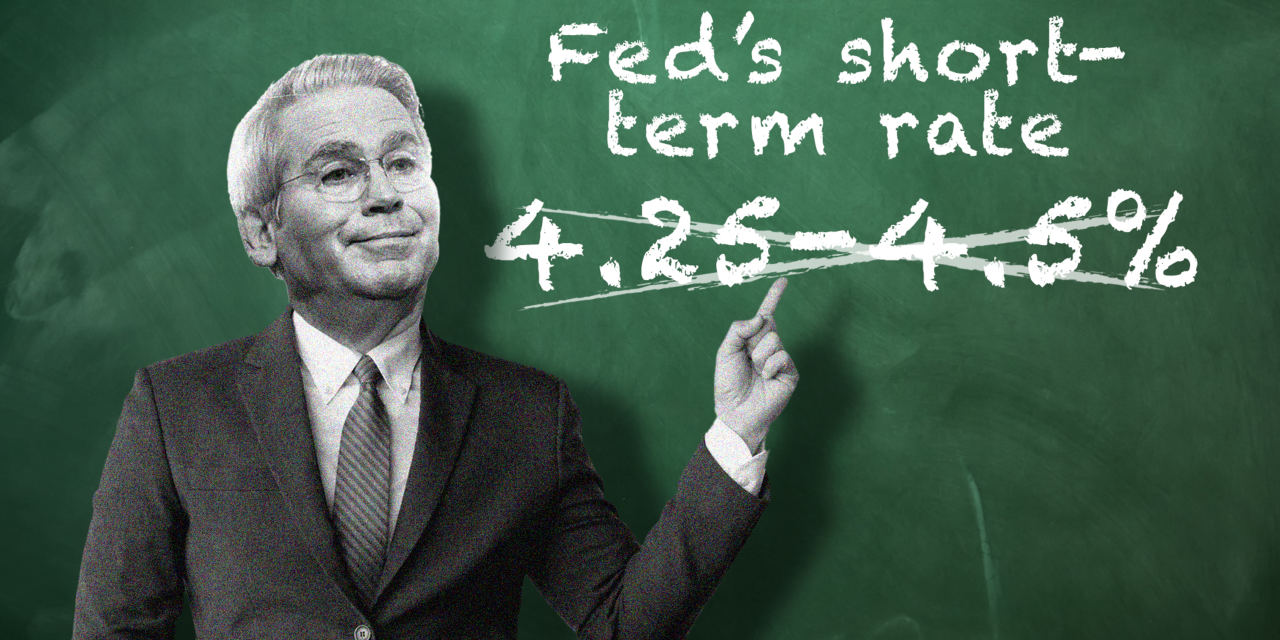
President Trump has indicated he has selected the next Federal Reserve chair, with financial markets strongly anticipating Kevin Hassett for the role.[6] Hassett currently serves as Director of the National Economic Council, playing a central role in coordinating the administration's economic policy across federal agencies.[1][2] Treasury Secretary Scott Bessent suggested the announcement could come by year-end, with the new chair potentially taking office in May when Jerome Powell's term concludes.
Hassett's Economic Vision
The economist brings substantial experience from Trump's first administration, where he chaired the Council of Economic Advisers from 2017 to 2019.[1] Despite previous warnings about tariff impacts and support for immigration-driven growth, Hassett recently predicted an "absolute blockbuster year" for 2026, citing corporate tax cuts and industrial manufacturing policies.[6] His appointment would signal Trump's commitment to aggressive economic expansion strategies.
Market Implications
Hassett's potential elevation represents a significant shift in Federal Reserve leadership philosophy. Markets view his selection as reinforcing pro-growth policies aligned with the administration's economic agenda.
```About the People Mentioned
Kevin Hassett
Kevin A. Hassett is an American economist who has been a prominent conservative policy adviser, academic, and public commentator. He earned a B.A. in economics from Swarthmore College and a Ph.D. in economics from the University of Pennsylvania, and served on the faculty at Columbia Business School before joining the Federal Reserve Board’s Division of Research and Statistics in the 1990s[4][5]. He later became a long-time scholar at the American Enterprise Institute and held fellowships at the Hoover Institution[5][6]. Hassett served as chairman of the White House Council of Economic Advisers from 2017 to 2019, where he was a central architect and public advocate of the 2017 corporate tax cut and related supply-side policy arguments[1][5]. He returned to the Trump White House as a senior economic adviser during the COVID-19 period and was appointed Director of the National Economic Council in early 2025, placing him at the center of economic policy planning for the Trump administration[1][6]. Over his career he has advised multiple presidential campaigns, including those of John McCain, George W. Bush, and Mitt Romney[1][5]. Hassett is also known as a public intellectual and author; he coauthored the 1999 book Dow 36,000, which drew wide attention for its bullish stock-market forecast, and has been a regular columnist and media commentator on economic issues[1][5]. His policy positions emphasize tax cuts, deregulation, and policies intended to boost investment and productivity, and he has advocated immigration rules favoring highly skilled workers while arguing for pro-growth fiscal measures[1][6]. In recent years Hassett returned to high-profile government service as National Economic Council director (2025) and has remained a visible defender of the administration’s economic agenda, drawing both support from conservative allies and scrutiny from critics over his policy claims and public statements[6][7].
Scott Bessent
Scott Bessent is an American government official and former hedge fund manager, currently serving as the 79th United States Secretary of the Treasury since January 28, 2025. Born on August 21, 1962, in South Carolina, Bessent graduated from Yale College with a degree in political science in 1984. Initially interested in journalism, he shifted to finance after missing out on a role at the Yale Daily News. He began his career with an internship under Jim Rogers, George Soros's first partner. Bessent's career in finance is marked by significant achievements. He was a key figure at Soros Fund Management, where he managed the London office and played a crucial role in profiting from major currency bets, notably earning $1 billion during the British Pound sterling crisis on Black Wednesday and $1.2 billion betting against the Japanese yen in 2013. After leaving Soros in 2015, he founded Key Square Capital Management, a global macro investment firm. Bessent also taught economic history as an adjunct professor at Yale University. In politics, Bessent has been involved as an economic advisor and major donor to the Donald Trump 2024 presidential campaign. His nomination as Treasury Secretary was announced by President-elect Trump on November 22, 2024, and he was confirmed by the Senate on January 27, 2025. As Secretary, Bessent focuses on maintaining economic strength, promoting growth, and enhancing national security through financial management. He is noted for his views on globalization and tariffs, advocating for updates to the international trading system to address inequality and economic disparities. Bessent's appointment marks him as the second openly gay man to serve in a U.S. Cabinet and the highest-ranking openly LGBT person in the federal government. His tenure as Treasury Secretary is expected to shape U.S. economic policies, particularly under the Trump administration's agenda.
Jerome Powell
Jerome H. Powell is the Chair of the Board of Governors of the Federal Reserve System, the central bank of the United States, a position he has held since February 2018 following his initial appointment by President Donald Trump and subsequent reappointment by President Joe Biden for a second four-year term in May 2022[2][5]. He also chairs the Federal Open Market Committee, the Fed’s principal monetary policymaking body[2]. Powell’s tenure spans some of the most significant economic challenges in recent U.S. history, including the post-Great Recession recovery and the financial fallout from the COVID-19 pandemic[3][6]. Born on February 4, 1953, in Washington, D.C., Powell holds an AB in politics from Princeton University (1975) and a law degree from Georgetown University (1979), where he was editor-in-chief of the Georgetown Law Journal[2]. His career before the Fed included roles as a lawyer and investment banker in New York City, a partner at The Carlyle Group (1997–2005), and a visiting scholar at the Bipartisan Policy Center focusing on fiscal issues[2][5]. He served as both Assistant Secretary and Under Secretary of the Treasury under President George H.W. Bush, with responsibilities for financial institutions and the Treasury debt market[2][5]. Powell was first nominated to the Federal Reserve Board by President Barack Obama in 2012 and assumed office in May of that year, later being reappointed for a term ending January 31, 2028[2][8]. As Fed Chair, he initially continued the policy of gradually raising interest rates—a process begun under his predecessor, Janet Yellen—to return monetary policy to more normal levels after the 2007–08 financial crisis[3]. This approach drew criticism from President Trump, who publicly opposed further rate hikes, but Powell maintained that such measures were necessary to prevent inflation and ensure long-term stability[3]. Powell’s leadership was again tested during the COVID-19 pandemic, when he led the Fed in slashing interest rates to near zero, launching emergency lending programs, and purchasing corporate debt to stabilize financial markets—actions that significantly expanded the central bank’s role in the economy[3]. Despite political pressures from both Democratic and Republican administrations, Powell has been praised for his steady, data-driven approach to monetary policy[6]. He resides in Chevy Chase, Maryland, with his wife and three children[6]. As of 2025, Powell remains a central figure in U.S. and global economic policy, overseeing the Fed’s efforts to balance inflation control with support for economic growth amid ongoing uncertainties in the financial landscape[2][5].
About the Organizations Mentioned
National Economic Council
The **National Economic Council (NEC)** is a key U.S. government agency established in 1993 by President Bill Clinton to coordinate economic policy-making and advise the President on both domestic and international economic issues[2][5][6]. Modeled after the National Security Council, the NEC's main mission is to ensure that economic policies across government departments are cohesive, aligned with the President’s agenda, and effectively implemented[5][6]. The NEC operates within the Executive Office of the President and is led by the Director of the National Economic Council, who serves as the President’s chief economic advisor[6]. The council includes senior officials from departments like Treasury, Commerce, and Labor, facilitating interagency collaboration to create strategic economic initiatives that promote sustainable growth, job creation, and financial stability[3][6]. Its staff size is around 30-35 full-time members as of late 2024, with resources allocated centrally through the White House[3]. Historically, the NEC was created to resolve coordination challenges in economic policymaking that existed under the older White House Office of Policy Development. It was designed to be powerful enough to enforce policy coordination without encroaching on cabinet officials’ domains[5]. Over time, the NEC has played a vital role in shaping major economic policies and responding to issues like infrastructure, manufacturing, labor markets, and financial regulation[4][6]. A notable aspect of the NEC is its distinction from the Council of Economic Advisors (CEA): while the CEA provides economic analysis and research, the NEC leads policy development and decision-making processes, managing how economic information is presented to the President and ensuring timely, balanced advice[7]. Current leadership includes Lael Brainard, under whose direction the NEC continues to influence economic strategies pertinent to business and technology sectors[4]. In summary, the NEC serves as the President’s central hub for economic policy coordination, advising, and implementation monitoring, making it a critical institution for shaping the U.S. economic landscape in
Council of Economic Advisers
The **Council of Economic Advisers (CEA)** is a key agency within the U.S. Executive Office of the President, established in 1946 by the Employment Act to provide the President with objective economic analysis and advice on both domestic and international economic policy[1][2][6]. Its core mission is to promote *maximum employment, production, and purchasing power* by offering data-driven insights that inform policy decisions[1][6]. The CEA is composed of a Chair and typically two to three additional economists, all appointed by the President, with the Chair requiring Senate confirmation[2]. Supported by a team of professional economists and staff, the Council analyzes complex economic indicators such as GDP, inflation, and unemployment to forecast economic trends and assess the impacts of proposed legislation or executive actions[1][4]. A fundamental output of the CEA is the **annual Economic Report of the President**, a comprehensive publication reviewing the previous year’s economic performance and outlining policy goals aligned with the administration’s agenda[2][3]. This report relies on authoritative data from sources like the Bureau of Economic Analysis and Bureau of Labor Statistics, making it a vital resource for policymakers, economists, and the public[2]. Historically, the CEA’s formation was rooted in post-World War II concerns about returning to economic depression, aiming to institutionalize Keynesian fiscal policy principles to maintain economic stability and growth[6]. Early internal disagreements about the Council’s role reflected differing views on whether it should be strictly impartial or politically engaged, but over time it has become an indispensable part of the policy process. The CEA not only advises the President directly but also participates in inter-agency deliberations, shaping economic policy proposals and public understanding through briefings, memos, and media engagement[4][5]. It often acts as a safeguard against poorly conceived policies by evaluating potential unintended consequences[8]. Notably, the CEA has been a training ground for prominent economists, including Nobel laureates like Paul Kru
Federal Reserve
## Overview and Mission The Federal Reserve, often called the "Fed," is the central bank of the United States, established by Congress in 1913 to provide the nation with a safer, more flexible, and stable monetary and financial system[1]. Its mission centers on a dual mandate from Congress: to promote maximum employment and maintain price stability, ensuring the dollar retains its value over time[1]. The Fed operates through a unique hybrid structure, combining a national Board of Governors in Washington, D.C., with 12 independent regional Reserve Banks, including institutions like the Cleveland Fed[1]. This decentralized setup allows the Fed to closely monitor economic conditions across diverse regions, industries, and communities, while maintaining independence from short-term political influences[1]. ## Key Functions The Fed’s responsibilities are broad and vital to the U.S. economy. It conducts monetary policy—primarily by influencing interest rates—to achieve its employment and inflation goals[2]. The Fed also supervises and regulates banks to ensure the safety and soundness of the financial system, works to minimize systemic risks, and fosters efficient payment and settlement systems[2]. Additionally, it promotes consumer protection and community development, addressing emerging issues through research, supervision, and enforcement of consumer laws[2]. ## History and Evolution The Federal Reserve is the third central bank in U.S. history, following two failed attempts in the 19th century[1]. Its creation was a response to the financial turbulence of the early 20th century, aiming to prevent crises and stabilize the economy. Over time, the Fed has evolved, adopting more transparent and inclusive policymaking processes. For example, it now conducts regular reviews of its monetary policy framework, engaging with academics, businesses, and the public to refine its strategies and communications[3][5]. ## Recent Developments and Achievements In 2025, the Fed completed its second major review of its monetary policy strategy, tools, and communications, reaffirming its commitment to transparenc