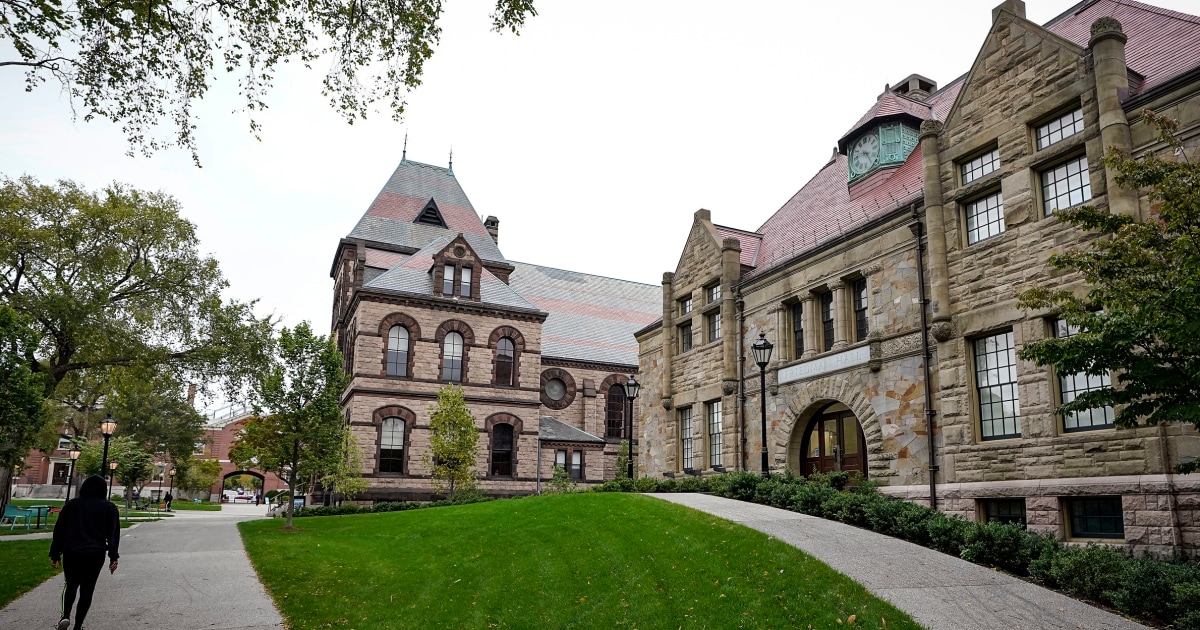
Brown University Shooting: Two Dead, Nine Injured as Suspect Sought
#brown_university #shooting #campus_violence #investigation #law_enforcement

Tragic Shooting Shakes Brown University
A devastating mass shooting at Brown University in Providence, Rhode Island, on December 13, 2025, claimed two student lives and injured nine others during a final exam review session for an introductory economics class. The attack unfolded at 4:05 p.m. EST inside Room 166 of the Barus and Holley Building, home to the School of Engineering and physics department, disrupting the second day of fall semester finals.[1][2]
Victims and Response Efforts
Providence Mayor Brett Smiley confirmed the casualties, with eight victims identified as students by university president Christina Paxson. The injured, suffering gun-related wounds, received care at Rhode Island Hospital; one remained critical, six in critical but stable condition, and two stable as of early December 14. Over 400 law enforcement officers, including FBI and ATF, swarmed the campus, issuing a shelter-in-place order amid a massive manhunt.[1][3]
Suspect Hunt Intensifies
Authorities seek 24-year-old Benjamin Erickson from Wisconsin, believed to have traveled to Rhode Island with intent. Weapons—a revolver and Glock with laser sight—were recovered from his hotel room. Described as a male in black who fled on foot, the suspect evaded capture as tactical units combed the area, urging witnesses to aid the ongoing investigation.[1][2]
About the People Mentioned
Christina Paxson
Christina Hull Paxson is an American economist and academic administrator who has served as the nineteenth president of Brown University since July 1, 2012. She is also a professor of economics and public policy at Brown. Paxson is known for her leadership in higher education, research, and public policy, and for her advocacy for increasing access to college education. Before joining Brown, Paxson was dean of the Princeton School of Public and International Affairs and a professor of economics and public affairs at Princeton University. At Princeton, she founded and directed the Center for the Economics and Demography of Aging and the Center for Health and Wellbeing. She has also held leadership roles in professional organizations, including serving as vice president of the American Economic Association and chair of the board of directors for the Association of American Universities. At Brown, Paxson launched a 10-year strategic plan called "Building on Distinction," which has guided the university’s growth and focus on interdisciplinary research, innovation, and inclusion. Under her leadership, Brown established a School of Public Health, expanded research centers in areas such as data science, brain science, and the creative arts, and strengthened its commitment to undergraduate education and financial aid. Notably, she led the "Brown Promise" initiative, which eliminated loans from university-awarded financial aid packages, making a Brown education more accessible to low-income students. Paxson has also overseen significant expansion of Brown’s academic and physical footprint, including partnerships that have contributed to the revitalization of Providence’s Jewelry District. Her tenure has seen Brown become a top producer of Fulbright Scholars and a leader in public-private partnerships for economic development. In recent years, Paxson has faced both praise and criticism, including student concerns about university investments and campus expansion. She remains a prominent figure in higher education, known for her focus on innovation, access, and community engagement.
About the Organizations Mentioned
Brown University
## Overview Brown University, located in Providence, Rhode Island, is a private Ivy League research university renowned for its distinctive approach to undergraduate education, pioneering research, and strong commitment to social responsibility and innovation. Founded in 1764, Brown is the seventh-oldest institution of higher education in the United States and has built a reputation for academic excellence, interdisciplinary study, and a progressive ethos. ## What Brown University Does Brown offers a broad spectrum of undergraduate, graduate, and professional programs across the arts, humanities, social sciences, life sciences, physical sciences, and engineering. The university is particularly noted for its Open Curriculum, which empowers undergraduate students to design their own course of study without traditional distribution requirements—a hallmark of Brown’s educational philosophy. Graduate and professional programs, including the Warren Alpert Medical School, School of Public Health, and School of Engineering, foster cutting-edge research and prepare students for leadership roles in academia, industry, and public service. ## History Brown was established by Baptist minister James Manning and others, with significant early ties to Rhode Island’s mercantile and maritime history. The university was named in honor of Nicholas Brown, a prominent benefactor. Throughout its history, Brown has been at the forefront of educational reform, including the 1969 adoption of the Open Curriculum, which revolutionized higher education by prioritizing student autonomy and intellectual exploration. ## Key Achievements Brown has produced numerous Nobel laureates, Pulitzer Prize winners, and leaders in diverse fields. Its faculty and alumni have made groundbreaking contributions in areas such as medicine, technology, public policy, and the arts. Recent milestones include the establishment of the Lassonde Innovation and Design Hub, supporting entrepreneurship and technology development[1], and the launch of new graduate programs like the online master’s in business analytics[1]. Brown’s research initiatives frequently address global challenges, from public health to environmental sustainability. ## Current Status As of 2025, Brown continues to attract a highly selective and diverse student body,
FBI
The Federal Bureau of Investigation (FBI) is a premier law enforcement agency in the United States, renowned for its role in protecting the nation from domestic and international threats. Founded on July 26, 1908, as the Bureau of Investigation, it was initially tasked with addressing land fraud and corporate malfeasance under President Theodore Roosevelt[1][2]. Over time, its mandate expanded significantly, particularly with the passage of the Mann Act in 1910, which allowed federal jurisdiction over certain moral offenses[1][4]. ### History and Evolution The FBI underwent significant transformation under J. Edgar Hoover, who became its director in 1924. Hoover implemented strict hiring standards and enhanced operational capabilities, transforming the agency into a robust investigative force[1][4]. The FBI's name was officially changed to the Federal Bureau of Investigation in 1935[5][6]. Throughout its history, the FBI has faced challenges, including concerns about potential abuses of power, but it has consistently demonstrated its value in national security and law enforcement[3][4]. ### Key Achievements The FBI has been instrumental in combating various crimes, including white-collar offenses, civil rights violations, and national security threats. Notable achievements include its role in enforcing the Espionage Act during World War I and its investigations into organized crime throughout the 20th century[2][4]. ### Current Status Today, the FBI is a sophisticated agency with over 37,100 employees, including special agents and professionals in various fields such as intelligence analysis and cybersecurity[5]. It operates in 55 field offices across the U.S. and has an international presence in 81 nations[5]. The FBI continues to evolve, addressing emerging threats like cybercrime and terrorism while maintaining its commitment to justice and integrity. ### Notable Aspects The FBI is known for its rigorous training programs at the FBI Academy in Quantico, Virginia, and its advanced forensic capabilities at the FBI Laboratory. Its work in business and technology includes
ATF
The Bureau of Alcohol, Tobacco, Firearms and Explosives (ATF) is a pivotal U.S. federal law enforcement agency under the Department of Justice, tasked with safeguarding communities from violent crime, terrorism, and illegal trafficking of firearms, explosives, alcohol, and tobacco. Originally rooted in enforcing tax laws dating back to the 1790s, the ATF evolved from its early focus on alcohol taxation—famously confronting the Whiskey Rebellion—to become a modern regulatory and investigative force. In 2003, its mandate expanded to include explosives, reflecting its growing role in national security. ATF’s core responsibilities include enforcing the Gun Control Act and the National Firearms Act, regulating interstate commerce in firearms and explosives, and investigating arson, bombings, and acts of terrorism. The agency operates a unique fire research laboratory in Maryland, enabling advanced forensic analysis of arson cases. It also partners with state and local law enforcement through initiatives like Project Safe Neighborhoods, leveraging technology and data to disrupt criminal networks and enhance public safety. A notable achievement was the expansion of explosives regulations under the Safe Explosives Act of 2002, which mandated background checks and federal permits for explosives handling. However, ATF has faced criticism, including controversies over high-profile incidents like Ruby Ridge and Waco, and legal battles over regulations, such as its 2009 loss in a case involving amateur rocketry fuels. Today, ATF employs over 5,000 people with a budget nearing $1.5 billion, maintaining a critical presence in both regulatory oversight and criminal investigations. Its work directly impacts industries ranging from firearms manufacturing to alcohol distribution, making it a key player in the intersection of business, technology, and public safety. Despite ongoing debates about its authority and funding, ATF remains central to America’s efforts to combat violent crime and ensure responsible commerce in regulated goods.
Rhode Island Hospital
Rhode Island Hospital is the state’s largest private, not-for-profit acute care hospital and the only Level I Trauma Center serving southeastern New England, functioning as the principal teaching and research hospital for Brown University’s Warren Alpert Medical School and as a founding member of the Brown University Health system (formerly Lifespan/Brown Health)[4][2]. Founded in Providence and integrated with Brown University since 1969, the 719-bed hospital offers comprehensive inpatient and outpatient services with leading programs in cardiology (including the state’s only open-heart surgery program), oncology, neurosciences, orthopedics, organ transplantation, psychiatry, diabetes care and trauma/emergency medicine[4][2]. Its pediatric services are delivered through Hasbro Children’s Hospital on the same campus, the state’s only dedicated pediatric facility and a national leader in fetal surgery, pediatric neurosurgery and other subspecialties[2][4]. Key achievements include designation as the regional Level I Trauma Center, hosting Rhode Island’s only open-heart surgery program, and developing nationally recognized specialty centers such as a Comprehensive Stroke Center and a large Cancer Institute that coordinates multidisciplinary care and clinical trials[1][4]. The hospital is also a major residency and training site—offering more than 42 residency programs—and maintains extensive research and teaching affiliations via Brown University, attracting academic faculty and funding for clinical research[4][5]. Currently, Rhode Island Hospital operates as a high-volume tertiary referral center with extensive emergency and surgical throughput and a large workforce embedded in Brown University Health; it continues to expand specialty programs and technology-driven care models while coordinating region-wide services across partner hospitals[1][3][8]. Notable aspects for business and technology audiences include its role as an academic-medical anchor in Rhode Island’s healthcare ecosystem, its integration of multidisciplinary specialty institutes, and its ongoing adoption of advanced clinical technologies and research-driven care pathways that influence regional healthcare