Missing FBI Records Spark Epstein Files Controversy

Missing FBI Records Spark Epstein Files Controversy
A CNN review reveals dozens of FBI witness interviews are absent from the massive Jeffrey Epstein files released by the Department of Justice last month, raising serious questions about transparency. Among the over 90 missing records—more than a quarter of 325 listed in an evidence log for Ghislaine Maxwell's attorneys—are three key interviews with a woman who accused President Donald Trump of sexual assault decades ago. These gaps in the 3.5 million pages undermine public trust in the Epstein Files Transparency Act's implementation.
Details of the Discrepancies
The DOJ website lacks these serial-numbered FBI records, despite their documentation in official logs. This omission fuels speculation about selective disclosure in the high-profile sex trafficking probe. Epstein's network implicated powerful figures, and absent interviews could obscure critical testimonies linking elites to the scandal, echoing past cover-up concerns in similar investigations.
Implications for Justice and Politics
The controversy intensifies calls for full accountability, with Trump-related files drawing partisan scrutiny. As Maxwell's trial echoes linger, these voids highlight ongoing battles over unsealed evidence. Demands grow for the FBI and DOJ to explain and release the missing documents, ensuring no stone remains unturned in pursuing truth.
About the People Mentioned
Donald Trump
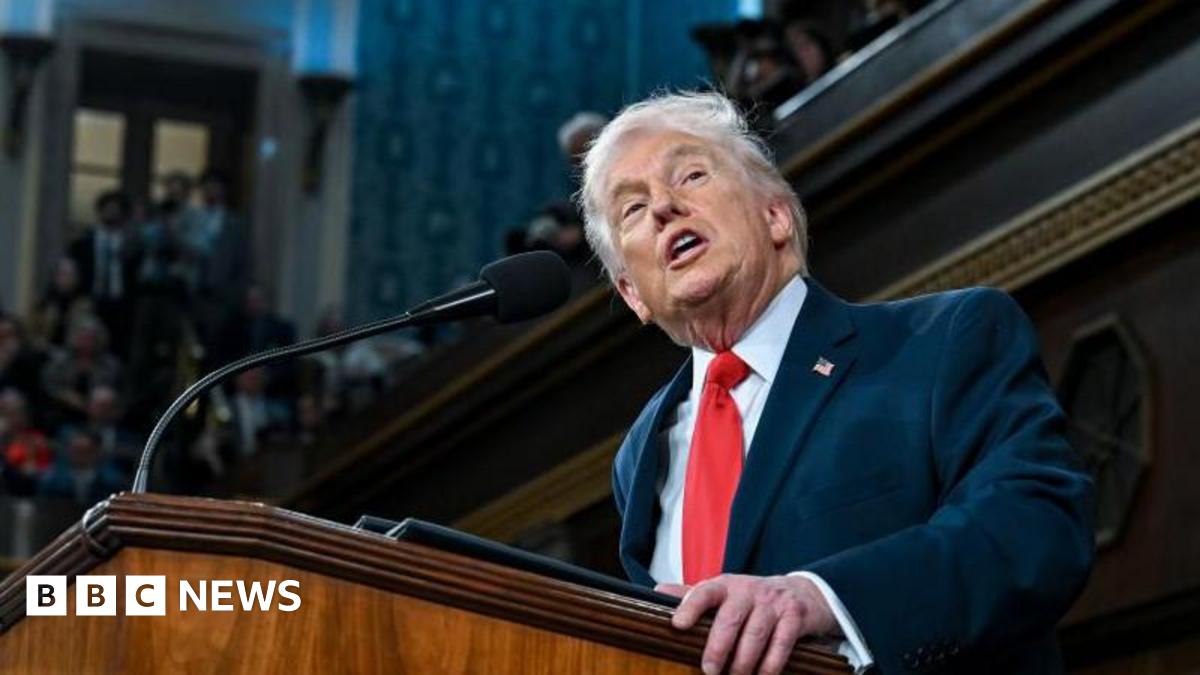
Donald John Trump, born June 14, 1946, in Queens, New York, is an American businessman, media personality, and politician. He graduated from the University of Pennsylvania’s Wharton School in 1968 with a degree in economics. In 1971, he took over his family’s real estate business, renaming it the Trump Organization, through which he expanded into building and managing skyscrapers, hotels, casinos, and golf courses. Trump gained widespread fame as the host of the reality TV show *The Apprentice* from 2004 to 2015, which helped establish his public persona as a successful entrepreneur. Trump entered politics as a Republican and was elected the 45th president of the United States, serving from 2017 to 2021. His presidency was marked by significant policy actions including tax cuts, deregulation, the appointment of three Supreme Court justices, renegotiation of trade agreements (notably replacing NAFTA with the USMCA), and a focus on immigration control including border wall expansion. He withdrew the U.S. from international agreements such as the Paris Climate Accord and the Iran nuclear deal, and engaged in a trade war with China. His administration’s response to the COVID-19 pandemic was criticized for downplaying the virus’s severity. Trump was impeached twice by the House of Representatives—first in 2019 for abuse of power and obstruction, and again in 2021 for incitement of insurrection—but was acquitted by the Senate both times. After losing the 2020 election to Joe Biden, Trump challenged the results, culminating in the January 6, 2021, Capitol riot. He remains a central figure in American politics, having won the 2024 presidential election and returned as the 47th president in 2025, continuing to promote policies aimed at economic growth, border security, and military strength[1][2][3][4].
Ghislaine Maxwell
Ghislaine Maxwell is a British-born former socialite and convicted sex offender, primarily known for her association with financier Jeffrey Epstein. Born on December 25, 1961, in Maisons-Laffitte, France, she was raised in Oxford, England, and attended Balliol College, Oxford. She is a naturalized American citizen and holds British and French citizenship[2]. Maxwell is the youngest daughter of Robert Maxwell, a media mogul and controversial figure whose death in 1991 sparked significant public intrigue. She initially worked in various roles connected to her father's business empire and later became a prominent socialite in New York City[1][2]. In 2012, she founded the TerraMar Project, a non-profit focused on ocean conservation, which ceased operations in 2019 amid legal scrutiny[2]. Her notoriety increased dramatically due to her involvement with Jeffrey Epstein, a convicted sex offender. In July 2020, Maxwell was arrested and charged by U.S. federal authorities with multiple crimes related to sex trafficking of underage girls, acting as Epstein's recruiter and accomplice. She was denied bail due to concerns about her finances and flight risk[2]. In December 2021, Maxwell was found guilty on five of six charges, including sex trafficking of a minor, and in 2022 she was sentenced to 20 years in prison[2][6]. Maxwell's trial revealed extensive evidence of her role in Epstein's abuse network, drawing significant media attention due to her high-profile social connections. She faces a separate pending trial for charges of perjury related to her testimony about Epstein’s activities[2][3]. Her case remains a focal point in discussions about sex trafficking and accountability among elite social circles.
About the Organizations Mentioned
CNN
**CNN (Cable News Network)** is a pioneering 24-hour cable news channel founded by media mogul Ted Turner and launched on June 1, 1980. It revolutionized television news by providing continuous, live news coverage worldwide, breaking from the traditional scheduled news broadcasts prevalent at the time[1][3][4][5]. CNN's headquarters are in Atlanta, Georgia, where it remains a major hub for news production. **History and Growth:** CNN was born from Ted Turner’s vision to create the first all-news channel, despite skepticism from industry professionals. Starting with a modest team and resources, it grew rapidly, expanding its reach through cable, satellite, and digital platforms. In 1982, CNN introduced CNN2 (later HLN), the first news channel to use a "wheel" schedule, and in 1985 launched CNN International to serve global audiences[1][4][6]. The network gained significant prominence during events like the 1991 Persian Gulf War, offering real-time battlefield coverage that established CNN as a trusted news source[3][6]. CNN’s website, CNN.com, launched in 1995, was among the first major news websites, marking its early embrace of digital news delivery[6]. **Ownership and Business Evolution:** In 1996, CNN became part of Time Warner (later WarnerMedia), and subsequently Warner Bros. Discovery, reflecting its integration into a major media conglomerate[1][2][6]. The network has adapted to changing media landscapes, including cost-cutting measures announced in 2022 but maintaining a commitment to longform and investigative content[1]. **Key Achievements:** CNN is credited with shaping modern journalism through its live, around-the-clock news coverage and global bureaus. It has earned numerous awards for its reporting and has influenced the creation of similar 24-hour news channels. Its notable anchors and correspondents, such as Bernard Shaw and Christiane Amanpour, have contributed to its authoritative reputation[1]
Department of Justice
The **United States Department of Justice (DOJ)** is a federal executive department responsible for enforcing federal laws, ensuring public safety, defending the interests of the United States, and upholding civil rights. Established in 1870 to consolidate federal legal affairs under the Attorney General, the DOJ has grown into a vast organization with over 115,000 employees and a budget exceeding $22 billion[1][4][5]. It operates through more than 40 component organizations, including prominent law enforcement agencies such as the Federal Bureau of Investigation (FBI), Drug Enforcement Administration (DEA), Bureau of Alcohol, Tobacco, Firearms and Explosives (ATF), and the U.S. Marshals Service[1][4][5]. The DOJ’s core mission is to uphold the rule of law, keep the nation safe, protect civil rights, and ensure a fair and impartial administration of justice across federal, state, local, tribal, and international levels[2][5]. It investigates and prosecutes federal crimes, including terrorism, drug trafficking, organized crime, financial fraud, and cybercrime. The FBI, as the DOJ’s principal investigative arm, leads in areas such as counterterrorism, counterintelligence, and cybercrime[6]. Additionally, the DOJ manages federal prisons and provides leadership and resources to state and local law enforcement agencies. Historically, the DOJ’s origins trace back to the Judiciary Act of 1789, which created the Attorney General's office. Its establishment as a separate department in 1870 allowed for greater coordination of federal law enforcement and legal representation of the government[2][4]. Over time, the DOJ has played a critical role in landmark civil rights enforcement, combating organized crime, and adapting to modern challenges such as cyber threats and international criminal cooperation[1][5]. Today, headquartered in Washington, D.C., with field offices nationwide and abroad, the DOJ continues to influence national security and justice policy, balancing traditional law enforcement with evolving technological and societal demands.