Conservative Front-Runners Lead Honduras Presidential Race Amid Trump Endorsement

Conservative Candidates Lead Honduras Presidential Race
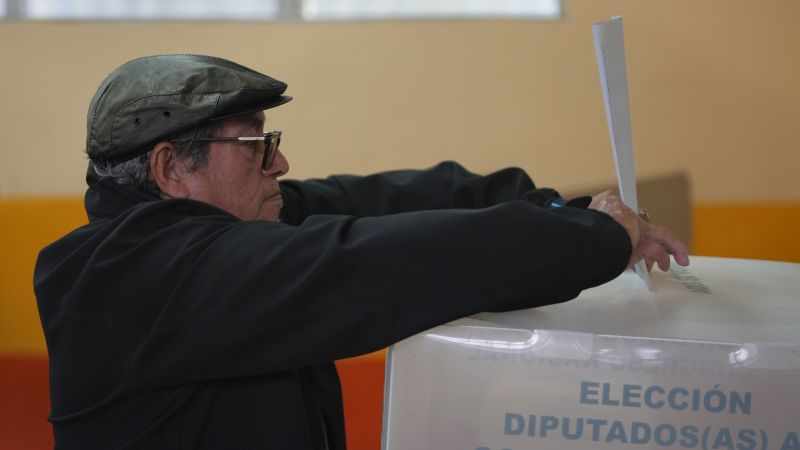
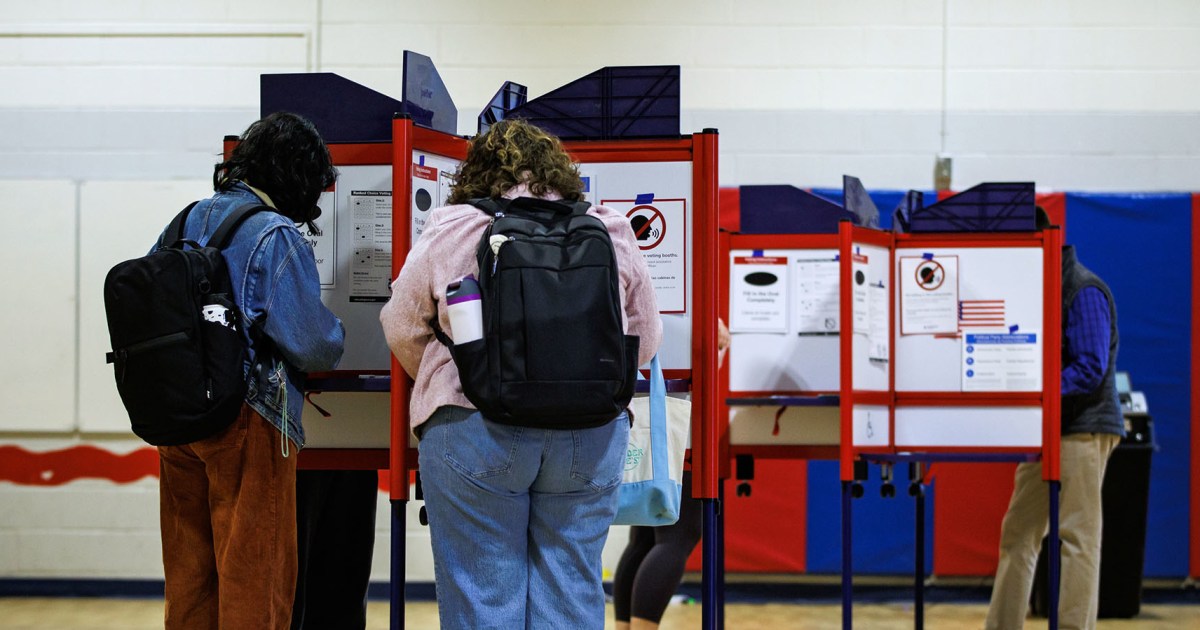
Honduras held its general election on November 30, 2025, with two conservative contenders emerging as frontrunners in an exceptionally tight contest. Nasry Asfura of the ruling National Party and Salvador Nasralla of the Liberal Party are virtually tied, separated by fewer than 515 votes with approximately 57% of polling stations reporting. Both candidates command roughly 40% support each, while Rixi Moncada of the Liberty and Refoundation party trails significantly at 19%.
Trump's Controversial Involvement
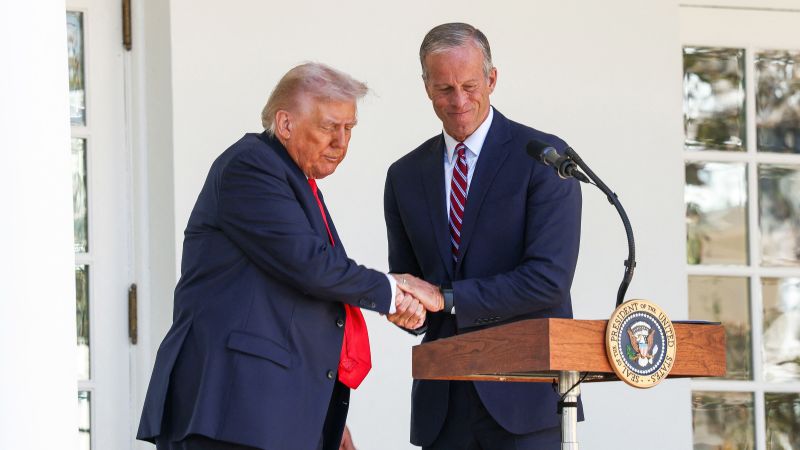
The election took an unprecedented turn when US President Donald Trump publicly endorsed Asfura, stating he was the only Honduran candidate his administration would work with. Trump's intervention has intensified scrutiny of the election process, with the president suggesting potential vote manipulation and warning of serious consequences if results are altered. Additionally, Trump announced plans to pardon former Honduran President Juan Orlando Hernandez, currently serving a 45-year sentence for drug trafficking charges.
Election Implications
The razor-thin margin between leading candidates could reshape Honduras's political landscape significantly. With voter turnout at approximately 30%, the outcome remains uncertain as officials continue their count.
```About the People Mentioned
Nasry Asfura
Nasry Juan Asfura Zablah, nicknamed "Tito," is a Honduran politician and businessman of Palestinian descent who was elected president of Honduras in late 2025.[1][2][3] Born in Honduras, he studied civil engineering but did not complete his degree, instead entering public service in the 1990s through operational and managerial roles in the Central District Mayor's Office in Tegucigalpa.[1] Asfura built a reputation for pragmatic governance focused on project execution during his early local government tenure, while establishing a successful career in the construction sector.[1] He first gained prominence in the 2005 National Party primaries for mayor of the Central District, where he popularized the catchphrase "¡Papi, a la orden!" ("Daddy at your service"), symbolizing accessibility and service to citizens—a slogan he revived in his 2025 presidential campaign.[1] From 2014 to 2022, Asfura served as mayor of Tegucigalpa, Honduras's capital, emphasizing practical problem-solving.[1] In 2022, he ran as the National Party's presidential candidate, finishing second to Xiomara Castro amid allegations of fraud and corruption.[1] As a conservative, he pledged to boost job creation, attract foreign investment, enhance police capabilities to combat Central America's highest homicide rate, and align Honduras with the United States over China.[1] His 2025 presidential victory, announced by the National Electoral Council, came after weeks of delays and was backed by U.S. President Donald Trump, who warned of reduced aid if Asfura lost.[1][2][3] If implemented, his administration may shift toward a pro-Israel stance, similar to that of former president Juan Orlando Hernández.[1] Asfura's win marks a significant political shift in Honduras, bolstering his current role as president-elect or incoming leader.[2][3]
Donald Trump
Donald John Trump, born June 14, 1946, in Queens, New York, is an American businessman, media personality, and politician. He graduated from the University of Pennsylvania’s Wharton School in 1968 with a degree in economics. In 1971, he took over his family’s real estate business, renaming it the Trump Organization, through which he expanded into building and managing skyscrapers, hotels, casinos, and golf courses. Trump gained widespread fame as the host of the reality TV show *The Apprentice* from 2004 to 2015, which helped establish his public persona as a successful entrepreneur. Trump entered politics as a Republican and was elected the 45th president of the United States, serving from 2017 to 2021. His presidency was marked by significant policy actions including tax cuts, deregulation, the appointment of three Supreme Court justices, renegotiation of trade agreements (notably replacing NAFTA with the USMCA), and a focus on immigration control including border wall expansion. He withdrew the U.S. from international agreements such as the Paris Climate Accord and the Iran nuclear deal, and engaged in a trade war with China. His administration’s response to the COVID-19 pandemic was criticized for downplaying the virus’s severity. Trump was impeached twice by the House of Representatives—first in 2019 for abuse of power and obstruction, and again in 2021 for incitement of insurrection—but was acquitted by the Senate both times. After losing the 2020 election to Joe Biden, Trump challenged the results, culminating in the January 6, 2021, Capitol riot. He remains a central figure in American politics, having won the 2024 presidential election and returned as the 47th president in 2025, continuing to promote policies aimed at economic growth, border security, and military strength[1][2][3][4].
Juan Orlando Hernandez
Juan Orlando Hernández Alvarado, born on October 28, 1968, in Gracias, Lempira, Honduras, is a Honduran lawyer and former politician who served as the 38th president of Honduras from January 27, 2014, to January 27, 2022. A member of the right-wing National Party, Hernández was previously president of the National Congress of Honduras from 2010 until 2013, when he stepped aside to run for president. He won the 2013 presidential election and was controversially re-elected in 2017 after the Supreme Court allowed a second term despite constitutional limits; the 2017 election was marked by accusations of fraud, violent protests, and a state of emergency declaration[2][3][4]. During his presidency, Hernández promoted security policies including the creation of a 5,000-strong military police force and social programs like *Vida Mejor* aimed at poverty reduction. He replaced four of five magistrates on the constitutional court, enabling his re-election. His administration faced heavy criticism for alleged authoritarianism, electoral fraud, and human rights abuses related to the suppression of post-election protests, in which around 30 demonstrators were killed[1][2][4][5]. Hernández’s tenure was also marred by serious legal troubles. Prosecutors accused him of using drug trafficking proceeds to finance his political campaigns and enrich himself, alleging he turned Honduras into a "narco-state." His brother was convicted of drug trafficking in the United States, and multiple witnesses implicated Hernández in drug trafficking activities[1][2][3]. In February 2022, Hernández was extradited to the United States to face charges of drug trafficking and weapons conspiracy. His trial in New York concluded with a guilty verdict in March 2024, and in June 2024 he was sentenced to 45 years in prison and fined $8 million[1][2][3][6]. Hernández’s rise from a poor rural background to the presidency and subsequent criminal conviction marks a significant chapter in Honduran political history, reflecting deep challenges with corruption and rule of law in the country.
About the Organizations Mentioned
National Party
The **National Party** refers primarily to a political organization operating at the national level, responsible for coordinating party activities, strategies, and election efforts across the United States. It functions as the highest authority within a political party’s structure, organizing the national nominating conventions where presidential candidates are selected every four years. The National Party's leadership includes a national chairperson, vice-chairs, a secretary, treasurer, and a national committee composed of representatives from each state. This committee manages party business and fundraising between conventions, supports candidates, and promotes the party platform[1][3][4]. Historically, the term "National Party" also identifies a distinct early-20th-century political organization in the U.S., founded in 1917 by pro-war defectors from the Socialist Party of America. This National Party was born out of coalitions focused on single-issue advocacy such as women's suffrage, prohibition, and political reforms like proportional representation and government ownership of utilities. Its founding conference in Chicago laid out a platform emphasizing universal suffrage, prison reform, and prohibition. The party's leadership included prominent former socialists and activists who sought to establish an alternative to the dominant parties at the time[2]. In the contemporary political landscape, national party organizations (like the Democratic National Committee and Republican National Committee) have evolved into complex, professional entities that not only manage electoral campaigns but also coordinate state and local party-building programs. They have become fiscally solvent and organizationally stable, adapting to the candidate-centered election system and playing a critical role in shaping national policy debates and election outcomes[6]. Legally, national party committees benefit from federal regulations that allow them to raise and spend larger sums of money to support candidates for Congress and the presidency. They must demonstrate national activity through conventions, state committees, and public issue advocacy to qualify for these advantages[5]. Notably, national parties serve as a bridge between local/state organizations and the federal government, playing an indispensable role in campaign financing, platform development
Liberal Party
The **Liberal Party** is a political organization dedicated to advancing a liberal society where individual liberty, property rights, and security are paramount, and no citizen is oppressed by poverty, ignorance, or conformity[1]. Its core mission centers on protecting individual freedoms and ensuring equal opportunities through policies shaped democratically by its members at annual assemblies[1]. The party places strong emphasis on civil rights, privacy, and data protection, adhering strictly to regulations like the GDPR to safeguard personal information of members and supporters[1]. Historically, the Liberal Party concept has manifested in various forms globally. In the United States, the Liberal Party of New York was founded in 1944 by moderate former members of the American Labor Party reacting against communist influences[2][4]. This party maintained a pragmatic alliance with labor unions and intellectuals, supporting progressive candidates often aligned with the Democratic Party[4]. It was notable for mobilizing immigrant and working-class voters, though over time it lost influence as internal leadership became more centralized and less ideologically driven[4]. Internationally, the Liberal Party ideals are represented in organizations like **Liberal International**, a federation of liberal and progressive democratic parties worldwide, formed in 1946 to promote liberal democracy and human rights globally[5][7]. The Liberal Party emphasizes a balance of liberty, equality, democracy, community, human rights, internationalism, and environmentalism, reflecting values that resonate strongly in business and technology sectors seeking innovation underpinned by freedom and ethical governance[3]. Its policies advocate for decentralization, support for diverse communities, and international cooperation, aligning with global trends in open markets and digital privacy[3]. Currently, the Liberal Party remains active in advocating liberal values through political engagement, policy development, and public discourse, often encouraging debate via internal platforms and external communications[1]. Its commitment to safeguarding rights and promoting a free society continues to influence political landscapes where liberal democratic principles are valued.
Liberty and Refoundation party
# Liberty and Refoundation Party (LIBRE): Honduras' Progressive Political Force Liberty and Refoundation (Libertad y Refundación, or LIBRE) is a left-wing democratic socialist political party in Honduras that has fundamentally reshaped the country's political landscape since its establishment in 2011[1][6]. ## Origins and Formation LIBRE emerged from the National Popular Resistance Front (FNRP), a broad leftist coalition formed to oppose Honduras's 2009 military coup that removed former president Manuel Zelaya[1][2]. The FNRP quickly became the largest social movement in Honduran history, uniting diverse constituencies including union activists, teachers, indigenous communities, farmers, and human rights defenders[2]. On June 26, 2011, the movement transformed into a formal political party, with supporters envisioning it as an instrument for systemic change[2]. ## Key Achievements and Current Status LIBRE's most significant achievement occurred on November 28, 2021, when party presidential candidate Xiomara Castro won 53% of votes to become Honduras's first female president[1]. Castro's victory represented a historic shift away from the two-party system dominated by the conservative National and Liberal parties, which many Hondurans viewed as corrupt and controlled by wealthy elites[2]. ## Platform and Vision The party campaigns on egalitarian economic development policies, integration of marginalized communities, and constitutional reform through a constituent assembly tasked with drafting a new constitution[2]. LIBRE represents a newfound political consciousness in Honduras, mobilizing citizens against traditional conservatism and resource exploitation[4]. ## Recent Developments As of 2025, LIBRE continues leading Honduras's presidential race with candidate Rixi Moncada[5]. The party faces external scrutiny, with U.S. officials expressing concerns