Cyber Monday 2025: Last-Minute Deals and Massive Savings

Cyber Monday 2025: Final Hours of Massive Savings
As Cyber Monday 2025 winds down, retailers are offering unprecedented discounts across electronics and tech. Major retailers including Amazon, Apple, Best Buy, and Walmart have slashed prices on premium products, creating a shopping frenzy for last-minute deals. Shoppers are capitalizing on record-low prices across multiple categories, making this year's event historically significant for consumer savings.
Top Deals Still Available
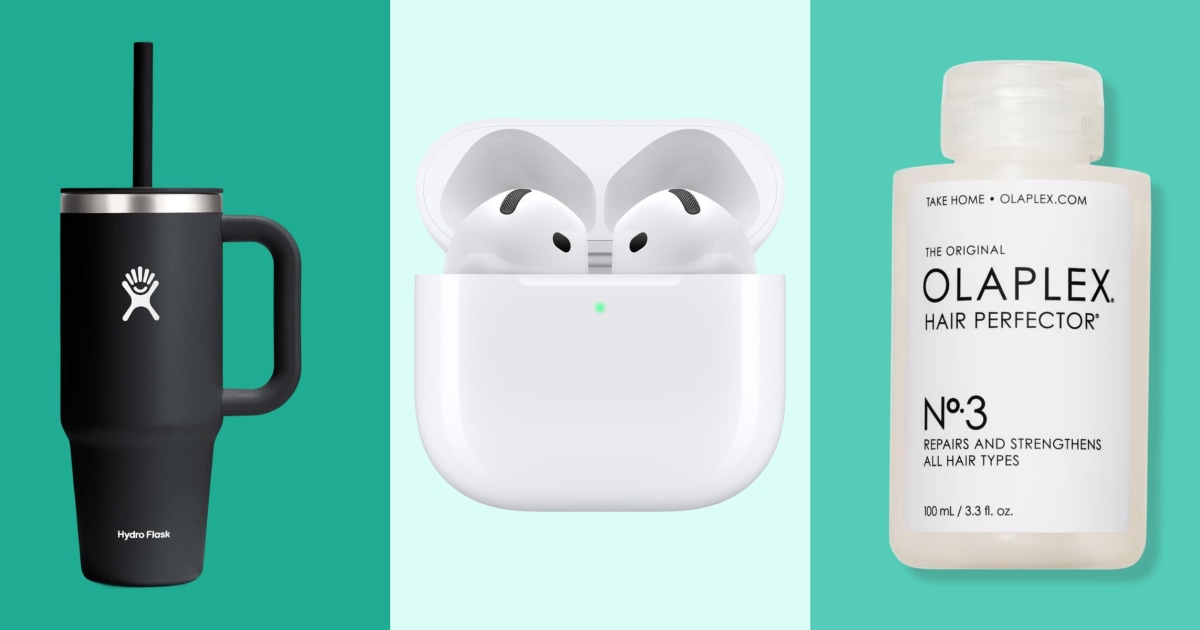
Samsung televisions are experiencing dramatic price reductions, with discounts reaching up to one thousand dollars on select models. Apple's AirPods have hit record-low pricing, offering exceptional value for audio enthusiasts. These limited-time offers represent the best opportunities of the entire sales event, with inventory depleting rapidly across all major platforms.
Don't Miss Out
With closing time approaching, consumers should act immediately to secure these extraordinary bargains. Stock levels are critically low on popular items, and price guarantees expire at midnight. This represents the final opportunity to capture significant savings before Cyber Monday concludes entirely.
```About the Organizations Mentioned
Amazon
Amazon.com, Inc. is a leading American multinational technology company specializing in **e-commerce, cloud computing, digital streaming, online advertising, and artificial intelligence**. Founded in 1994 by Jeff Bezos in Bellevue, Washington, Amazon initially launched as an online bookstore but rapidly expanded into a vast online marketplace known as "The Everything Store," selling a wide array of products across numerous categories[1]. Today, it stands as the **world's largest online retailer and marketplace**. Amazon operates multiple key business segments: Amazon Marketplace for retail sales, Amazon Web Services (AWS) for cloud computing, and Amazon Prime for subscription services, all contributing substantial revenue streams and synergistic benefits[3]. AWS is a powerhouse in scalable cloud infrastructure, serving businesses globally, while Amazon Prime offers fast delivery, streaming video, music, and exclusive deals to millions of subscribers[1][3]. The company’s growth strategy focuses heavily on technological innovation, particularly in **artificial intelligence and robotics**. Its AI-powered products include Alexa, the voice assistant embedded in Echo devices. Amazon’s warehouses employ over 45,000 robots, reflecting its commitment to automation and efficiency in logistics[4]. Capital expenditures for 2025 are projected at $118 billion, emphasizing AI and cloud expansion[4]. Amazon’s notable acquisitions have broadened its market reach and diversified offerings. Key acquisitions include **Whole Foods Market (2017), MGM Studios (2022), Twitch, Ring, and IMDb**, which have enhanced its physical retail presence, media content, and smart home technology portfolio[1][3]. These moves have helped Amazon maintain market dominance with over $574 billion in annual revenue and a market capitalization exceeding $2 trillion[3]. Despite strong retail and advertising performance, Amazon faces challenges such as narrowing AWS margins and increased AI infrastructure competition. However, its Q2 2025 financials showed robust revenue growth, with net sales rising 9% to $155.7 billion, underscoring its resilience and adap
Apple
Apple Inc. is a leading American multinational technology company known for pioneering personal computing, mobile devices, and software ecosystems. Founded in 1976 by Steve Jobs and Steve Wozniak, Apple revolutionized technology with the first commercially successful personal computer and mainstream adoption of the graphical user interface (GUI), setting new standards in product design, user experience, and seamless integration across devices[2]. Headquartered in Cupertino, California, Apple’s product lineup includes the iPhone, iPad, Mac computers, Apple Watch, AirPods, and services such as the App Store, Apple Music, and iCloud. The company has built a vast ecosystem that enables third-party developers to expand product functionalities, strengthening its market dominance. Apple is widely recognized for its innovation in hardware, software, and services, with an emphasis on aesthetics and privacy. In 2025, Apple committed to its largest-ever investment initiative, pledging $600 billion over four years in the United States to boost manufacturing, research and development, and advanced technology sectors like artificial intelligence (AI) and silicon engineering[1][3]. This includes new manufacturing facilities, expanded R&D centers, and a program called the American Manufacturing Program (AMP) to encourage domestic production of critical components. These efforts support over 450,000 U.S. jobs and aim to establish a robust supply chain within the country[3]. Financially, Apple remains a powerhouse with a market capitalization of $3.84 trillion and annual revenue exceeding $400 billion. However, in 2025, it faced challenges including a 19% decline in stock value, intensified regulatory scrutiny from the U.S. Department of Justice over antitrust issues, legal disputes related to the App Store, and competitive pressure in AI technology[1][2]. Despite these hurdles, Apple continues to innovate, recently updating its software platforms with a unified "Liquid Glass" design and expanding its AI-driven personal assistant, Apple Intelligence[1]. Under CEO Tim Cook’s leadership, Apple balances technological advancement
Best Buy
Best Buy Co., Inc. is a leading American multinational consumer electronics retailer headquartered in Richfield, Minnesota. Founded in 1966 by Richard M. Schulze and James Wheeler as an audio specialty store called Sound of Music in St. Paul, Minnesota, the company transformed significantly over the decades. In 1983, it was rebranded as Best Buy Company, Inc., shifting focus to a superstore format that emphasized low prices and a wide selection of consumer electronics, home appliances, and VCRs, targeting a broader and more affluent customer base[1][4][5]. Key milestones in Best Buy’s evolution include its 1985 Initial Public Offering (IPO), which provided capital for rapid expansion across the United States[1][3]. In 1988, Best Buy introduced its innovative "Concept II" store format, eliminating commissioned salespeople to create a more relaxed shopping environment and placing all stock on the sales floor for better customer access. Though initially controversial with suppliers and employees, this concept proved successful and fueled growth[1][4]. Subsequent store concepts (III and IV) enhanced customer experience with larger spaces, interactive displays, and product demonstration areas[3][5]. Best Buy’s strategic acquisitions, such as the 2002 purchase of Geek Squad, integrated tech support services that broadened its revenue streams and strengthened customer relationships[1]. In response to e-commerce competition, Best Buy launched the "Renew Blue" transformation in 2012, led by CEO Hubert Joly, focusing on cost-cutting, enhancing omnichannel retailing, and revitalizing the customer experience[1]. From 2018 to 2024, Best Buy emphasized health technology, digital expansion, and service innovations to adapt to shifting consumer behaviors[1]. Today, Best Buy remains a dominant force in consumer electronics retail, noted for its customer-centric store formats, integrated tech services, and ability to evolve amid intense competition, including the demise of many rivals like Circuit City
Walmart
Walmart, founded in 1962 by Sam Walton, has grown from a single discount store in Arkansas to become the world’s largest retailer, with a commanding presence in both physical and digital retail landscapes[3]. As of fiscal year 2025, Walmart operates over 10,750 stores and serves approximately 270 million customers each week across 19 countries, employing about 2.1 million associates worldwide[1][2][4]. The company reported $681 billion in revenue for 2025, reflecting a 5.1% increase from the previous year and an 8.6% rise in operating income, underscoring its robust financial health and ongoing expansion[1][4][6]. ## What Walmart Does Walmart is a leader in hypermarkets and discount retail, offering a vast range of products—from groceries and apparel to electronics and home goods—through its extensive network of physical stores, e-commerce platforms, and mobile apps[2][3]. Its business is organized into three main segments: Walmart U.S., Walmart International, and Sam’s Club, a members-only warehouse club[3][5]. The company’s mission—“to help people save money and live better”—drives its focus on everyday low prices, convenience, and customer-centric innovation[2][5]. ## History and Key Achievements Walmart’s journey from a single store to a global powerhouse is marked by relentless expansion, operational efficiency, and technological adoption[3]. Key milestones include the launch of Walmart Supercenters in the 1980s, international expansion beginning in the 1990s, and the rapid growth of its e-commerce business in the 2010s and beyond[3]. Today, online sales account for 18% of Walmart’s revenue, fueled by four consecutive quarters of 20% growth[1]. The company’s retail media network, Walmart Connect, has also surged, with ad revenue up 50% in a recent quarter