Dell Tests NVIDIA N1X Laptop: CES Clues and Ultraportable Gaming Potential

Dell Tests NVIDIA N1X Laptop Just Months Ago
A shipping manifest reveals Dell tested a 16 Premium laptop with NVIDIA's elusive N1X Arm APU in November 2025, just two months back. This engineering sample boasts integrated GeForce RTX graphics, hinting at powerful gaming in slim designs. Watching NVIDIA's CES keynotes feels like unraveling a tech thriller, piecing together delays and surprises.[1][3]
N1X Specs and Exciting Potential
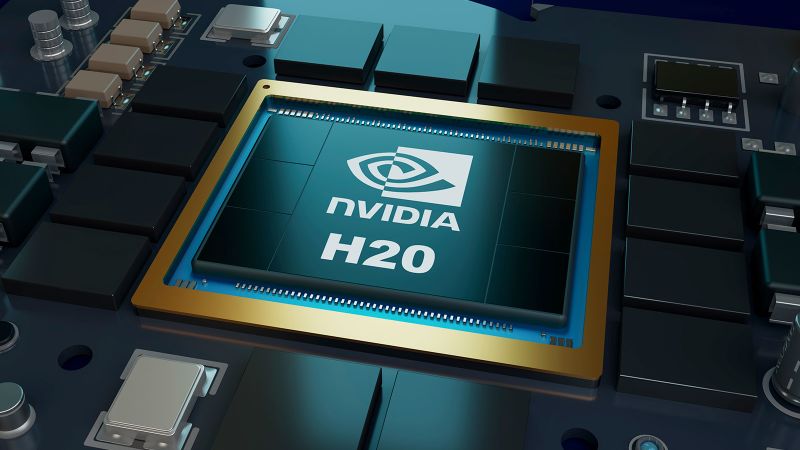
The N1X, blending MediaTek CPU with Blackwell GPU tech akin to RTX 5070, promises RTX 4070-level performance at 65-120W TDP. Ideal for ultraportable gaming laptops, it could boost battery life via Arm efficiency and DLSS 4. Yet, Windows on Arm relies on emulation, challenging game compatibility.[2][5]
Delays and CES Riddle
Originally eyed for Q1 2026, N1X faces setbacks from DRAM shortages, Microsoft OS tweaks, and competition from Intel Panther Lake and AMD Strix Halo. Dell's XPS return at CES 2026 skipped it, pointing to mid-2026 launch. Is N1X still coming? Clues suggest yes, solving the CES mystery soon.[4][6]
About the Organizations Mentioned
Dell
**Dell Technologies** is an American multinational technology giant headquartered in Round Rock, Texas, specializing in PCs, servers, storage, networking, software, security, and AI-infused infrastructure solutions for consumers and enterprises.[1][4] Founded in 1984 by Michael Dell from his University of Texas dorm room as PC's Limited, the company pioneered the **direct-to-consumer, build-to-order model**, allowing customers to customize affordable, high-quality PCs via phone (later online), bypassing retail and minimizing inventory costs.[3][5] This disrupted IBM-dominated markets; by 1989, revenues hit $300 million, and Dell became the world's top PC maker by 2001.[3][5] It went public in 1988, privatized in 2013 under Michael Dell, and returned publicly in 2018 after the transformative 2016 $67 billion EMC merger, integrating VMware (retained separately) and boosting enterprise capabilities.[1][5] Key achievements include ranking **48th on the 2024 Fortune 500** (based on 2023 revenue), maintaining #1 in external RAID enterprise storage (23.9% share per IDC CY24Q2), and investing $8.2 billion in R&D from FY22-24.[1][6] Innovations like Dell Apex (as-a-service for cloud/storage since 2021), AI-ready infrastructure, and Nvidia partnerships position it for multi-cloud and edge computing.[4] Today, under CEO Michael Dell and COO Jeff Clarke, Dell employs ~120,000, with FY2024 revenues split 55% Client Solutions (desktops, notebooks, peripherals) and 38% Infrastructure Solutions (servers, storage).[1][4] It excels in scale-out architecture, private cloud, and sustainability, adapting from PC roots to AI-driven futures amid post-COVID revenue surges.[1][4][5] This evolution cements Dell's role in powering digital transformation. (29
NVIDIA
NVIDIA Corporation, founded in 1993 by Jensen Huang, Chris Malachowsky, and Curtis Priem, is a leading American technology company headquartered in Santa Clara, California, renowned for its development of graphics processing units (GPUs) and accelerated computing platforms[1][2][4]. Initially focused on GPU technology for video gaming, NVIDIA revolutionized the industry by inventing the world’s first GPU, the GeForce 256, in 1999, which transformed PC gaming and 3D graphics[4]. Over time, NVIDIA expanded its scope beyond gaming to include artificial intelligence (AI), high-performance computing (HPC), professional visualization, and automotive technologies[1][4]. The company’s CUDA platform, launched in 2006, enabled GPUs to run massively parallel computations, fueling breakthroughs in scientific research, AI model training, and advanced simulations across industries[1][4]. Today, NVIDIA dominates with a 92% market share in discrete desktop and laptop GPUs and controls over 80% of GPUs used for AI training and inference, powering more than 75% of the world’s top 500 supercomputers[1]. NVIDIA’s product portfolio includes GeForce GPUs for gamers, professional GPUs for data centers and edge computing, Tegra processors for mobile and automotive applications, and platforms like NVIDIA Omniverse for digital twins and AI-driven industrial automation[1][2][3]. Its innovations extend into cloud gaming through GeForce Now and AI-driven autonomous vehicle systems. The company employs over 36,000 people worldwide, with a revenue surpassing $130 billion in fiscal year 2025, reflecting its massive impact on the technology ecosystem[2]. Recognized as one of the most innovative and best places to work, NVIDIA continues to be at the forefront of AI, accelerated computing, and digital transformation, shaping multiple sectors including healthcare, robotics, automotive, and gaming with cutting-edge hardware and software solutions[2][4]. Its leadership in GPU technology and AI infrastructure
MediaTek
**MediaTek Inc.** is a leading Taiwanese fabless semiconductor company that designs and manufactures system-on-chips (SoCs) and integrated circuits (ICs) powering smartphones, smart homes, connectivity devices, IoT, automotive systems, and more.[1][2][4] Founded in 1997 and headquartered in Hsinchu Science Park, Taiwan, MediaTek began with chipsets for optical drives and DVD players before pivoting to mobile devices in 2004.[2][1] Its early MT62xx series enabled smaller firms to challenge telecom giants, fueling rapid market entry for feature phones and smartphones.[2] By 2011, it shipped over 500 million mobile SoCs annually, and in 2014, it launched the "Everyday Genius" brand to democratize affordable "super-mid market" smartphones.[2] Key achievements include overtaking Qualcomm as the world's top smartphone chipset vendor in Q3 2020, driven by growth in India and Latin America.[2] MediaTek powers over 2 billion devices yearly with innovations in **5G**, **AI edge processing**, **HyperEngine gaming**, and **MiraVision displays**.[3][4][5] Strategic partnerships—like Intel for 5G PCs (2019), Nvidia for vehicle infotainment (2023), and VVDN for AIoT—highlight its expansion into autos, data centers, and custom ASICs.[2][4] In 2024, revenue hit $16.5 billion with 22,397 employees, dominating Android ecosystems while venturing into TVs (Pentonic platforms), tablets, wearables, and Wi-Fi.[1][6] Today, as the fourth-largest fabless chipmaker, MediaTek emphasizes power-efficient, AI-driven tech across smartphones (Dimensity series), smart TVs, IoT (Genio), and beyond, blending performance with accessibility.[3][5][7] Its "Incredible In. Incredible Out." ethos drives industr
Microsoft
Microsoft is a global technology leader that develops, licenses, and supports a broad range of software, services, devices, and solutions. Founded in 1975 by Bill Gates and Paul Allen, Microsoft initially gained prominence through its MS-DOS operating system and later Windows, which became the dominant PC operating system worldwide. Over time, the company expanded into cloud computing, productivity software, gaming, and AI, evolving from a software vendor into a comprehensive technology ecosystem[2][4]. Today, Microsoft’s core business revolves around its cloud platform, Azure, which supports enterprise digital transformation and AI innovation. In fiscal year 2025, Microsoft reported a strong financial performance with revenue reaching $76.4 billion, an 18% increase year-over-year, driven largely by a 27% growth in Microsoft Cloud revenue to $46.7 billion. Operating income rose 23%, and net income increased 24%, underscoring robust profitability. The company’s strategic focus on cloud and AI is central to its growth, with Azure surpassing $75 billion in revenue, reflecting broad adoption across industries[3][5]. Microsoft also leads in cybersecurity solutions, with Microsoft Sentinel recognized as a leader in Gartner’s 2025 Magic Quadrant for Security Information and Event Management (SIEM). This AI-powered cloud service enhances threat detection and response, reflecting Microsoft’s commitment to innovation in security and hybrid cloud environments[6]. The company employs over 220,000 people worldwide and continues to drive digital transformation both internally and for its customers. Its vision embraces the integration of AI and human intelligence, pioneering the “Frontier Firm” model—organizations that blend AI agents with human judgment to scale rapidly and innovate continuously[1][4]. With a diversified portfolio including Office 365, LinkedIn, Xbox, and Surface devices, Microsoft remains a dominant force in technology, shaping the future of work, security, and AI-enabled business transformation[2][3][6].
Intel
Intel Corporation is a leading American multinational technology company specializing in the design and manufacture of advanced semiconductors that power computing devices globally. Founded in 1968, Intel pioneered the development of microprocessors, becoming the dominant supplier of x86-based processors for PCs, servers, and other computing platforms. The company is known for its continuous innovation in semiconductor technology and its role in shaping the modern computing landscape. Intel's recent technological advancements include the launch of the Intel® Core™ Ultra series 3 processors (code-named Panther Lake) and Intel® Xeon® 6+ processors (Clearwater Forest), both built on the cutting-edge Intel 18A semiconductor node—currently the most advanced manufacturing node in the United States. These products are manufactured at Intel’s state-of-the-art Fab 52 facility in Chandler, Arizona, showcasing Intel's commitment to domestic production and technological leadership[1]. In the face of intense competition from rivals such as AMD and the architectural shifts exemplified by Apple’s move to its own silicon, Intel has been undergoing significant restructuring. This includes workforce reductions by approximately 15%, aiming to streamline operations, improve efficiency, and focus on core growth areas like AI and data centers. Financially, Intel reported solid demand and revenue resilience, with Q2 2025 revenue reaching $12.9 billion, exceeding guidance despite challenges from one-time costs and impairments[3][5]. The company is also enhancing its foundry business and AI roadmap to strengthen its competitive position and long-term shareholder value[3]. Intel’s strategic partnerships, including a $5 billion investment by Nvidia to jointly develop CPUs, and talks of adding AMD as a foundry customer, highlight its adaptive approach to industry dynamics[6]. Despite recent challenges and market shifts, Intel remains a crucial player in the semiconductor industry, advancing AI-enabled platforms and maintaining a significant impact on the global technology ecosystem[1][6].
AMD
Advanced Micro Devices, Inc. (AMD) is a leading American multinational technology company specializing in high-performance computing and adaptive technologies. Headquartered in Santa Clara, California, with major operations in Austin, Texas, AMD designs and develops central processing units (CPUs), graphics processing units (GPUs), field-programmable gate arrays (FPGAs), system-on-chips (SoCs), and other high-performance components used across a broad spectrum of markets including gaming, data centers, artificial intelligence (AI), and embedded systems[1][2]. Founded in 1969 by Jerry Sanders and colleagues, AMD started as a Silicon Valley startup focused on memory chips and gradually entered the microprocessor market in 1975, becoming a primary competitor to Intel[1]. The company's early success included the Athlon and Opteron processors in the early 2000s, which solidified its presence in the PC and server markets. However, AMD faced challenges competing with Intel in the late 2000s and early 2010s but rebounded strongly with innovations in processor architecture and graphics technology[1]. A major milestone in AMD’s recent history was its acquisition of Xilinx in 2022, expanding its portfolio into FPGAs and enhancing its capabilities in adaptive computing[1]. In October 2025, AMD announced a strategic partnership with OpenAI to supply six gigawatts of AI processors over five years, underscoring its critical role in powering AI infrastructure and advancing the AI ecosystem[1][3]. AMD is recognized for driving innovation in high-performance computing and adaptive technologies. It emphasizes corporate responsibility, inclusivity, and energy-efficient computing, fostering a culture of innovation and execution excellence[2]. Despite recent challenges in data center revenue growth compared to competitors like Nvidia, AMD continues to be a key player with a premium market valuation and strong potential in next-generation computing technologies[4][5]. Overall, AMD stands as a transformative force in technology, delivering cutting-edge products that shape gaming,