Federal Worker Layoffs Begin Amid Government Shutdown
#politics #shutdown #federal_layoffs #budget #administration
Federal Worker Layoffs Commence Amid Shutdown
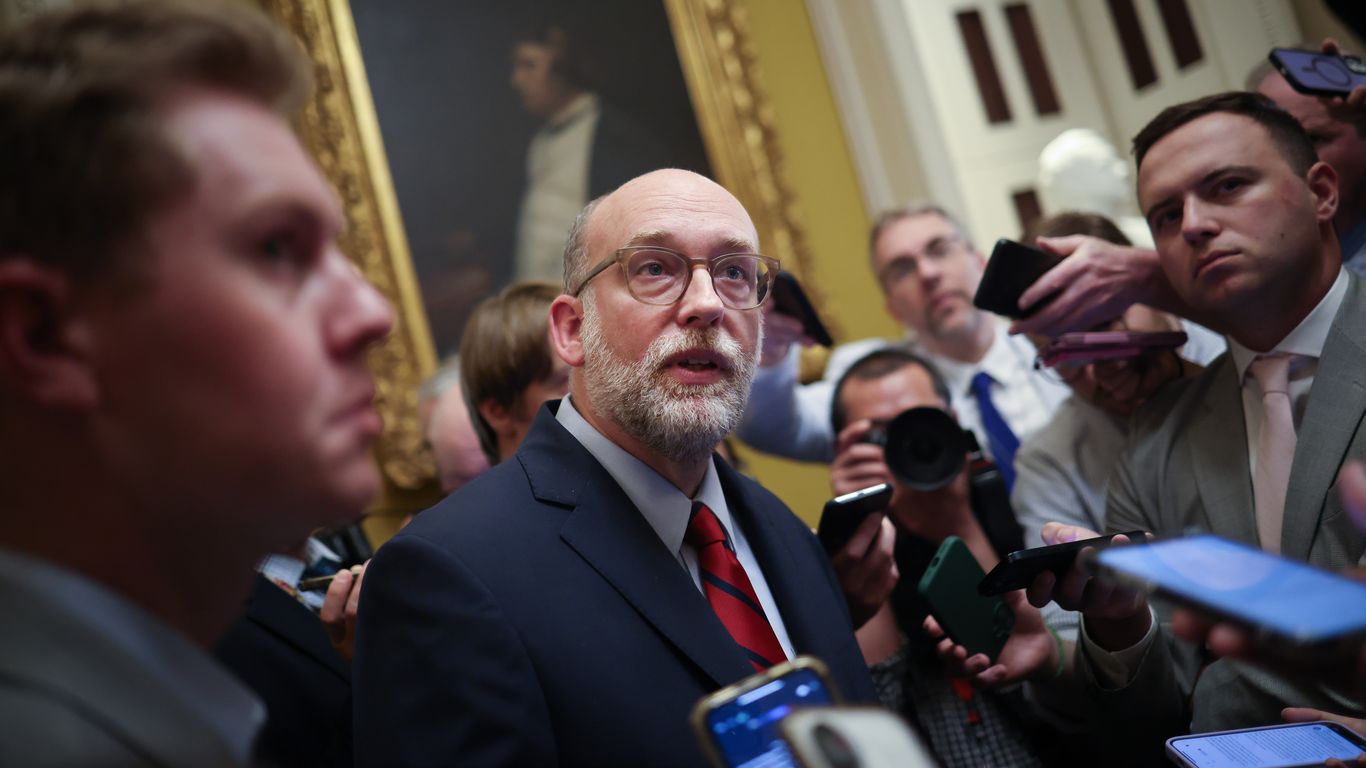
The Trump administration has officially initiated “substantial” federal workforce layoffs, marking a significant shift in government shutdown strategy. Office of Management and Budget Director Russell Vought confirmed on Friday that reductions in force (RIFs) have started, with approximately 4,200 employees laid off across several agencies that day.
Context and Scale of Workforce Cuts
This action follows earlier efforts to reduce the federal workforce through buyouts and voluntary departures, totaling hundreds of thousands over recent months. The ongoing government shutdown, now in its 10th day, forced difficult decisions on where permanent cuts would occur. Unlike past shutdowns that led primarily to furloughs, these layoffs represent a more permanent workforce contraction enabled by policies enacted during Trump’s first term.
Implications and Reactions
While the administration frames these layoffs as necessary for efficiency and budgetary reasons, critics argue they risk degrading essential government services. The unprecedented nature of the layoffs during a shutdown has sparked legal challenges and heightened political debate about the future role of the federal workforce.
About the People Mentioned
Russell Vought
Russell Thurlow Vought is a prominent conservative political figure and policy architect born on March 26, 1976.[1] He graduated from Wheaton College, Illinois with a BA in 1998 and earned his JD from George Washington University Law School in 2004.[1] Vought spent over two decades working in Washington D.C. on policy and governance issues. He held several Capitol Hill positions, including serving as Policy Director for the House Republican Conference under then-Chairman Mike Pence, and as Executive Director of the Republican Study Committee.[1][4] He also worked as Vice President of Heritage Action for America for seven years before joining the Trump Administration.[4] During Trump's first term, Vought rose through the ranks at the Office of Management and Budget (OMB). The Senate confirmed him as Deputy Director in February 2018 by a single vote.[2] He became Acting Director in early 2019 after his predecessor was named Trump's acting chief of staff, and was confirmed as OMB Director in July 2020.[1][2] In this role, he oversaw implementation of the President's policy, management, and regulatory agendas across the Executive Branch.[4] Vought's tenure was marked by controversy. Under his direction, OMB withheld military aid to Ukraine as Trump pressured President Zelenskyy to investigate President Biden, leading to Trump's first impeachment.[2] Vought refused to cooperate with congressional investigators, characterizing the inquiry as a "sham."[2] Following Trump's 2020 exit from office, Vought founded the Center for Renewing America in 2021, a think tank dedicated to advancing the MAGA movement.[2][5] He became a key architect of Project 2025, a comprehensive conservative policy blueprint that outlined plans for restructuring federal government and consolidating executive power.[2][3] His section included proposals for mass civil service firings and significant government restructuring.[3][5] As of February 2025, Vought serves as Acting Director of the Consumer Financial Protection Bureau and Director of the Federal Deposit Insurance Corporation.[7]
About the Organizations Mentioned
Office of Management and Budget
## Office of Management and Budget: A Comprehensive Overview The **Office of Management and Budget (OMB)** is a pivotal component of the Executive Office of the President, serving as the largest office within this branch. Established in 1970, OMB plays a crucial role in implementing the President's vision across the Executive Branch, focusing on budget development, management, and regulatory oversight. ### Key Functions - **Budget Development and Execution**: OMB prepares the President's annual budget proposal, which outlines the administration's priorities and allocates resources accordingly. This process involves evaluating agency programs and setting funding priorities[1][2]. - **Management Oversight**: OMB supervises agency performance, procurement, financial management, and information technology. It ensures that these areas align with the President's policies and priorities[1][3]. - **Regulatory Oversight**: The agency reviews and coordinates significant federal regulations to ensure they reflect Presidential priorities and assess their economic impacts[1][3]. ### History and Achievements While the OMB itself was established in 1970, its predecessor, the Bureau of the Budget, was created in 1921. Over the years, OMB has played a critical role in shaping federal policy and budgeting. Notable achievements include aligning federal spending with national priorities and improving administrative efficiency across government agencies. ### Current Status Today, OMB continues to serve as a key advisor to the President, coordinating policies and implementing strategies across agencies. It also plays a significant role in shaping AI policy through its oversight role in regulatory and budget processes[6]. ### Notable Aspects - **Resource Management Offices (RMOs)**: These offices within OMB are responsible for preparing the President's budget proposal and overseeing budget execution. They provide significant influence over federal programs[6]. - **Innovation and Technology**: OMB is involved in developing AI procurement policies and guiding federal IT acquisition strategies, reflecting its evolving role in technology management[6]. In summary, the Office of Management