Ferry Disaster Strikes the Southern Philippines: Rescue and Investigation Underway

Ferry Disaster Strikes Southern Philippines
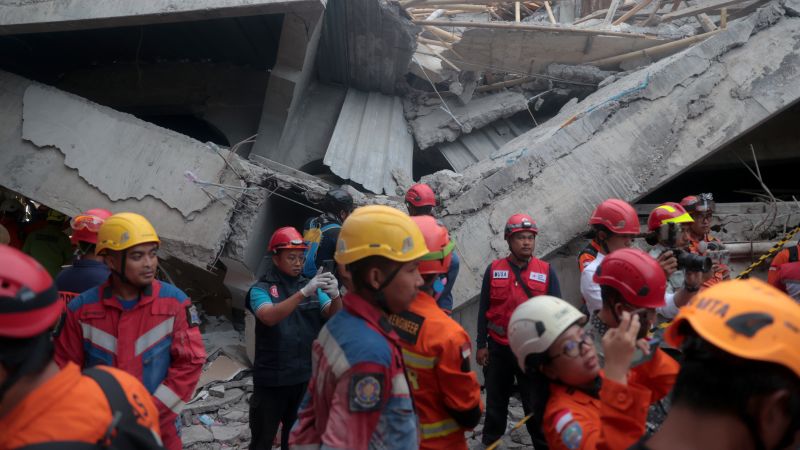
A ferry carrying over 350 people sank early Monday near Baluk-Baluk Island in the southern Philippines, sparking a massive rescue operation. The M/V Trisha Kerstin 3, en route from Zamboanga City to Jolo Island, submerged around 1:50 a.m. after encountering technical issues amid rough waters. Officials confirmed 332 passengers and 27 crew were aboard, within capacity limits.[1]
Rescue Efforts and Tragic Toll
Swift response from the Philippine Coast Guard, navy ships, a Black Hawk helicopter, and fishing boats saved at least 316 survivors. Tragically, 18 bodies have been recovered, with about two dozen still missing. Onboard sea marshals issued a distress call, enabling rapid deployment of rescue vessels. Survivors described the vessel tilting and taking on water suddenly.[2][3]
Ongoing Investigation and Safety Concerns
Authorities are probing the cause, focusing on mechanical failures and weather conditions. This incident underscores persistent maritime risks in the region, where inter-island ferries serve vital transport links. Enhanced safety measures may follow to prevent future tragedies.[1]
About the Organizations Mentioned
Philippine Coast Guard
The **Philippine Coast Guard (PCG)** is the third armed uniformed service of the Philippines, currently operating under the Department of Transportation[4]. Tasked primarily with enforcing laws within Philippine waters, the PCG conducts maritime security operations, safeguards life and property at sea, and protects marine environment and resources[4]. ## Organization and Structure The PCG is headed by a **Commandant** with the rank of Admiral, who holds full authority and command over the entire service[4]. The organization was originally established as a major unit of the Philippine Navy under Republic Act No. 5173, amended by Presidential Decree No. 601[2]. It was later transferred to the Department of Transportation, separating it from the Philippine Navy, which focuses on national defense[5]. The PCG's functional command units include the Maritime Security Command (MARSECOM) for territorial patrol and law enforcement, the Marine Environmental Protection Command (MEPCOM) for environmental enforcement, and the Maritime Safety Services Command (MSSC) for maritime surveillance and navigational safety[4]. ## Core Responsibilities The PCG performs **maritime search and rescue, maritime law enforcement, maritime safety, and marine environmental protection**[2]. Specific functions include combating maritime theft, smuggling, illegal fishing, and illegal immigration[3]. As the sole agency responsible for implementing World Maritime Organization conventions, the PCG oversees oil pollution prevention and control[3]. The organization enforces navigational rules, licenses marine officers, investigates marine casualties, and manages vessel registration and safety certificates[1]. Through its **Marine Environmental Protection (MAREP)** function, the PCG protects and preserves marine resources[2]. ## Current Operations In recent years, the PCG has gained prominence for asserting Philippine sovereign rights in the South China Sea, conducting patrols against illegal fishing activities and unauthorized maritime inc