Greece Airspace Shutdown Strands Thousands Amid Unexplained Communications Glitch
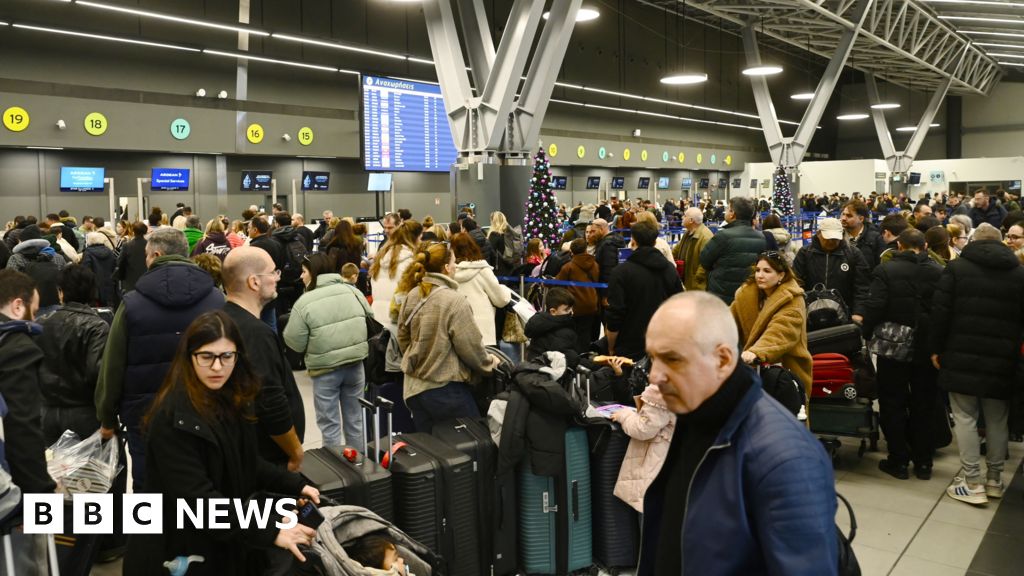
Thousands Stranded as Greece Airspace Shuts Down
Chaos erupted across Europe when a sudden radio communications fault grounded flights in Greece, stranding thousands of passengers on January 4, 2026. Air traffic controllers suspended all arrivals and departures at Athens International Airport and regional hubs after mysterious noise disrupted multiple channels, including backups. This unprecedented shutdown diverted incoming flights to neighboring countries, creating massive backlogs and frustration for travelers mid-journey.[1][2]
Technical Glitch or Something More?
Greece's Transport Minister Christos Dimas assured the public it was unlikely a cyberattack, calling it a serious incident but emphasizing passenger safety remained intact. The Greek Civil Aviation Authority confirmed the noise forced a several-hour halt, with operations slowly resuming afterward. Air traffic controllers highlighted outdated equipment as a vulnerability, renewing calls for urgent modernization.[1]
Wider Implications for Air Travel
A judicial inquiry and internal probe launched Monday seek answers, underscoring Europe's reliance on robust aviation tech. Stranded passengers faced delays, diversions, and uncertainty, spotlighting how one fault can ripple globally. Airlines scramble to reschedule, while experts urge infrastructure upgrades to prevent future disruptions.[1][2]
About the Organizations Mentioned
Greek Civil Aviation Authority
The **Hellenic Civil Aviation Authority (HCAA)**, known as Υπηρεσία Πολιτικής Αεροπορίας (ΥΠΑ) in Greek, serves as Greece's primary regulator of civil aviation, operating under the Ministry of Infrastructure, Transport, and Networks.[1][2][3] Headquartered in Glyfada near the former Ellinikon Airport, it oversees air traffic control, aeronautical communications, airport operations, aircraft registration and inspection, licensing of air operators, and personnel certification, ensuring safety, efficiency, and compliance across Greece's skies.[2][3] Established around 1931 with formal governance from 1952, the HCAA has evolved into a cornerstone of Greece's aviation sector, managing a network of radar stations via the PALLAS system (including sites at Ymittos, Mount Pilion, and Crete) and VHF communications from remote locations like Akarnanika Mountains and Thassos Island.[2] It also maintains a dedicated flying unit for navigational aid calibration.[2] Key achievements include rigorous safety inspections, accident investigations, and fostering industry growth while upholding EU-aligned standards, such as airport certifications for international flights.[1][4] Currently led by Governor Georgios Saounatsos, the HCAA remains pivotal amid Greece's tourism-driven aviation boom, regulating operators like those under Fraport Greece for 14 regional airports.[2][4] In a forward-looking move, the Greek government announced a **seven-pillar modernization plan** in 2025 to transform the authority, enhancing air navigation through digital upgrades and strategic reforms—vital for business leaders eyeing tech-driven efficiencies in Europe's aviation hub.[5] Notable aspects include its role in drone regulations (with 2025 updates) and balancing rapid sector expansion with security, as outlined in recent aviation laws.[4][7] For tech and business enthusiasts, the HCAA's pivot toward innovation positions Greece as a Mediterranean aviation powerhouse, supporting economi
Athens International Airport
**Athens International Airport (AIA) "Eleftherios Venizelos"** is Greece's largest and busiest airport, serving as the primary gateway to Athens, Attica, the Greek islands, and the Mediterranean region while handling passenger flights, cargo, and connecting traffic at its Spata location, 20 km from central Athens.[1][2][3][4] Opened on March 28, 2001, AIA replaced the outdated Ellinikon International Airport to accommodate booming tourism and air traffic, debuting just in time for the 2004 Summer Olympics, where it managed influxes of international visitors seamlessly.[2][3] Built on 16,000 acres—the largest airport expanse in Europe—it features two parallel runways (4 km and 3.8 km long), one main terminal with 153 check-in desks and 14 jet bridges, and a satellite terminal linked by underground walkway or shuttle, supporting 24-hour operations and A380 approvals from EASA and FAA.[1][2][3][5] Key achievements include record-breaking **31.85 million passengers in 2024** (up 13.1% from 2023 and 24.5% from 2019), ranking it Europe's 16th-busiest airport and among the top 25 globally for growth, with 40% of Greece's air traffic (70% international).[1][2][4][6] It processed 124,961 cargo tonnes, boasts 24 contact stands plus 75 remote positions, and has extended tourism seasons via incentives, marketing, and IT-driven expansions—boosting capacity from 16 million to a planned 50 million without full new phases.[1][2][4] Currently, AIA thrives as Aegean Airlines' main hub, serving a 6 million catchment population with advanced logistics, cultural nods in design (e.g., classical Greek elements), authentic dining, and services like
Greece's Transport Ministry
The **Ministry of Infrastructure and Transport** (Greek: Υπουργείο Υποδομών και Μεταφορών), headquartered in Cholargos, Athens, serves as Greece's central government body overseeing the planning, management, and policy implementation for all transport modes, including road, rail, maritime, and air infrastructure, as well as passenger and freight services.[4][1][2] It supervises regional entities like KTEL bus operators and collaborates on public service obligations (PSOs) to ensure efficient urban and interurban mobility.[1][6] Established through mergers, the ministry evolved from the **Ministry of Transport and Communications**, incorporating public works from the Environment Ministry in 2009 and briefly fusing with Development in 2012–2013 before refocusing on infrastructure.[4] Since 2016, leaders like Christos Spirtzis (2016–2019) and Kostas Karamanlis (2019–2023, resigned post-Tempi crash) have steered it, with Christos Dimas currently at the helm.[4] Key achievements include advancing EU-aligned projects like railway electrification on over 1,000 km of the Orient/East-Med corridor, modernizing signaling systems, and promoting sustainable urban mobility plans (SUMPs) via tools for electric mobility and policy selection.[7][8][9] It has driven PSO evaluations for 2013–2020, forecasting subsidies for passenger services, and prioritized eight connectivity initiatives for resilience.[5][6] Currently, amid a post-2023 Tempi tragedy (57 fatalities) that spurred safety overhauls, the ministry advances €13+ billion in backlogged projects via public-private partnerships (PPPs), targeting ports, rail (e.g., $260M Nea Karvali–Toxotes line), 950 electric buses, and 14 Athens metro upgrades by 2025.[9] With firms like GEK