Tragic Mid-Air Helicopter Collision in New Jersey Kills Two Pilots
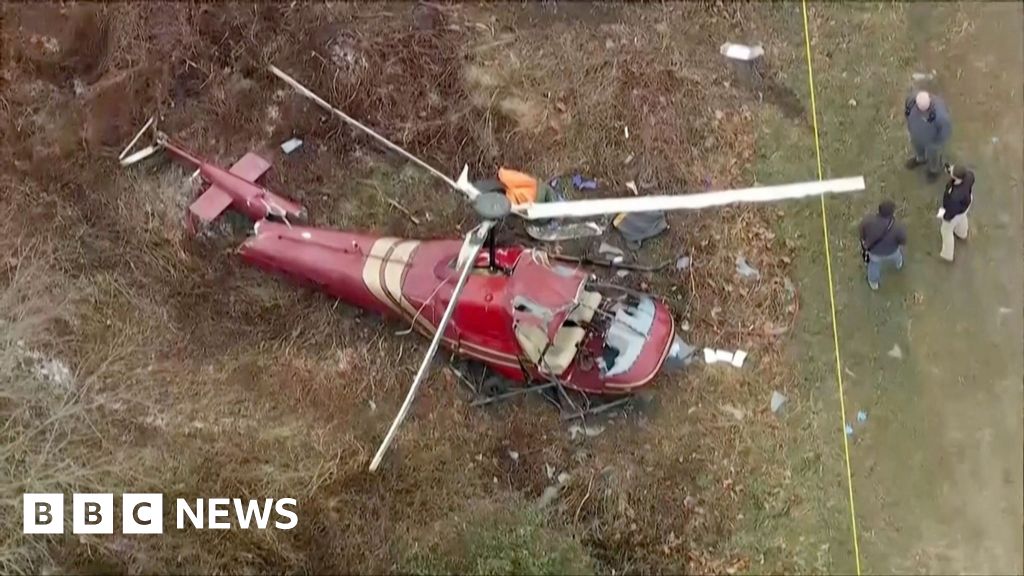
Tragic Mid-Air Helicopter Collision Claims Two Lives in New Jersey
A devastating mid-air collision between two helicopters near Hammonton Municipal Airport in New Jersey has resulted in the deaths of both pilots, shaking the local community and aviation enthusiasts alike. The incident unfolded around 11:25 a.m. on Sunday, when the aircraft plummeted to the ground near Route 30 and Basin Road, with one erupting into flames upon impact.[1][2]
Victims and Circumstances Revealed
The pilots were identified as 71-year-old Michael Greenberg of Sewell, piloting an Enstrom 280C, who perished at the scene, and 65-year-old Kenneth L. Kirsch of Carneys Point, flying an Enstrom F-28A, who succumbed to injuries at a hospital. Witnesses reported the helicopters flying unusually close together shortly after takeoff from the airport café where the pilots had stopped for breakfast, suggesting they may have been operating in tandem.[2][3]
Investigation and Broader Implications
The Federal Aviation Administration is probing the crash, which occurred about a mile from the airport in a sparsely populated field, averting greater tragedy. Such rare mid-air incidents underscore the perils of low-altitude flight and the need for stringent airspace protocols to prevent future losses in aviation.[1]
About the People Mentioned
Michael Greenberg
Michael E. Greenberg (born May 25, 1954) is an American neuroscientist renowned for his pioneering research on **neuroplasticity**—the brain's ability to adapt through learning, experience, or injury—and the molecular mechanisms linking neuronal activity to gene expression.[1][2][3] He earned a BA in Chemistry from Wesleyan University in 1976, followed by a PhD in Biochemistry from Rockefeller University in 1982 under Nobel laureate Gerald Edelman.[1][2][3] Greenberg's academic career at Harvard Medical School began in 1986 as an Assistant Professor in Microbiology and Molecular Genetics, advancing to full Professor in 1994.[2][3] From 1994 to 2008, he directed the Neurobiology Program at Boston Children's Hospital, then served as Chair of the Department of Neurobiology at Harvard Medical School from 2008 to 2022.[1][2][3] Since 2008, he has held the Nathan Marsh Pusey Professor of Neurobiology position in the Blavatnik Institute.[1][4] His laboratory's breakthroughs include elucidating signal transduction pathways from synapses to the nucleus, identifying activity-responsive cis-regulatory elements coordinating gene expression, and revealing cell-type- and species-specific transcriptional diversity.[1][2] These insights have advanced understanding of brain maturation, long-term memory, behavioral plasticity, and disorders like Rett Syndrome.[1][2][4] In 2023, Greenberg shared **The Brain Prize**—neuroscience's highest honor, awarded by the Lundbeck Foundation—with Christine Holt and Erin Schuman for their collective work on neuronal transcription and translation.[1][2][4] A prolific author of over 200 papers, he has edited journals like *Neuron* and mentored leading neuroscientists, including Morgan Sheng and David Ginty.[3] Elected to the National Academy of Sciences and American Academy of Arts and Sciences, Greenberg remains a pivotal figure in molecular neurobiology.[5]
Kenneth L. Kirsch
Kenneth L. Kirsch was a 65-year-old resident of Carneys Point, New Jersey, known as an experienced helicopter pilot.[2][4] He gained local recognition for his passion for aviation, frequently flying with fellow pilot Michael Greenberg, a longtime friend, and serving as a familiar presence at Hammonton Airport where they would land for meals before departing together.[4] Little is documented about his early life or professional background beyond his piloting expertise, but he was described by authorities as a veteran flyer who had been active in the hobby for many years.[4] Kirsch piloted an Enstrom F-28A helicopter, reflecting his familiarity with light aircraft operations.[2] His life ended tragically in a midair collision over Hammonton, New Jersey, involving two helicopters—one piloted by Kirsch and the other by Greenberg. Greenberg died at the scene, while Kirsch was airlifted in critical condition to a hospital but succumbed to his injuries shortly after.[2][4] A witness recounted rushing to Kirsch's crashed helicopter in her backyard, comforting him until first responders arrived.[4] Hammonton Police Chief Kevin Friel noted the duo's strong bond and routine at the airport, while the investigation into the crash—focusing on potential mechanical failure or pilot error—remains ongoing, with authorities meticulously recovering wreckage.[4] New Jersey Governor-elect Mikie Sherrill, a former Navy helicopter pilot, publicly expressed condolences for the victims' families and gratitude to emergency responders.[4] Kirsch's death, alongside Greenberg's, marked a significant loss to the local aviation community, with no prior notable public roles or achievements beyond his flying prominence reported.[2][4]
About the Organizations Mentioned
Federal Aviation Administration
The **Federal Aviation Administration (FAA)** is a U.S. government agency responsible for ensuring the safety, efficiency, and regulation of civil aviation and commercial space transportation within the United States and its surrounding international waters. Established originally as the Federal Aviation Agency in 1958, it became part of the Department of Transportation in 1967, adopting its current name[1][3]. The FAA’s core functions include regulating and overseeing air traffic control, pilot and technician certification, airport safety standards, and aircraft manufacturing and maintenance regulations. The agency manages air traffic for over 50,000 daily commercial and general aviation flights, ensuring safe and efficient navigation through the National Airspace System (NAS)[2][4]. It also develops and operates air traffic control and navigation systems used by both civil and military aircraft, showcasing its broad operational scope[1][3]. The FAA operates through five main lines of business: - Air Traffic Organization (ATO), managing air navigation services and control facilities such as towers and radar centers - Aviation Safety (AVS), responsible for certification of personnel and aircraft - Airports (ARP), overseeing national airport system planning and grants - Office of Commercial Space Transportation (AST), regulating commercial space launches and reentries - Security and Hazardous Materials Safety (ASH), focusing on risk reduction and infrastructure protection[4]. In addition to regulation, the FAA invests heavily in research and development, advancing aviation technology and safety systems, including aeromedical research and environmental programs addressing noise and pollution from aircraft[2][3]. Its mission emphasizes providing the safest, most efficient aerospace system globally, with a vision of integrating new technologies and users into aviation safely and innovatively[6]. Notable achievements include establishing stringent safety standards that have made U.S. airspace one of the safest worldwide and pioneering regulation of commercial space transportation, an emerging sector. The FAA’s commitment to innovation and safety continues to shape the future of aviation and aerospace, making it a central figure in both business and technolog