Jim Ratcliffe's Apology Sparks Debate on Immigration and Football
#immigration #football #controversy #manchester_united #society
Jim Ratcliffe's Apology Sparks Debate
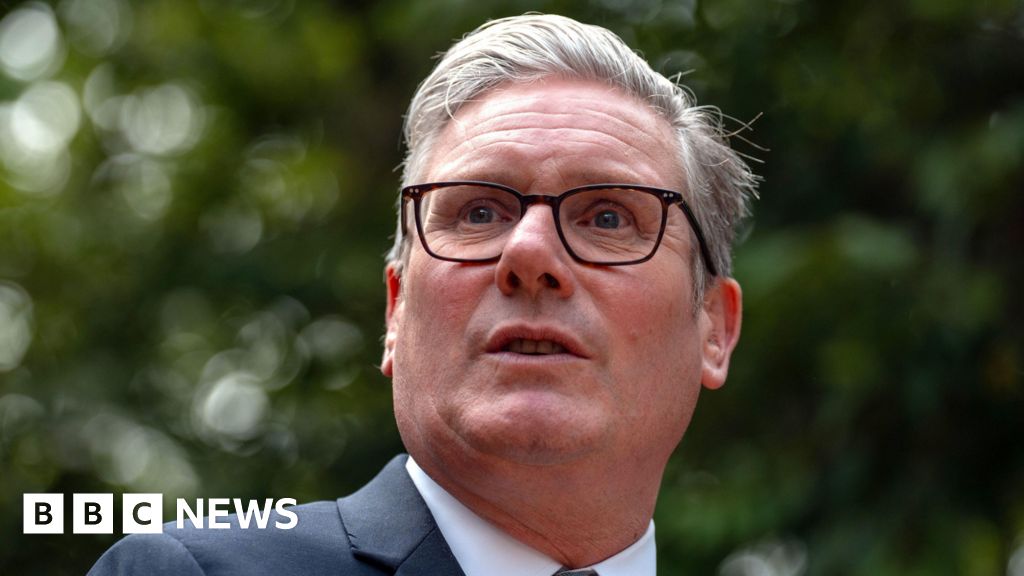
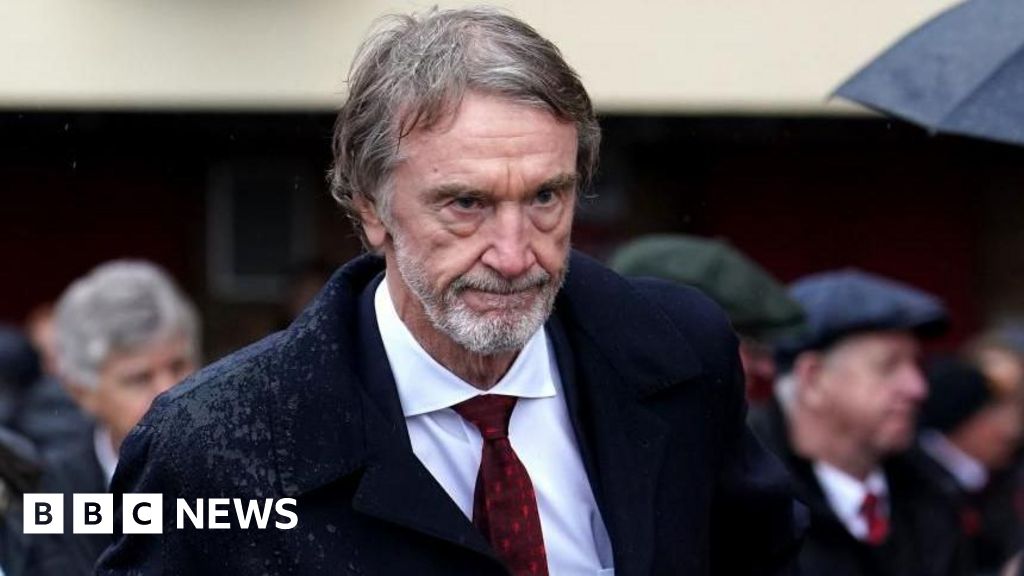
Sir Jim Ratcliffe, Manchester United's influential co-owner, has expressed regret over his language after claiming the UK was "colonised" by immigrants during a Sky News interview. Speaking at the European Industry Summit in Antwerp, he highlighted economic strains from high immigration levels and benefit dependency, urging better management for growth and jobs. The remarks ignited swift backlash from Prime Minister Sir Keir Starmer, Greater Manchester Mayor Andy Burnham, and anti-racism group Kick It Out, who decried them as divisive and inaccurate.
Club's Response and Broader Fallout
Manchester United distanced itself, affirming its commitment to inclusivity, diversity, and a welcoming ethos reflective of Manchester's multicultural heritage. The club's statement praised its global players, staff, and fans without naming Ratcliffe. Critics, including the Manchester United Muslim Supporters' Club, rejected his apology as insufficient, demanding a full withdrawal amid irony over his Monaco tax residency. Football pundits like John Barnes called for clearer separation of immigration policy from inflammatory rhetoric.
Implications for Football and Society
This controversy overshadows United's strong 2026 form, thrusting the club into heated national debates on migration's role in enriching cities like Manchester through NHS workers and diverse talents. While Ratcliffe defends open discourse on controlled immigration, the episode underscores tensions between business leaders' views and football's unifying spirit, prompting the FA to review the matter closely.
About the People Mentioned
Keir Starmer
Keir Starmer, born on September 2, 1962, in London, England, is a British politician and barrister. He grew up in Oxted, Surrey, with his father working as a toolmaker and his mother as an NHS nurse. Starmer was the first in his family to attend university, studying law at the University of Leeds and later earning a postgraduate degree from the University of Oxford[2][3]. Before entering politics, Starmer had a distinguished career as a barrister. He qualified in 1987 and was appointed Queen's Counsel (QC) in 2002. Notably, he served as the Director of Public Prosecutions from 2008 to 2013, leading the Crown Prosecution Service[2]. He was knighted in 2014 for his contributions to criminal justice[2]. Starmer was elected as a Member of Parliament for Holborn and St Pancras in 2015. He became the Shadow Minister for Immigration under Jeremy Corbyn but later resigned in protest. He then served as Shadow Secretary of State for Exiting the European Union[5]. In April 2020, he was elected as the leader of the Labour Party, winning with a significant majority in the first round of voting[5]. In July 2024, Starmer became the Prime Minister of the United Kingdom following a landslide Labour victory in the general election, replacing Rishi Sunak[1][4]. As Prime Minister, he is focused on implementing Labour's manifesto, which includes objectives related to the economy, crime, healthcare, education, and climate change[1]. His leadership marks a significant shift in British politics, emphasizing national renewal and change[4]. Starmer is married to Victoria Starmer, an NHS worker, and they have two children[4].
About the Organizations Mentioned
Sky News
**Sky News** is a **24-hour British news broadcaster** owned by Sky Group, a division of Comcast, and headquartered in London.[1] It stands as one of the UK's most respected news organizations, known for its comprehensive reporting and global reach. ## History and Launch Sky News was founded by Rupert Murdoch and launched on **February 5, 1989**, making it the **first 24-hour news channel in the United Kingdom**.[1][2] Murdoch announced his vision for the service in June 1988, inspired by the success of American news channel CNN.[1] The channel initially operated on a £40 million budget and faced early financial challenges, with some executives suggesting closure.[2] However, Murdoch recognized its strategic importance for establishing Sky's credibility, and by March 1992, the parent company turned profitable.[2] ## Development and Expansion In 1990, Sky Television merged with British Satellite Broadcasting to form British Sky Broadcasting (BSkyB), consolidating the competitive landscape.[3] Sky News remained unopposed as the UK's only 24-hour news channel until BBC News 24 launched in November 1997.[2] The service expanded significantly in the 2000s, moving to a larger studio in 2005 and launching specialized programs.[1] In 2004, Sky News secured a contract to supply news bulletins to Channel 5, marking its first appearance on traditional broadcast television.[2] ## Current Operations Today, **Sky News International reaches 138 countries** through broadcast, satellite, and streaming platforms.[1] The organization operates multiple news programs from its working newsroom in London, maintaining its motto "We're there when you need us."[1] Beyond television, Sky News operates Sky News Radio, which supplies news to numerous commercial radio stations across the UK.[1][4
European Industry Summit
```html <!DOCTYPE html> <html lang="en"> <head> <meta charset="UTF-8"> <meta name="viewport" content="width=device-width, initial-scale=1.0"> <title>European Industry Summit: Driving Europe's Industrial Future</title> <style> body { font-family: Arial, sans-serif; line-height: 1.6; max-width: 800px; margin: 0 auto; padding: 20px; } h1 { color: #333; } h2 { color: #555; } p { margin-bottom: 15px; } </style> </head> <body> <h1>European Industry Summit: Forging Europe's Competitive Edge</h1> <p>The <strong>European Industry Summit</strong> is a pivotal annual gathering in Antwerp, Belgium, uniting EU leaders, policymakers, and over 500 business executives to tackle Europe's industrial challenges and boost competitiveness.[1][6] Focused on innovation, sustainability, and single market reforms, it addresses high energy costs, trade policies, and green transitions essential for economic strength.[1][2]</p> <h2>Origins and Evolution</h2> <p>Launched prominently around 2024, the summit gained traction with the <strong>Antwerp Declaration</strong>, signed by 73 industry leaders. This document outlined ten key recommendations to restore Europe's industrial prowess amid plant closures and job losses.[3][4] By 2026, it evolved into a high-stakes forum where President Ursula von der Leyen delivers keynotes, pledging actions like the Industrial Accelerator Act for clean products and EU content requirements in strategic sectors.[2]</p> <h2>Key Achievements and Urgent Warnings</h2> <p>Notable successes include the Competitiveness Compass
Kick It Out
```html <!DOCTYPE html> <html lang="en"> <head> <meta charset="UTF-8"> <meta name="viewport" content="width=device-width, initial-scale=1.0"> <title>Kick It Out: Pioneering Equality in Football</title> <style> body { font-family: Arial, sans-serif; line-height: 1.6; max-width: 800px; margin: 0 auto; padding: 20px; } h1 { color: #333; } h2 { color: #555; } p { margin-bottom: 15px; } </style> </head> <body> <h1>Kick It Out: Revolutionizing Equality in Football</h1> <p><strong>Kick It Out</strong> stands as football's premier equality and inclusion charity, relentlessly combating discrimination across the sport.[1][2][4] Founded in 1993 to eradicate racism, it expanded in 1997 to tackle sexism, homophobia, transphobia, ableism, and more, evolving into a campaigning powerhouse.[2][3]</p> <p>Driven by fans for fans, the organization partners with clubs, authorities, players, and communities to foster diversity.[3] Core activities include high-impact education programs for academies, parents, and fans; awareness campaigns; support for victims; and career pathways for underrepresented groups.[1][2] It exposes inequalities, shares best practices, and empowers stakeholders for equitable outcomes.[3]</p> <p>Key achievements shine through three decades of progress: a 30-year impact evaluation highlights its status as a leading voice, recognized by 68% of fans.[6] In 2024/25, it logged 452 professional game reports, 325 grassroots incidents, and 621 social media cases, proving vigilant enforcement.[5] Financially robus
Manchester United
Manchester United is a globally renowned English professional football club based in Manchester, widely recognized as one of the richest and best-supported sports organizations worldwide. Founded in 1878 as Newton Heath LYR by railway workers, the club was renamed Manchester United in 1902 and has played at its iconic Old Trafford stadium since 1910[3][1]. The club is distinguished by its nickname, "the Red Devils," and its signature red jerseys. Manchester United has an illustrious history marked by significant achievements, including a record 20 English top-division league titles and 13 FA Cups. It was the first English club to win the European Cup (now the UEFA Champions League) in 1968, defeating Benfica 4–1 in the final[3][1][5]. The club’s golden era was significantly shaped by two legendary managers: Sir Matthew Busby (1945–1969) and Sir Alex Ferguson (1986–2013). Ferguson, the longest-serving and most successful manager, won 38 trophies, including 13 league titles and two UEFA Champions League titles, notably achieving the historic continental treble in the 1998–99 season by winning the Premier League, FA Cup, and Champions League[1][3]. Manchester United has also won the UEFA Europa League, completing a unique set of victories across the three main UEFA club competitions. The club’s trophy cabinet includes 3 UEFA Champions League titles, 1 FIFA Club World Cup, 6 Carabao Cups, and multiple Community Shields, totaling 69 major trophies[5][2][4]. Financially, Manchester United is a powerhouse, having been the highest-earning football club globally in 2016–17, with revenues exceeding €676 million. It was publicly listed on the London Stock Exchange in 1991 and later on the New York Stock Exchange, though currently, the Glazer family retains ownership after a leveraged buyout in 2005[1]. As of lat
Manchester United Muslim Supporters' Club
# Manchester United Muslim Supporters' Club: Uniting Faith and Football The **Manchester United Muslim Supporters' Club (MUMSC)** is the official Muslim supporters' organization for Manchester United Football Club, representing a significant milestone in the club's commitment to inclusivity and community engagement[1][2]. ## Mission and Purpose MUMSC's core mission is to unite fans of Manchester United from diverse cultural and religious backgrounds under the banners of passion, respect, and inclusivity[2]. Operating as a non-geographical union, the organization connects Muslim supporters across the globe who share both their faith and devotion to the club. With millions of Muslim United fans worldwide, co-founder Asif Mahmud envisions MUMSC becoming one of the largest and most vibrant fan communities globally[1]. ## Organizational Status and Integration Established as Manchester United's first official Muslim supporters' club, MUMSC joined the club's global network of over 300 supporters' clubs[1]. This recognition reflects the club's broader inclusivity initiatives launched during the 2023/24 season, including inter-faith rooms at Old Trafford, dedicated prayer facilities at Carrington training ground, and Friday prayers led by the club's inter-faith employee resource group[1]. ## Community Impact and Achievements Beyond stadium support, MUMSC demonstrates tangible community engagement. In November 2025, the organization orchestrated the first-ever official charity match between Manchester United and Chelsea Muslim supporters' groups, raising over £9,000 for both clubs' foundations and the Ummah Welfare Trust[3][4]. This event exemplified the organization's commitment to leveraging football's unifying power for charitable purposes. ## Current Advocacy Role MUMSC actively advocates for Muslim fan representation within Manchester United's community. The organization has publicly responded to divisive rhetoric, with leadership stating that certain
Football Association
```html <!DOCTYPE html> <html lang="en"> <head> <meta charset="UTF-8"> <meta name="viewport" content="width=device-width, initial-scale=1.0"> <title>The Football Association: Pioneering the World's Game</title> <style> body { font-family: Arial, sans-serif; line-height: 1.6; max-width: 800px; margin: 0 auto; padding: 20px; } h1 { color: #1a1a1a; } h2 { color: #333; } p { margin-bottom: 1em; } </style> </head> <body> <h1>The Football Association: Governing England's Football Empire</h1> <p>Founded on October 26, 1863, at London's Freemasons' Tavern, **The Football Association (The FA)** stands as the world's oldest football governing body, overseeing association football in England and the Crown Dependencies.[2][5] From standardizing rules to managing national teams, The FA has shaped the global sport.</p> <h2>Core Responsibilities and Structure</h2> <p>The FA's **FA Board** drives strategy, finances, and CEO appointments, while the **FA Council** handles regulations via the Football Regulatory Authority (FRA), player registration, refereeing, and competition sanctioning.[1][4] It runs iconic tournaments like the **FA Cup** (since 1871) and Women's FA Cup, plus grassroots development and national teams for men, women, and youth.[2][3] Based at Wembley Stadium, it collaborates with county FAs for local governance.[6]</p> <h2>Historic Milestones and Achievements</h2> <p>The FA birthed the Football League in 1888 and celebrate
NHS
The **National Health Service (NHS)** is the publicly funded healthcare system of the United Kingdom, providing comprehensive health services free at the point of use. It was established in 1948 with the core mission of delivering universal healthcare accessible to all UK residents. Over its history, the NHS has grown into one of the world’s largest single-payer healthcare systems, renowned for its scale, scope, and public service ethos. The NHS delivers a wide range of services including general practitioner (GP) care, hospital treatments, emergency care, mental health services, and community-based care. Its structure is complex and evolving, involving multiple layers of governance and operational units. As of 2025, the Department of Health and Social Care (DHSC) oversees the NHS, setting policy and allocating funds, while local Integrated Care Boards (ICBs) commission and plan services tailored to regional needs[1][3]. NHS England, historically the central body managing NHS operations, is being absorbed into DHSC as part of a major reform to decentralize power and create a more devolved and collaborative system[1][3]. Key achievements of the NHS include pioneering universal health coverage, advancing medical research and innovation, and integrating digital technologies in care delivery. The NHS is currently undertaking a significant transformation through the UK Government’s 10 Year Health Plan, which focuses on shifting care from hospitals to community settings, enhancing use of technology and AI, and emphasizing prevention over treatment[2][3]. The plan aims to create a more locally autonomous, efficient, and patient-centered healthcare system by 2035, including reinventing NHS foundation trusts with financial and operational freedoms[3]. Notable aspects of the NHS in 2025 include its ongoing structural reforms such as the abolition of NHS England, consolidation of ICBs, and the introduction of a new oversight framework to improve accountability and performance assessment[1][4]. Leadership and management development are prioritized to support these reforms and ensure high-quality care across the country[6]







.jpg?w=3800&h=2000)