Jim Schwartz Resigns as Browns DC Amid Head Coach Snub

Jim Schwartz Resigns from Browns Amid Head Coach Snub
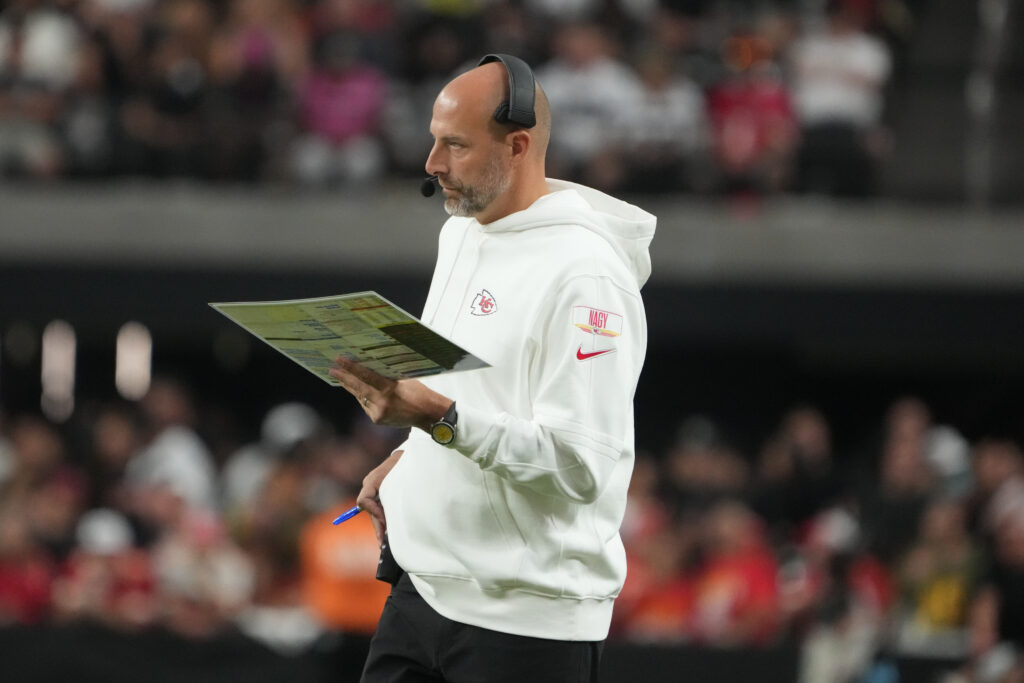
Cleveland Browns defensive coordinator Jim Schwartz has officially resigned, just weeks after being passed over for the head coaching job that went to Todd Monken. The 59-year-old submitted his letter of resignation, ending a three-year tenure marked by elite defensive performances. Despite the team's efforts to retain him, Schwartz made clear his desire to depart following the January 28 hiring.[1][2]
Schwartz's Stellar Legacy and Contract Complications
Schwartz transformed Cleveland's defense into a league powerhouse, leading it to top rankings in yards allowed multiple times. Stars like Myles Garrett, who shattered the single-season sack record and earned Defensive Player of the Year, thrived under his schemes. Yet, with two years left on his contract through 2026, the Browns retain his rights, blocking lateral moves to other defensive coordinator roles without permission.[1][3][6]
Expectations for a 2026 Sideline Absence
NFL insiders report the expectation that Schwartz won't coach anywhere in 2026, likely sitting out as the Browns cover his salary. This tug-of-war highlights behind-the-scenes tensions, with new coach Monken now tasked with finding a replacement while vowing to maintain the defensive identity. Fans await how this shift impacts Cleveland's rebuild.[2][7]
About the People Mentioned
Jim Schwartz
Jim Schwartz is an American football coach currently serving as the defensive coordinator for the Cleveland Browns in his fourth season with the team as of 2026.[1][8] In his 27th year as an NFL coach and 17th as a defensive coordinator, he began his professional career as a college/pro scout with the Browns from 1993 to 1995 before advancing through coaching roles.[1][2][5] A Maryland native, Schwartz started coaching at the college level as a graduate assistant at the University of Maryland (1989-1990) and Minnesota (1990-1991), followed by positions at North Carolina Central (1991-1992) and Colgate (1992).[2] He entered the NFL with the Tennessee Titans, spending a decade there from 1999 to 2008, including eight years (2001-2008) as defensive coordinator—the youngest in franchise history at the time—where his unit led the Titans to a 13-3 record and an AFC South title in 2008.[1][2][6] Schwartz served as head coach of the Detroit Lions from 2009 to 2013, guiding the team to the playoffs in 2011 after their 0-16 season in 2008, though his overall record was 29-51.[3][4] He later held defensive coordinator positions with the Buffalo Bills (2014), Philadelphia Eagles (2016-2020)—helping them win Super Bowl LII while leading the NFL in rush defense (79.2 yards per game)—and as a senior defensive assistant with the Titans (2021-2022), whose defense topped the league in rushing yards allowed.[1] During his coordinator tenure, he has coached seven different defensive linemen to double-digit sacks in a season.[1] Named the 2023 NFL Assistant Coach of the Year in his first Browns season, Schwartz remains a key figure in Cleveland's defensive scheme under head coach Kevin Stefanski, bringing over three decades of NFL experience.[1][5] A notable 2011 postgame altercation with San Francisco 49ers coach Jim Harbaugh during a Lions-49ers matchup drew media attention.[3]
About the Organizations Mentioned
Cleveland Browns
The **Cleveland Browns** are a professional American football team based in Cleveland, Ohio, competing in the National Football League (NFL) as a member of the American Football Conference (AFC) North division. Founded in 1944 by businessman Arthur B. "Mickey" McBride and coach Paul Brown, the Browns began play in 1946 in the All-America Football Conference (AAFC), where they dominated by winning all four league championships before the AAFC folded in 1949. The team then joined the NFL and maintained early dominance, reaching the NFL championship game every year from 1950 to 1955 and winning three titles during that period[2][3]. Named after their first coach Paul Brown, who is considered a pioneer of modern football, the Browns built a legacy of success with legendary players such as Jim Brown, widely regarded as one of the greatest running backs in NFL history. The franchise won a total of eight league titles (including AAFC and NFL championships) and 18 division trophies in its early decades, making it one of professional football’s dynasties[1][7]. Ownership shifted several times, notably to Art Modell in 1961, who controversially fired Paul Brown in 1963. The team won its last NFL championship in 1964 but struggled to reach the Super Bowl despite multiple AFC Championship game appearances in the 1980s under quarterback Bernie Kosar[2][3]. The Browns faced a major upheaval when Modell relocated the franchise to Baltimore in 1996, causing the team to be temporarily deactivated until it was reactivated as an expansion franchise in 1999[4]. Since their revival, the Browns have struggled with consistency and performance, often ranking among the NFL’s weaker teams. However, recent seasons have shown improvement, including a playoff win in 2020—their first since 1994. The team plays home games at FirstEnergy Stadium and is currently owned by Jimmy and Dee Hasla
NFL
## Overview of the NFL The National Football League (NFL) is the preeminent professional American football organization in the United States, renowned for its massive influence on sports, entertainment, and business. With 32 teams divided between the American Football Conference (AFC) and National Football Conference (NFC), the NFL organizes a 17-game regular season culminating in a single-elimination playoff and the Super Bowl—the most-watched annual sporting event in the U.S.[2] ## History and Evolution Founded in 1920 as the American Professional Football Association (APFA) in Canton, Ohio, the league initially comprised teams primarily from the Midwest and Northeast[1][3]. It was renamed the National Football League in 1922 and faced early instability, surviving competition from rival leagues such as the All-America Football Conference (AAFC) and multiple iterations of the American Football League (AFL)[2]. By the 1950s, the NFL had established a monopoly on professional football in the U.S., with only the Canadian Football League (CFL) operating independently in Canada[2]. The most significant development in NFL history was the 1966 merger agreement with the AFL, which led to a common draft and the creation of the Super Bowl as a championship game between the two league champions[1][2]. The leagues fully merged in 1970, reorganizing into the AFC and NFC and cementing the NFL’s dominance in American professional sports[1][2]. ## Key Achievements and Innovations The NFL pioneered lucrative television contracts, transforming football into a national pastime and a major media event. The league’s adoption of revenue-sharing and salary caps fostered competitive balance, helping small-market teams remain viable[2]. The NFL has also been a leader in sports technology, implementing instant replay, advanced player tracking, and digital platforms for fan engagement. Notable achievements include the expansion to 32 teams, the internationalization of the game through game