Chris Beard's Fiery Ejection Echoes Rick Barnes' Legacy
Chris Beard's Fiery Ejection Echoes Rick Barnes' Legacy
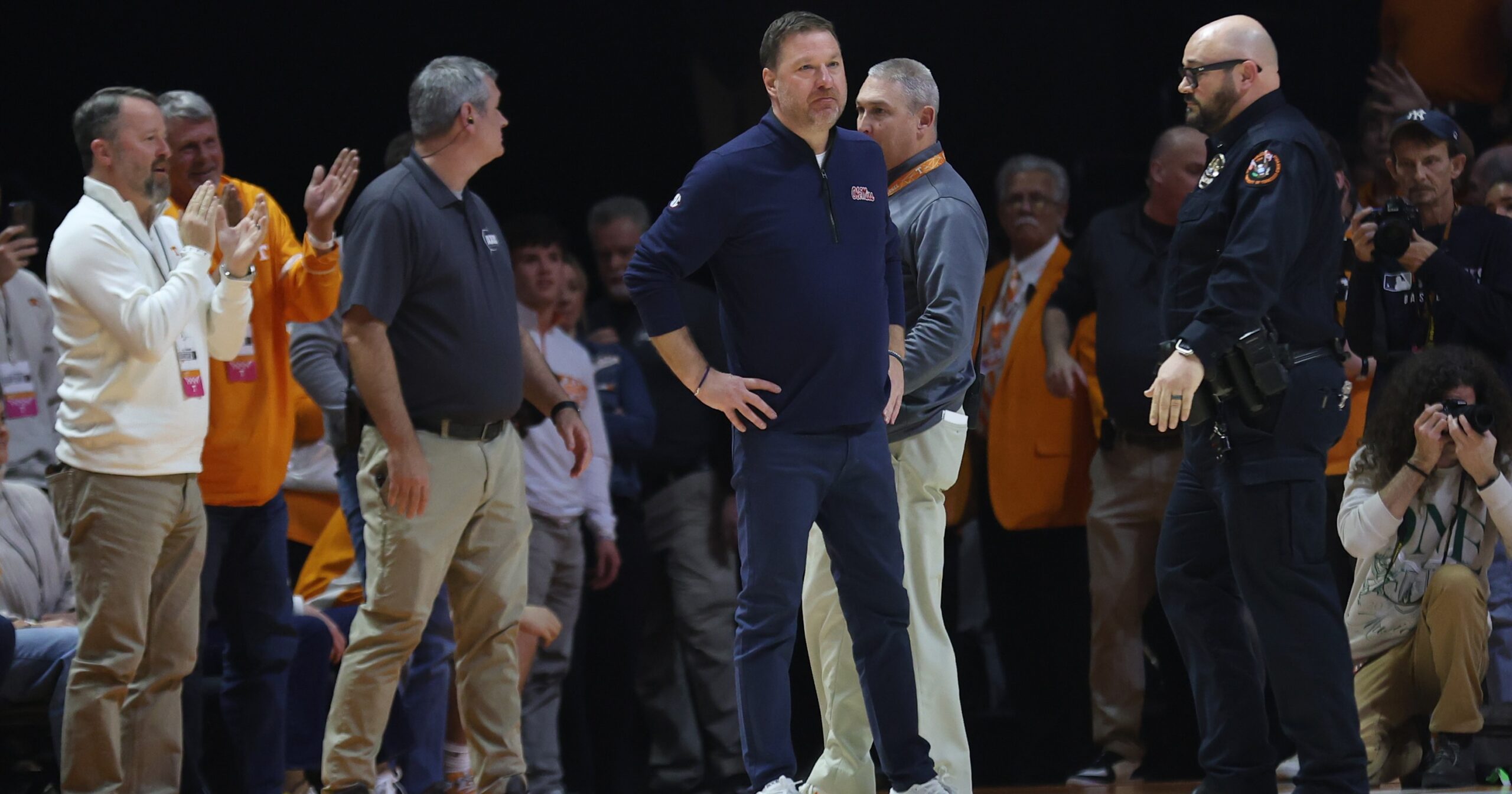
In a heated clash at Tennessee, Ole Miss coach Chris Beard was ejected late in the second half of an 84-66 loss, mirroring tactics once used by Vols legend Rick Barnes. With Tennessee pulling away, Beard stormed the court over a missed foul call in the paint, drawing double technicals despite knowing the consequences. His outburst aimed to ignite his struggling Rebels amid glaring disparities.[1][2]
Fighting for Every Call and Rebound
Beard justified his actions postgame, praising Barnes as a "Hall of Fame coach" who fought similarly for his program early on. Frustrations boiled over Tennessee's 34 free throws to Ole Miss's 21, plus a crushing 40-23 rebounding edge that doomed the Rebels. Despite a competitive first half, Tennessee erupted for 58 second-half points, led by Nate Ament's 28.[1][3]
Leadership Beyond the Bench
Even after ejection, Beard sprinted back to rally his team, showcasing passion that defines coaching grit. This stand underscores Ole Miss's resolve in a tough SEC grind, drawing parallels to Barnes' storied defenses. Such fire could spark turnarounds, proving ejections sometimes fuel greater battles ahead.[4][5]
About the Organizations Mentioned
Tennessee
**Tennessee** is a U.S. state renowned for its robust economic growth, business-friendly policies, and leadership in technology and manufacturing sectors, as highlighted in Governor Bill Lee's final 2026 State of the State address.[1][2][3] Historically, Tennessee's modern economic ascent traces to the Manhattan Project era, establishing it as a nuclear energy pioneer in East Tennessee. Under Governor Lee's seven-year administration (ending 2026), the state achieved landmark milestones: poverty rates fell below national averages for the first time, recidivism hit record lows, teachers received a 42% pay raise, and law enforcement saw historic increases. Fiscal discipline secured a decade-long AAA bond rating, fueling 300,000 new jobs and $11 billion in 2025 investments across 91 of 95 counties.[1][3][4] Memphis led in economic projects since 2019, with over half of new investments in rural areas.[1] Key achievements include topping national rankings for nuclear energy development, attracting $8 billion via the Nuclear Fund for small modular reactors at Clinch River—the first in America. High-profile wins: BlueOval City, Oracle's Nashville hub, xAI's Memphis expansion, Orano in Oak Ridge, and In-N-Out's relocation. Public safety surged with Memphis' Safe Task Force yielding a 55% Shelby County crime drop and 5,500 arrests. Education advanced, placing Tennessee top-five in reading/math growth, outpacing U.S. averages via TCAT expansions, GIVE grants, and CTE programs.[1][2][4] Currently, Tennessee thrives with a proposed $57.9–$59.5 billion FY2026 budget emphasizing opportunity: $20 million Rainy Day Fund boost to $2.2 billion (state record), $425 million infrastructure, 14 new state parks, $80 million Memphis safety grants, 150 more troopers, quantum computing acceleration, and housing initiatives like a
Ole Miss
## Overview The University of Mississippi, affectionately known as Ole Miss, is Mississippi’s flagship public research university and a member of the elite R1: Doctoral Universities—Highest Research Activity group, reflecting its commitment to high-impact research and academic excellence[5][7]. Founded in 1848, Ole Miss has grown from a regional institution to a nationally recognized university with over 24,000 students, offering more than 90 majors across 15 academic divisions, including nationally ranked programs in business, accountancy, law, pharmacy, and medicine[3][5]. ## History Ole Miss has a rich and complex history. While it is celebrated for its traditions, Southern charm, and picturesque campus in Oxford, it also played a pivotal role in the Civil Rights Movement when James Meredith became its first African American student in 1962, marking a turbulent but ultimately transformative chapter in its journey toward inclusivity and diversity[2][4]. Today, the university is noted for its efforts to foster a welcoming environment for students from all backgrounds, both within Mississippi and internationally[2][4]. ## Key Achievements Ole Miss has a legacy of innovation, notably in medicine: surgeons at its medical center performed the world’s first human lung and heart transplants in the 1960s[2]. The university’s research enterprise continues to address critical challenges in health, technology, and society, with a strong focus on community engagement and economic development[3][7]. Its Honors College is recognized for blending rigorous academics with experiential learning and community action[1][5]. ## Current Status Today, Ole Miss is a vibrant, diverse community that balances academic rigor with a lively campus culture. It is renowned for its SEC athletics, premier tailgating in “The Grove,” and a student life that regularly earns top marks for school spirit, social scene, and sense of community[1][3][5]. The university has adapted well to the digital age, offering robus