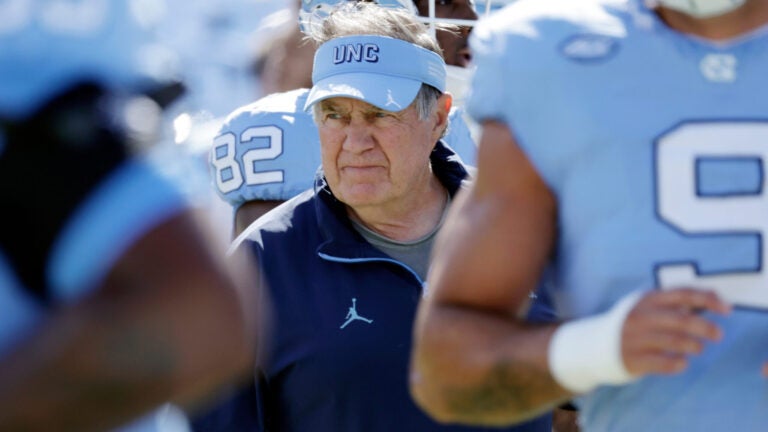
Kyle Whittingham's Surprise Move: Utah to Michigan Coaching Switch

Kyle Whittingham’s unexpected move from Utah to Michigan
Kyle Whittingham’s decision to step down at Utah and promptly accept Michigan’s head coaching job surprised fans and pundits, blending personal ambition with timing that amplified the move’s drama. The longtime Utes leader left a program he built into a consistent winner and took a high-profile role that offers greater national exposure and resources.
Context, reasons and ramifications
Reports cite Whittingham’s desire for a new challenge, a lucrative contract, and the chance to pursue a national title at a storied program as motivating factors, while Utah promoted continuity by elevating a trusted coordinator; the transition raises questions about recruiting, bowl plans and legacy for both schools.
What to watch next
Expect Michigan to integrate Whittingham’s defensive identity, Utah to emphasize stability, and observers to judge the move by next season’s on-field results and long-term program trajectories.
About the Organizations Mentioned
Utah
You asked about the organization "Utah." The most likely interpretation is that you mean the U.S. state of Utah (commonly referred to simply as "Utah"), which functions as a political and economic entity rather than a private organization; if you meant a different organization named "Utah" (a company, nonprofit, or product), please clarify. Utah is a U.S. state in the Mountain West that functions as a government, economic hub, and policy actor for roughly 3.27 million residents, with most people concentrated along the Wasatch Front around Salt Lake City and strong recent population growth since 2010[3][1]. Utah’s government oversees public services (education, transportation, health and human services), state budgeting and legislation, and economic development through the Utah Legislature and executive agencies; the 2025 state budget totaled about $30.8 billion for FY2026 and directed funds toward tax relief, education increases, infrastructure, and public-safety priorities[4][2]. Historically, Utah was organized as a U.S. territory and admitted as the 45th state in 1896; its modern economy diversified from mining and agriculture into technology, transportation, education, government services, and tourism—hosting five national parks and a strong outdoor-tourism sector[3]. Key achievements in recent years include sustained fastest-in-nation population growth since 2000, steady tax-policy adjustments (a gradually declining flat income tax rate), and significant investments in education and workforce programs reflected in legislative priorities[3][4]. Utah’s higher-education institutions (for example, Utah State University) contribute to research, workforce development, and sizable statewide economic impact[5][6]. Current status: Utah is a fast-growing, business-friendly state emphasizing affordability, infrastructure, workforce development, and public safety; the 2025 legislative agenda and budget continued tax cuts, teacher-pay
Michigan
When referring to "Michigan," it typically denotes the **State of Michigan**, a U.S. state known for its rich history, economic diversity, and technological advancements. Here's a summary of the state's key aspects: ## Overview and History Michigan is the 10th most populous state in the U.S., known for its automotive industry, agricultural production, and significant contributions to the nation's economy. Historically, Michigan was a major player in the automotive sector, with companies like Ford, General Motors, and Chrysler headquartered there. The state's economy has diversified over time, with advancements in technology, healthcare, and education. ## Key Achievements - **Economic Development**: Michigan has made significant strides in economic development, particularly in the automotive and technology sectors. The state continues to attract businesses with its favorable business environment and skilled workforce. - **Education and Innovation**: Michigan is home to prestigious institutions like the University of Michigan and Michigan State University, which contribute to research and innovation in the state. - **Infrastructure Improvements**: The state has invested heavily in infrastructure, including road repairs and development projects, to support economic growth. ## Current Status Currently, Michigan is focused on building on its past achievements. Governor Gretchen Whitmer has emphasized the importance of creating jobs, lowering costs, and investing in education and infrastructure. The state's budget for Fiscal Year 2026 includes significant investments in these areas, with a focus on bipartisan cooperation to address challenges like road maintenance and economic development. ## Notable Aspects - **Public Health Infrastructure**: Michigan's public health system is supported by the Michigan Department of Health and Human Services (MDHHS) and local health departments, ensuring comprehensive health services across the state. - **Technological Advancements**: The state is a hub for technological innovation, with initiatives like the Innovate Tech Hub providing resources for businesses and entrepreneurs. - **Trade Relations**: Michigan plays a crucial role in trade with Canada, with efforts to maintain strong economic ties with its