Lindsey Vonn Airlifted After Shocking Crash Ahead of 2026 Milano Cortina Games

USA Olympics Legend Airlifted After Shocking Crash
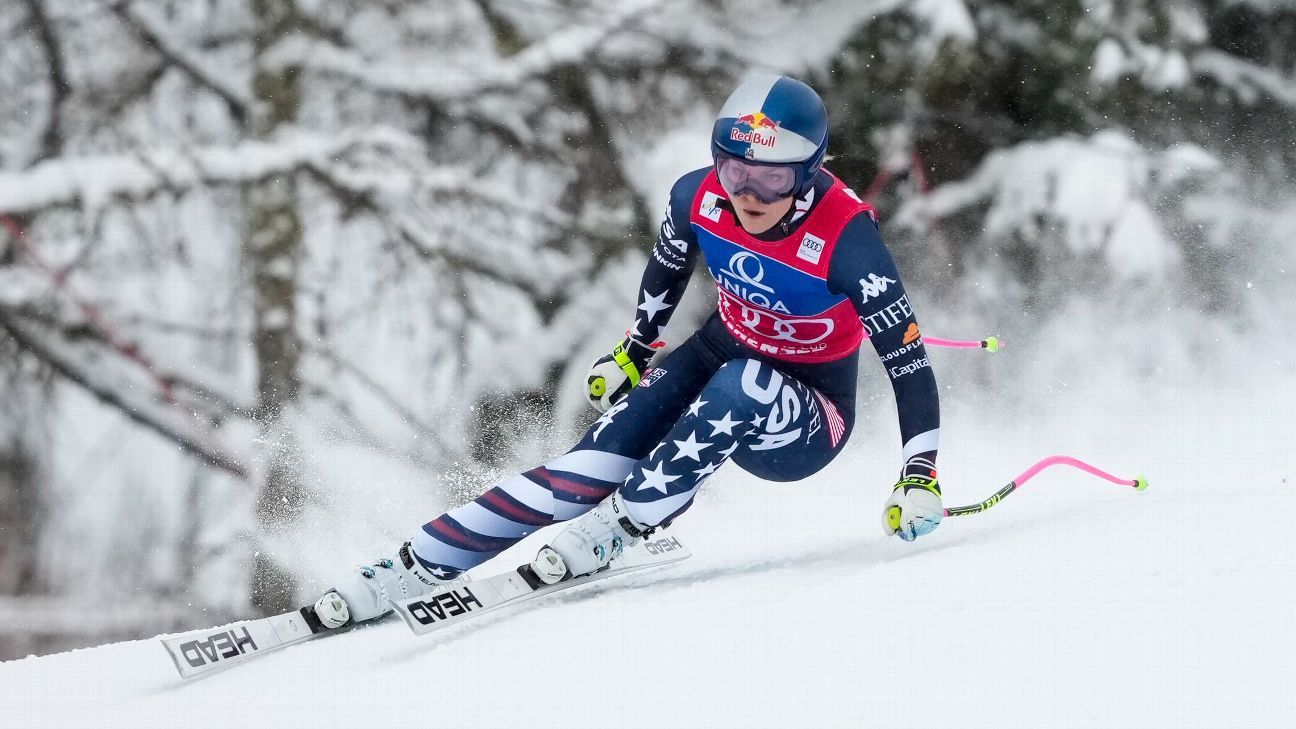
Lindsey Vonn, the iconic U.S. downhill skier and multiple Olympic gold medalist, suffered a harrowing crash during her final race before the 2026 Milano Cortina Games. Competing in Switzerland, the legend lost control on a treacherous course, leading to an immediate airlift to a nearby hospital. Fans worldwide held their breath as helicopters whisked her away, with initial reports confirming serious injuries that now cast doubt on her participation in the upcoming Olympics.[1]
Details of the Dramatic Incident
The crash occurred on a high-speed descent, where Vonn, pushing limits in what she called her swan song, collided with a barrier at over 60 mph. Medical teams stabilized her on-site before the airlift. This USA Olympics star, known for her resilience and record-breaking wins, faces a uncertain recovery timeline just months from the Games.[1]
Lessons in Pushing Boundaries
Vonn's story transcends sports, mirroring how real-world challenges build true champions. Much like skipping rote flashcards for immersive conversations sharpens language skills, Vonn's career thrived on practical grit over theory. Her setback reminds athletes to balance ambition with safety as 2026 approaches.
About the People Mentioned
Lindsey Vonn
Lindsey Vonn (born October 18, 1984, in St. Paul, Minnesota) is an American **alpine ski racer** widely regarded as one of the greatest female skiers in history.[4][5] She began skiing at age three, later moving with her family to Vail, Colorado, to pursue elite training, and first gained international attention at 14 by winning the slalom at Italy’s Trofeo Topolino, a first for an American girl.[1][5] Vonn made her **Olympic debut** at 17 at the Salt Lake City 2002 Winter Games and went on to compete in four Olympics: 2002, 2006, 2010, and 2018.[2][5] At the **2010 Vancouver Olympics**, she became the first U.S. woman to win **downhill gold** and also earned **bronze in super-G**.[4][5] After missing the 2014 Sochi Games due to injury, she returned to win **bronze in downhill** at PyeongChang 2018, bringing her Olympic total to **three medals** (one gold, two bronze).[4][5][7] On the **World Cup** circuit, Vonn dominated speed events (downhill and super-G). She won **four overall World Cup titles** (2008–2010, 2012) and a record **eight World Cup downhill titles**, amassing **82 World Cup race victories** and 138 podiums before retiring in 2019.[3][4][5] At retirement, her 82 wins were the most by any woman in World Cup history, a mark later surpassed by Mikaela Shiffrin.[3][6] She also collected **seven world championship medals**, including two golds in 2009 (downhill and super-G).[3][4] Vonn’s career was marked by repeated comebacks from serious injuries, including multiple knee ligament tears and fractures, which contributed to her high profile and reputation for resilience.[3][5][6] Since retirement, she has remained prominent as a media personality, author, and advocate for women and girls in sport, and she was inducted into the U.S. Olympic & Paralympic Hall of Fame for her achievements.[2]
About the Organizations Mentioned
USA Olympics
The **United States Olympic & Paralympic Committee (USOPC)**—often referred to in shorthand as the organization behind "USA Olympics"—is the federally chartered nonprofit that serves as both the National Olympic Committee (NOC) and National Paralympic Committee (NPC) for the U.S., fielding elite teams for the Olympic, Paralympic, Youth Olympic, Pan American, and Parapan American Games.[1][2][3] Founded in 1894 (with IOC recognition in 1900 as the American Olympic Committee), the USOPC has evolved through names like United States Olympic Committee (USOC) until its 2019 rebrand to fully integrate Paralympics via the 1998 Paralympic Amendment to the Ted Stevens Olympic and Amateur Sports Act of 1978.[1][3][5] Headquartered in Colorado Springs, Colorado, it uniquely manages both Olympic and Paralympic operations without government funding, relying on private donations and commercial partners—one of only four such NOCs worldwide.[1][3] The USOPC trains, funds, and enters U.S. teams, collaborates with 45 National Governing Bodies (NGBs) for sports administration, and provides athletes with performance services like sports medicine, nutrition, psychology, health insurance, tuition grants, and career support at Olympic Training Centers.[1][2][4] It oversees U.S. city bids for hosting Games (e.g., LA 2028), approves trials, and stewards the Olympic Movement alongside entities like the U.S. Anti-Doping Agency and Center for SafeSport.[1][4] **Key achievements** include establishing the U.S. as the most medaled nation in Olympic history, hosting more international events, and leading global sport roles.[1] Current chair Gene Sykes (since 2023) guides its privately funded model, emphasizing innovation in athlete support and technology-driven performance (e.g., physiology and tech analytic