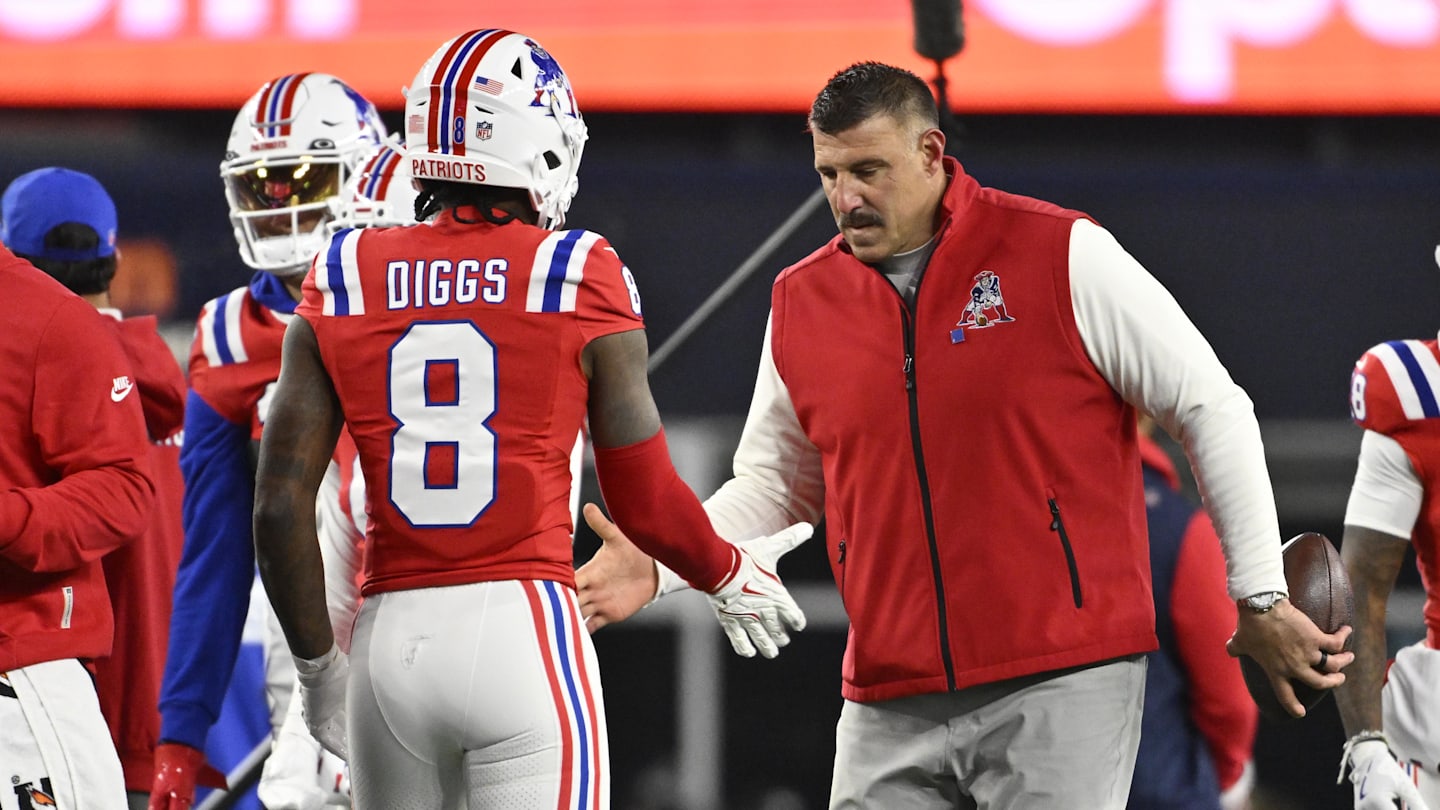
Marcus Woodson Named Kansas State Co-Defensive Coordinator
#marcus_woodson #kansas_state #football #coaching #college_football

About the People Mentioned
Perplexity
**Perplexity AI** is an American software company founded in August 2022 by engineers Aravind Srinivas (CEO), Denis Yarats (CTO), Johnny Ho (Chief Strategy Officer), and Andy Konwinski, specializing in an AI-powered web search engine that delivers synthesized responses with real-time citations from internet sources.[1][2][3] The founders drew from experiences at OpenAI, Meta, Quora, and Databricks to address limitations in traditional search and early AI chatbots like ChatGPT, which often lacked verifiable sources.[1][2][3] Perplexity launched its flagship conversational "answer engine" on December 7, 2022, initially as a free public beta using OpenAI's GPT-3.5 and Microsoft Bing, later incorporating proprietary models based on Mistral-7B and LLaMA-2.[1][2][4] It pivoted from an earlier tool, Bird SQL, after Twitter's API changes in February 2023, focusing on direct answers over links.[1][2] Key achievements include rapid growth: 2 million monthly active users by March 2023, 10 million by January 2024, and 780 million queries processed monthly by 2025.[1][2][5] Funding milestones propelled valuations from $1 billion in April 2024 (after $165 million raised) to $14 billion in June 2025 ($500 million round), reaching $20 billion by September 2025.[3] Backed by investors like Jeff Bezos, Nvidia, and Shopify's Tobi Lutke, it introduced mobile apps, a Pro subscription, Chrome extension, and a publishers' revenue-sharing program in July 2024.[1][3][4] Recent events underscore ambition: In January 2025, Perplexity proposed merging with TikTok's U.S. operations ahead of a ban; in August 2025, it bid $34.5 billion for Google Chrome to address antitrust issues.[3] Today, Perplexity remains a leading AI search disruptor, blending LLMs like GPT-4, Claude, and Mistral for personalized, ad-free research, challenging Google with over 10 million users and unicorn status in under two years.[2][3][4][5] (Word count: 298)
About the Organizations Mentioned
Kansas State
Kansas State University (K-State) is a public land-grant research university established in 1863 as the first operational land-grant college under the Morrill Act, making it the first public higher education institution in Kansas. Its main campus is located in Manhattan, Kansas, with additional campuses in Salina and Olathe, each specializing in unique academic and research areas such as aerospace, technology, bioenergy, animal health, and food safety[1][2][4][6]. K-State is classified as an R1 doctoral university, indicating very high research activity. It offers over 250 academic programs across nine colleges, including Agriculture, Architecture, Arts and Sciences, Business Administration, Engineering, Veterinary Medicine, and Leadership Studies. The university provides a comprehensive range of degrees, including 65 master's and 45 doctoral programs, emphasizing applied learning, leadership development, and industry partnerships[2][3][9]. The university is known for its strong commitment to research and innovation, with faculty conducting nationally recognized research that is integrated into the student learning experience. The Olathe campus notably fosters collaboration between students, researchers, and companies, particularly in biosciences and technology sectors[3]. K-State also offers extensive online programs, expanding access to its educational resources. With a student body of over 21,000 and nearly 4,000 full-time faculty and staff, K-State prides itself on a connected community of difference-makers focused on innovation, creativity, and societal impact. It embraces its heritage as a land-grant institution dedicated to teaching, research, and service. Traditions like the Wildcat mascot and the fight song "Wildcat Victory" enrich campus culture, while the university also participates in the Big 12 athletic conference[4][7]. Kansas State University remains a significant player in business and technology education, combining historical legacy with forward-looking research and community engagement to prepare students for leadership in a rapidly evolving world[1][2][3].