Mars Rover AI Drives Autonomously on the Red Planet
Mars Rover Can't Escape AI Even On A Whole Separate Planet
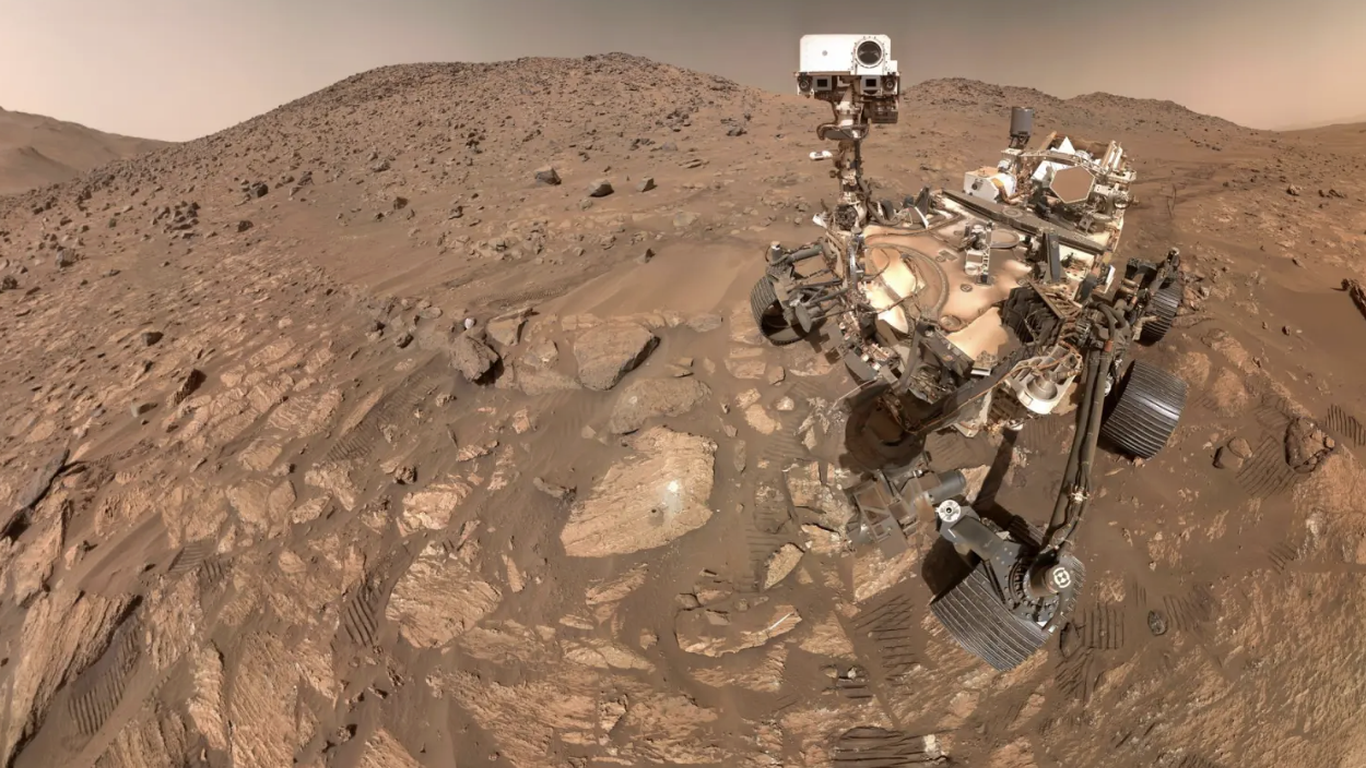
Even on the distant Red Planet, NASA's Perseverance rover now relies on artificial intelligence for navigation, proving AI's reach extends across the solar system. Vast distances averaging 140 million miles from Earth create communication delays of 4 to 24 minutes one-way, making real-time remote control impossible. Traditional manual planning by human experts, analyzing terrain images and plotting waypoints every 330 feet, has dominated for 28 years but slowed exploration to mere 100-meter daily traverses.
AI Takes the Wheel on Mars
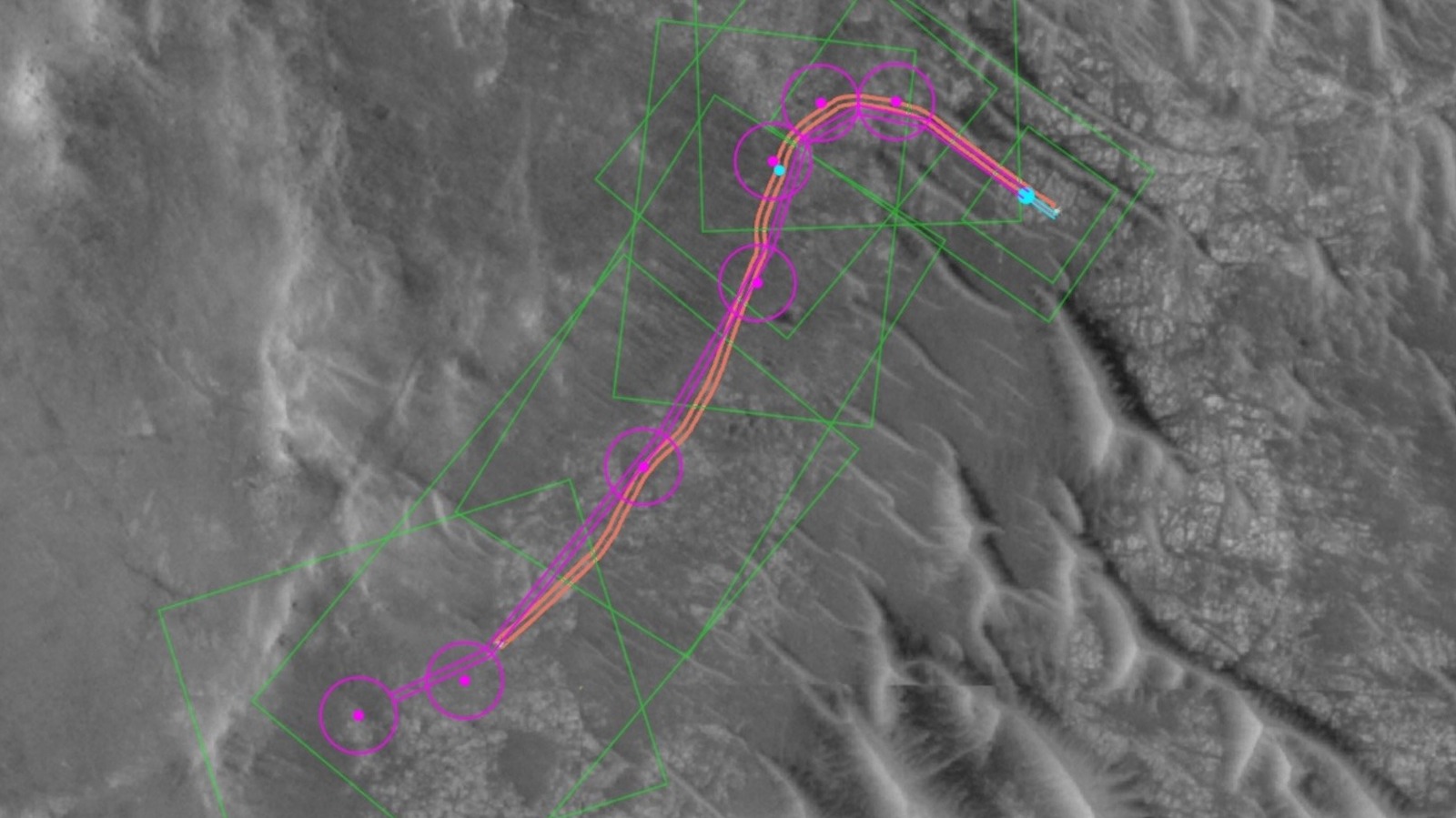
In December 2025, Perseverance completed its first fully AI-planned drives, covering 689 feet on December 8 and 807 feet two days later. Using vision-language models from Anthropic's Claude, the system generated safe waypoints autonomously from JPL's datasets, bypassing human input. Rigorous validation via a digital twin replica checked over 500,000 telemetry variables, ensuring compatibility with the rover's flight software and hardware constraints.
Future of Autonomous Exploration
This breakthrough promises kilometer-scale drives, reducing operator workload while flagging scientific features in vast image volumes. AI achieves 45% faster routing, with sustained speeds up to 0.7 m/s and 99% terrain classification accuracy, revolutionizing planetary missions despite challenges like dust storms and latency.
About the Organizations Mentioned
NASA
The National Aeronautics and Space Administration (NASA) is the United States’ premier civil space agency, responsible for the nation’s civilian space program, aeronautics research, and aerospace technology development[1][2]. Headquartered in Washington, D.C., NASA operates ten major field centers across the country and employs nearly 18,000 civil servants, supported by an extensive network of contractors, academic institutions, and international partners[1][2]. Since its establishment in 1958, NASA has revolutionized humanity’s understanding of the cosmos, pioneered technological advancements, and shaped global space policy. ## History and Key Achievements NASA was created in response to the Soviet Union’s 1957 launch of Sputnik, with the goal of ensuring U.S. leadership in space exploration. It succeeded the National Advisory Committee for Aeronautics (NACA) and quickly became the driving force behind iconic programs such as Project Mercury (America’s first human spaceflight program), Project Gemini (which developed techniques for space rendezvous and extravehicular activity), and the Apollo program, which landed astronauts on the Moon between 1969 and 1972[1]. The agency also developed the Space Shuttle, the world’s first reusable spacecraft, and built the International Space Station (ISS), a symbol of international collaboration and scientific research[1][5]. NASA’s robotic exploration has been equally transformative, with over 1,000 uncrewed missions investigating Earth, the Moon, Mars, and beyond. The agency’s fleet of observatories—including the Hubble Space Telescope and the James Webb Space Telescope—has provided unprecedented views of the universe, from the birth of stars to the detection of exoplanets[1]. The Perseverance rover is currently searching for signs of ancient life on Mars, while New Horizons explored Pluto and the outer solar system[1]. ## Current Status and Notable Aspects Today, NASA is advancing the Artemis program, aiming to return human
Jet Propulsion Laboratory
The **Jet Propulsion Laboratory (JPL)** is NASA's premier federally funded research and development center for robotic space exploration, managed by the California Institute of Technology (Caltech) in La Cañada Flintridge, California.[1][2][4] Founded on October 31, 1936, by Caltech researchers experimenting with rocket propulsion, JPL evolved from U.S. Army projects during World War II, developing pioneering ballistic missiles like the MGM-5 Corporal and MGM-29 Sergeant—the nation's first guided systems.[1][4] JPL's core mission involves designing, building, and operating planetary robotic spacecraft, Earth-orbit satellites, and astronomy instruments, while managing the NASA Deep Space Network for solar system communications.[1][2][4] With over 4,500 employees under Director Dave Gallagher, it drives innovation across **Earth science**, planetary exploration, and astrophysics, employing more than 100 missions to probe our solar system and beyond.[2][5][6] Key achievements include launching Explorer 1, America's first satellite in 1958; iconic probes like Mariner, Surveyor, Galileo, Cassini, and Mars Pathfinder; and all NASA Mars rovers, from Curiosity to Perseverance, which recently completed its first AI-planned drive.[1][2][3][4] JPL spacecraft have visited every planet, the Sun, and interstellar space, pioneering technologies like synthetic aperture radar (Seasat, NISAR) and instruments for Hubble, Spitzer, Kepler, and James Webb's MIRI.[4][5][8] Active projects encompass Juno at Jupiter, Psyche asteroid mission, SMAP soil monitoring, and Europa ice analysis.[1][2] Today, JPL thrives with 40+ active missions, including Mars sample return efforts and NISAR with ISRO, fostering breakthroughs in disaster prediction, exoplanets, and life detection.[2]
Anthropic
Anthropic is an American artificial intelligence (AI) startup founded in 2021 by former OpenAI executives Dario Amodei, Daniela Amodei, Jack Clark, Sam McCandlish, and Tom Brown. The founders left OpenAI over concerns about AI safety and alignment, particularly disagreeing on OpenAI’s partnerships and strategic direction. Anthropic was established as a public-benefit corporation, emphasizing the development of AI systems that are **safe, reliable, interpretable, and aligned with human values**—balancing shareholder interests with broader societal good[2][4][5]. Since its inception, Anthropic has rapidly grown both in workforce and market presence. From only 192 employees in 2022, it expanded to 1,097 employees globally by 2025, marking a nearly sixfold increase in three years, reflecting aggressive scaling especially in 2023-2024[1][3]. This workforce supports Anthropic’s mission to build large language models (LLMs) that are *helpful, honest, and harmless* while advancing techniques to make AI behavior more predictable and controllable[4]. Anthropic’s funding success is remarkable, having raised approximately $7.3 billion in multiple rounds within just a few years, including a $4 billion commitment from Amazon in 2024 and a record $13 billion financing round in September 2025. These investments have propelled the company's valuation to around $61.5 billion[2][3]. This financial backing underscores substantial investor confidence in Anthropic's vision and technology. The company is known for its flagship AI models like the “Claude” series, with recent releases such as Claude 3.5 and Claude Sonnet 4.5, which are competitive with industry leaders like GPT-4 in natural language understanding and coding tasks[2][6]. Anthropic also actively collaborates with academic institutions and regulators to formalize AI safety standards, reinforcing its leadership in ethical AI development[3].