Marvel Pays Tribute to Robert Redford
#robert_redford #marvel_studios #captain_america #the_winter_soldier #avengers #endgame
Introduction
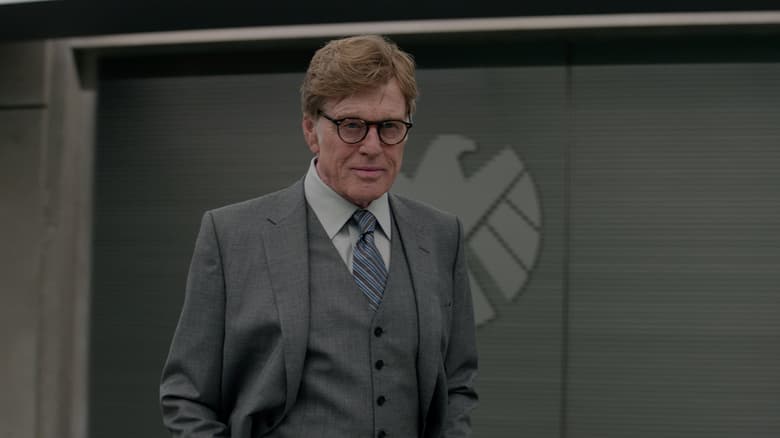
Marvel Studios recently paid tribute to the late Robert Redford, one of the most iconic actors in Hollywood, who left an indelible mark on the Marvel Cinematic Universe. Redford's portrayal of Alexander Pierce in 'Captain America: The Winter Soldier' and 'Avengers: Endgame' left fans in awe and admiration. His incredible talent and on-screen presence will be remembered for generations to come.
Key Details
Robert Redford's inclusion in the Marvel films was a surprise to many, as the actor was known for his preference for independent films over big-budget blockbusters. However, his decision to join the MCU was a testament to the quality and impact of the franchise. His character, Alexander Pierce, was a complex and compelling villain, adding depth and layers to the story. Redford's performance was widely praised by critics and fans, solidifying his place in the Marvel universe.
Impact
Redford's presence in the Marvel films not only brought in a new audience but also elevated the overall quality of the movies. His experience and talent added a level of authenticity and credibility to the films, making them more than just superhero movies. His legacy will continue to live on through his timeless performances and contributions to the film industry.
About the People Mentioned
Robert Redford
Charles Robert Redford Jr. (August 18, 1936 – September 16, 2025) was an acclaimed American actor, director, and producer whose six-decade career defined the American New Wave era, blending charisma, versatility, and a commitment to independent cinema.[2][3][6] Born in California and later based in Utah, Redford began in 1960s television with appearances on "The Twilight Zone" and "The Untouchables," transitioning to film with his Broadway adaptation *Barefoot in the Park* (1967).[1][2] Breakthrough stardom arrived via *Butch Cassidy and the Sundance Kid* (1969) opposite Paul Newman, followed by iconic roles in *The Sting* (1973), *The Way We Were* (1973), *All the President's Men* (1976), *Jeremiah Johnson* (1972), *The Candidate* (1972), and later *Avengers: Endgame* (2019).[1][2][3][6] As a director, his debut *Ordinary People* (1980) earned him the Academy Award for Best Director and Best Picture, with further credits including *Quiz Show* (1994), *A River Runs Through It* (1992), and *The Horse Whisperer* (1998).[1][2][3][4] Redford co-founded the Sundance Institute in 1980 and its influential film festival in 1978 (relaunched 1985), championing indie filmmakers and launching careers worldwide.[1][3][4] His accolades include two Academy Awards, multiple Golden Globes (plus the Cecil B. DeMille Award), BAFTA Awards, a 2001 Honorary Oscar, and the Presidential Medal of Freedom.[1][2][5][7] An outspoken environmentalist, he advocated for preservation and social justice, producing documentaries like *Public Trust* (2020).[3][4] Redford, survived by his second wife Sibylle Szaggars, two daughters, and seven grandchildren, died at 89, leaving a legacy as Hollywood's thoughtful leading man and indie pioneer.[2][3]
About the Organizations Mentioned
Marvel Studios
## Marvel Studios: A Comprehensive Overview Marvel Studios is a film and television production company that has become synonymous with the Marvel Cinematic Universe (MCU), a sprawling, interconnected franchise of superhero films and series based on characters from Marvel Comics[1][6]. The studio is widely recognized for pioneering the shared universe concept in cinema, where storylines, characters, and events cross over multiple films and shows, creating a cohesive and immersive narrative experience[6]. ## History and Formation Founded in August 1996, Marvel Studios was established as Marvel Entertainment sought greater creative control over its characters’ on-screen adaptations[1]. In its early years, Marvel Studios operated by developing scripts and packaging projects, then licensing them to major studios like 20th Century Fox for production and distribution[1]. This period saw the release of films such as *Blade* (1998), which, while not part of the later MCU, demonstrated Marvel’s ability to successfully adapt its comics for the big screen[2]. A pivotal moment came in 2004, when David Maisel joined as COO and orchestrated a bold financial move: Marvel secured a $525 million non-recourse loan from Merrill Lynch, using the film rights to 10 key characters as collateral[2][4]. This risky venture paid off spectacularly, enabling Marvel to self-finance its films and retain greater control over its intellectual property[4]. ## Key Achievements and Business Model The studio’s breakthrough came with *Iron Man* (2008), the first film fully produced by Marvel Studios and the launchpad for the MCU[6]. This was followed by a series of interconnected films culminating in *The Avengers* (2012), which proved the viability and profitability of the shared universe model[6]. Marvel Studios’ approach—combining consistent quality, strategic planning, and fan engagement—has made the MCU the highest-grossing film franchise of all time. Marvel Studios’ business model


:max_bytes(150000):strip_icc()/Rebecca-Romijn-072625-c554ba5f343845b990bb83b9def22af1.jpg)