Netflix Reveals Real-Life Succession Drama: Dynasty - The Murdochs Docuseries

Netflix Unveils the Real-Life Succession Drama
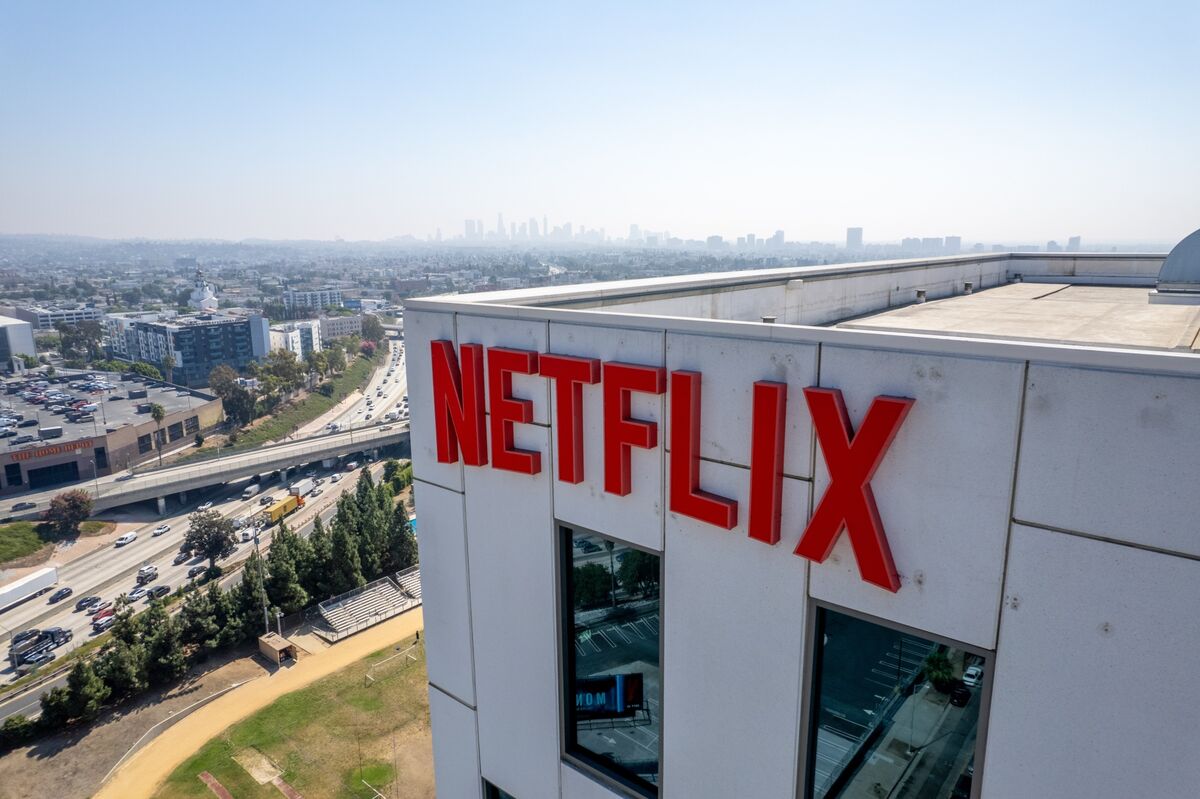
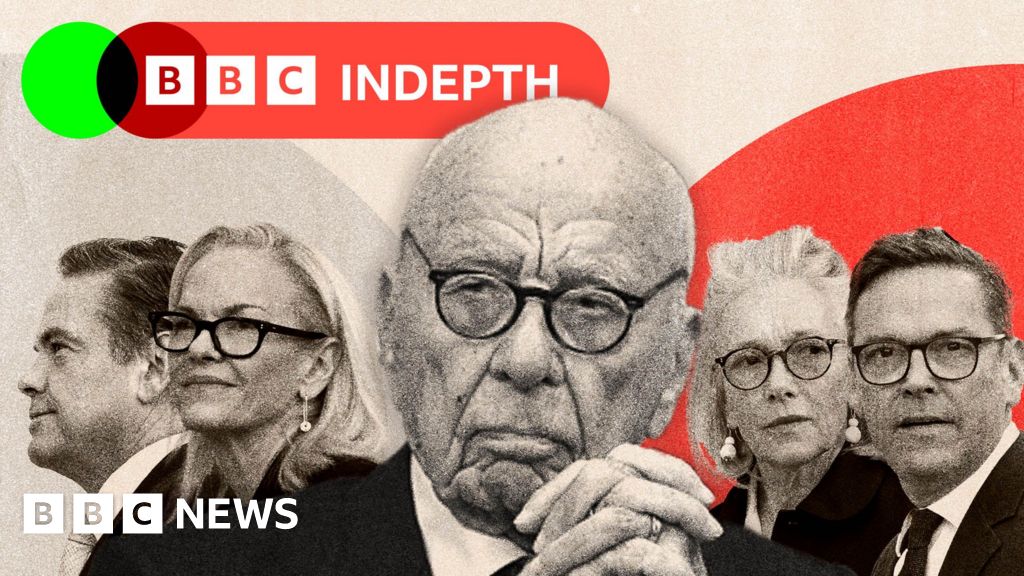
Netflix's upcoming docuseries "Dynasty: The Murdochs" promises to deliver a behind-the-scenes look at the power struggle within one of media's most influential families. The four-part series chronicles the succession battle involving media mogul Rupert Murdoch and his children, culminating in a landmark settlement last fall. Premiering March 13, the documentary explores how Murdoch raised his heirs as competitors rather than family members, creating what experts describe as a corporate "Hunger Games" dynamic that ultimately fractured the dynasty.
Unprecedented Access and Expert Insights
What distinguishes this docuseries is its access to thousands of pages of private communications, including emails and text messages previously unseen by the public. The series features interviews with former Murdoch employees and prominent journalists from outlets like The New York Times and The Atlantic who covered this compelling saga. Directed by Emmy-winning documentarian Liz Garbus, the production brings cinematic storytelling to corporate intrigue, offering viewers an intimate examination of ambition, legacy, and family conflict at the highest levels of global media.
```About the People Mentioned
Rupert Murdoch
Rupert Murdoch (born Keith Rupert Murdoch, March 11, 1931) is an Australian-American former business magnate, investor, and media mogul who is widely regarded as one of the most influential figures in global media for the past half-century[3]. After inheriting a small Australian newspaper from his father in 1952, Murdoch rapidly expanded his holdings, acquiring provincial and metropolitan newspapers across Australia and New Zealand, and pioneering the modern tabloid format with an emphasis on sports, scandal, and eye-catching headlines[3]. His aggressive acquisition strategy extended internationally, with purchases of iconic British newspapers such as The News of the World, The Sun, and The Times, as well as significant American media assets including the New York Post, 20th Century Fox, Fox News, and The Wall Street Journal[4]. Murdoch’s business approach combined relentless ambition, shrewd dealmaking, and a keen sense of public sentiment, enabling him to build a media empire—News Corp—that spans television, print, and digital platforms across multiple continents[2]. His outlets have been credited with shaping political discourse, particularly in the English-speaking world, and have often courted controversy for their editorial stances and coverage[4]. Murdoch’s influence extended beyond business into politics, with his media properties frequently aligning with conservative causes and candidates, and his personal advocacy for issues such as the formation of an Australian republic[3]. In September 2023, Murdoch announced his retirement as chairman of both Fox Corporation and News Corp, stepping down after a 71-year career that saw him transform the media landscape[5]. His eldest son, Lachlan Murdoch, succeeded him as sole chair, following a highly publicized and at times contentious family succession process[4]. In September 2025, the Murdoch family finalized an agreement that ensured Lachlan’s control over the core media assets, resolving a bitter succession dispute that had threatened to divide the empire[4]. This arrangement secures the continuity of Murdoch’s legacy and the conservative editorial voice he championed[4]. Even in retirement, Murdoch remains a symbol of media power and dynastic ambition. His life and career are the subject of ongoing public fascination, with major biographies and analyses exploring his impact on journalism, politics, and culture[1][2]. While his direct operational role has ended, the structures he built and the debates he sparked continue to shape the global media environment.
About the Organizations Mentioned
Netflix
Netflix, Inc., founded in 1997 by Reed Hastings and Marc Randolph in Los Gatos, California, is a global media and entertainment company primarily known for its streaming service that offers movies, TV series, and games to over 300 million paid subscribers across more than 190 countries[1][2]. Initially disrupting the traditional video rental market dominated by Blockbuster, Netflix evolved from DVD rentals to pioneering the streaming model in 2007, fundamentally changing how audiences consume entertainment[1]. Netflix’s transition into original content production beginning in 2013 marked a significant milestone, with acclaimed series and films that garnered numerous awards, establishing it not only as a distributor but also a creator of high-quality content[1]. This strategic pivot helped Netflix compete against traditional broadcasters and emerging streaming platforms. By 2023, Netflix expanded into live programming, further broadening its content offerings and competitive scope[1]. Financially, Netflix is a powerhouse with a market capitalization of approximately $464 billion as of late 2025, annual revenues exceeding $43 billion, and a strong earnings per share figure of $23.97 from the previous year, showcasing robust profitability and investor confidence[1]. Under the leadership of CEO Theodore A. Sarandos, Netflix continues to innovate in entertainment technology, providing flexible viewing experiences where users can play, pause, and resume content anytime, anywhere[1][2]. Notable aspects of Netflix include its disruption of traditional media, its investment in diverse global content, and its adaptation to technological shifts in media consumption. Its impact extends beyond entertainment to influence digital distribution, consumer behavior, and the economics of content creation and delivery in the 21st century[1][2]. Netflix remains a benchmark in streaming services and a key player in the evolving landscape of global entertainment.
The New York Times
The New York Times (NYT) is a prestigious American daily newspaper founded on September 18, 1851, in New York City by Henry Jarvis Raymond and George Jones. It has established itself as a global leader in journalism, renowned for accurate, independent, and fair reporting. Its mission is to seek the truth and help people understand the world, a commitment reflected in its deployment of journalists worldwide to cover major historical events, often at personal risk[1][2][4]. Under the stewardship of Arthur Ochs Sulzberger Jr. and the Sulzberger family since 1896, The Times has become the largest local metropolitan newspaper in the U.S. and the third-largest overall, following The Wall Street Journal and USA Today. Its digital presence is substantial, with its website attracting millions of unique visitors monthly, making it the most popular newspaper site in America[6]. Historically, The New York Times has played critical roles in shaping public discourse and policy. Notable achievements include exposing the corrupt Tweed Ring in 1871, landmark reporting on the Vietnam War classified documents in 1971, and the influential 1619 Project in 2019, which reevaluates the legacy of slavery in the U.S.[1][4]. It has earned 112 Pulitzer Prizes, the most of any news organization, underscoring its journalistic excellence[6]. The company has expanded beyond print into digital media, broadcasting, and online services, acquiring assets like About.com and Baseline StudioSystems, and previously co-launching the Discovery Times network[2]. It continues to innovate in news delivery, exemplified by its live COVID-19 briefing that engaged over 1,100 journalists[1]. The Times is distinguished by its iconic motto, “All the News That’s Fit to Print,” adapted for digital as “All the News That’s Fit to Click.” Its comprehensive coverage includes business, technology, science, arts, and politics, making it a vital source for
The Atlantic
```html <!DOCTYPE html> <html lang="en"> <head> <meta charset="UTF-8"> <meta name="viewport" content="width=device-width, initial-scale=1.0"> <title>The Atlantic: A Storied Legacy in Journalism</title> <style> body { font-family: Arial, sans-serif; line-height: 1.6; max-width: 800px; margin: 0 auto; padding: 20px; } h1 { color: #333; } h2 { color: #555; } p { margin-bottom: 1em; } </style> </head> <body> <h1>The Atlantic: Shaping American Discourse Since 1857</h1> <p><strong>The Atlantic</strong> is a premier American magazine blending news, literature, opinion, and long-form journalism, renowned for its insightful coverage of politics, culture, business, and technology.</p> <h2>Rich Historical Roots</h2> <p>Founded in Boston in 1857 as <em>The Atlantic Monthly</em>, it emerged amid abolitionist fervor, backed by literary giants like Ralph Waldo Emerson, Harriet Beecher Stowe, Oliver Wendell Holmes Sr., Henry Wadsworth Longfellow, and John Greenleaf Whittier. Francis H. Underwood and Moses Dresser Phillips spearheaded its launch, with James Russell Lowell as first editor. The debut issue in November 1857 quickly established it as a top English-language periodical, publishing commentary on slavery, education, and politics[1][2][3].</p> <p>In 1878, it absorbed rival <em>The Galaxy</em>, featuring Mark Twain and Walt Whitman. Ownership shifted through challenges: Mortimer Zuckerman acquired it in 1980, then David G. Bradley in