Minnesota Welfare Fraud Probe Linked to Al-Shabaab Terror Financing
Minnesota Welfare Fraud Under Federal Investigation
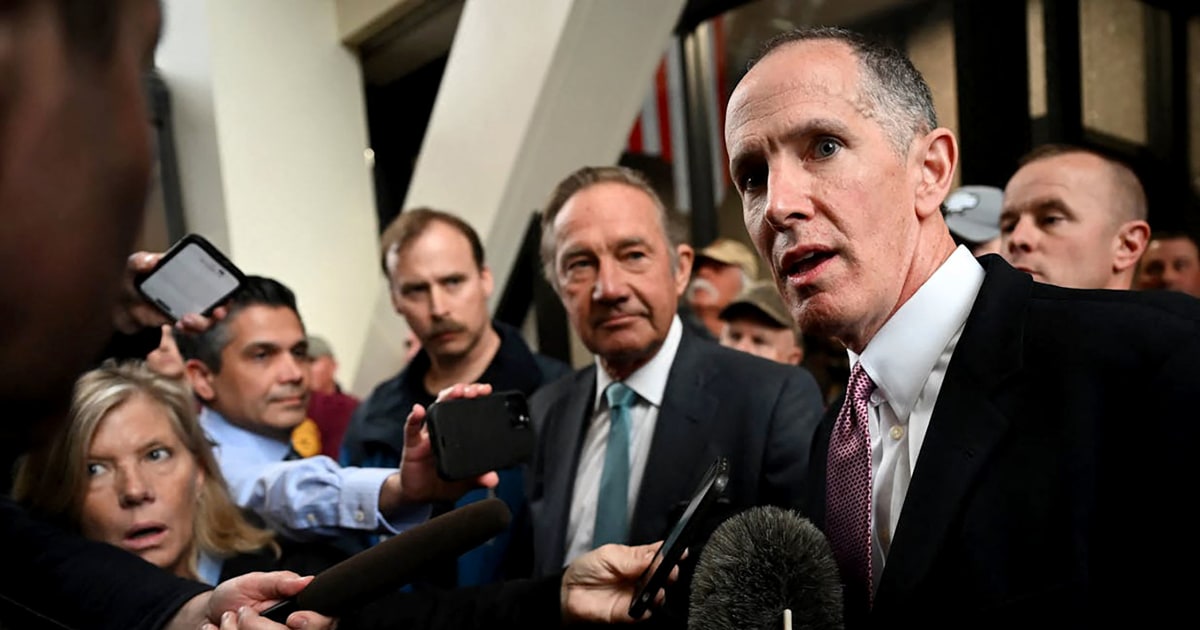
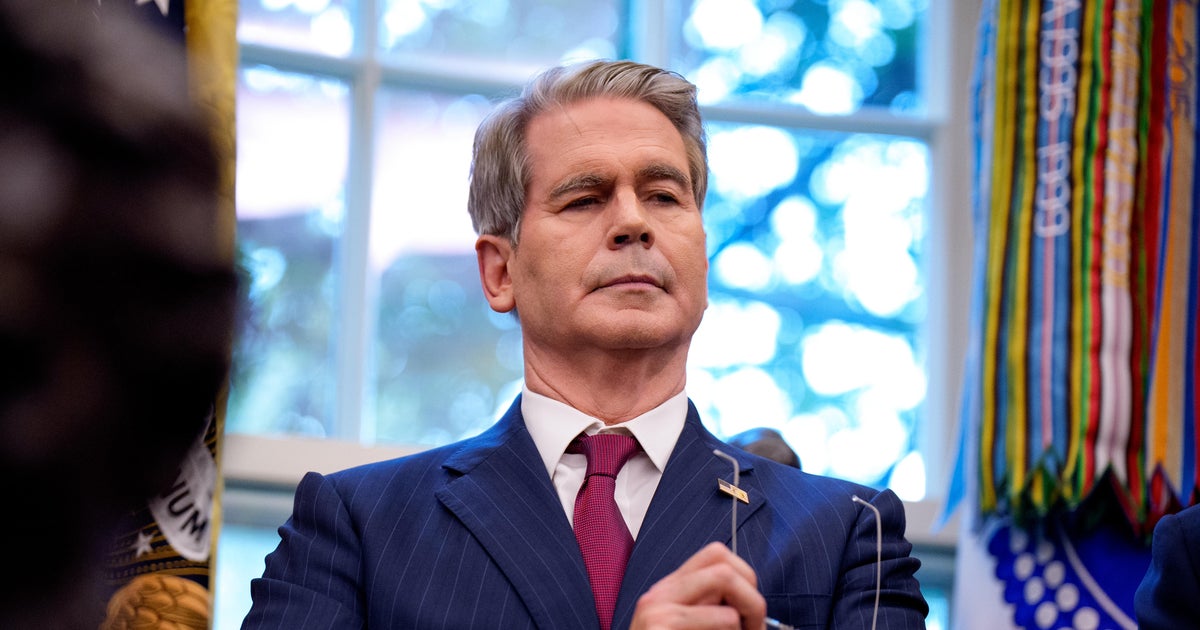
The Trump administration is investigating whether millions of dollars from Minnesota's welfare programs were diverted to al-Shabaab, an al-Qaeda-linked terrorist organization operating in Somalia. Treasury Secretary Scott Bessent confirmed the investigation into this alarming connection between domestic fraud and international terrorism financing.
Scale of the Fraud Scheme
Federal prosecutors have identified one of the largest welfare-fraud waves in U.S. history occurring in Minnesota. Counterterrorism officials believe stolen funds from Medicaid and social-service programs were routed overseas through informal cash-transfer networks called hawalas. Once reaching Somalia, al-Shabaab systematically extracted a share of the money regardless of sender intentions.
Broader Implications
Multiple defendants have been charged in related schemes, including autism program fraud involving millions in fraudulent reimbursements. These cases highlight how vulnerable government programs designed to help children and families have been systematically exploited for personal profit and potentially terrorist financing.
```About the People Mentioned
Scott Bessent
Scott Bessent is an American government official and former hedge fund manager, currently serving as the 79th United States Secretary of the Treasury since January 28, 2025. Born on August 21, 1962, in South Carolina, Bessent graduated from Yale College with a degree in political science in 1984. Initially interested in journalism, he shifted to finance after missing out on a role at the Yale Daily News. He began his career with an internship under Jim Rogers, George Soros's first partner. Bessent's career in finance is marked by significant achievements. He was a key figure at Soros Fund Management, where he managed the London office and played a crucial role in profiting from major currency bets, notably earning $1 billion during the British Pound sterling crisis on Black Wednesday and $1.2 billion betting against the Japanese yen in 2013. After leaving Soros in 2015, he founded Key Square Capital Management, a global macro investment firm. Bessent also taught economic history as an adjunct professor at Yale University. In politics, Bessent has been involved as an economic advisor and major donor to the Donald Trump 2024 presidential campaign. His nomination as Treasury Secretary was announced by President-elect Trump on November 22, 2024, and he was confirmed by the Senate on January 27, 2025. As Secretary, Bessent focuses on maintaining economic strength, promoting growth, and enhancing national security through financial management. He is noted for his views on globalization and tariffs, advocating for updates to the international trading system to address inequality and economic disparities. Bessent's appointment marks him as the second openly gay man to serve in a U.S. Cabinet and the highest-ranking openly LGBT person in the federal government. His tenure as Treasury Secretary is expected to shape U.S. economic policies, particularly under the Trump administration's agenda.
About the Organizations Mentioned
al-Shabaab
Al-Shabaab is a Sunni Islamic terrorist organization and one of al-Qaeda's most powerful affiliates, designated as a foreign terrorist organization by the United States.[1][4] The group emerged as the military wing of the Islamic Courts Union (ICU) in Somalia and gained prominence after Ethiopian and UN-backed forces dismantled the ICU in December 2006.[1] ## Origins and Goals Al-Shabaab publicly pledged loyalty to al-Qaeda in 2012 and has since become the organization's wealthiest component as of 2025.[1] The group's primary objective is to overthrow the Somali Federal Government, expel foreign forces from Somalia, and establish a fundamentalist Islamic state governed by strict Islamic law across a "Greater Somalia" that would unite ethnic Somalis throughout East Africa.[1][4] ## Current Operations and Reach With an estimated 7,000 to 12,000 fighters, al-Shabaab maintains a stronghold in southern Somalia and conducts operations across Somalia, Kenya, and Ethiopia.[1][2] The organization generates revenue through illegal fee collection, extortion, kidnappings, and IED manufacturing, enabling it to sustain extensive operations.[6] Since 2014, al-Shabaab has killed more U.S. citizens than any other al-Qaeda affiliate.[1] ## Recent Escalation In February 2025, al-Shabaab launched its most ambitious offensive in years, rapidly recapturing strategic territories and advancing within 50 kilometers of Mogadishu.[3][5] The group now controls a strategic triangle across central Somalia and has demonstrated sophisticated tactics combining IED detonations with coordinated small-arms assaults, ambushes, and high-profile attacks against government and civilian targets.[1][3] ## Strategic
al-Qaeda
Al-Qaeda is a transnational militant Islamist organization founded in the late 1980s by Osama bin Laden, emerging from the anti-Soviet jihadist movement in Afghanistan. Its core objective is to expel Western influence from Muslim countries and establish fundamentalist Islamic regimes[1][2]. Initially a logistical network supporting mujahideen fighters during the Afghan-Soviet war, al-Qaeda evolved into a decentralized terrorist network with multiple regional affiliates across the Middle East, Africa, South Asia, and beyond[1][3]. The group is infamous for orchestrating the September 11, 2001 attacks on the United States, which triggered the U.S.-led War on Terror and the invasion of Afghanistan to dismantle al-Qaeda’s bases and overthrow the Taliban regime that harbored them[1][2]. Other major attacks linked to al-Qaeda include the 1998 U.S. embassy bombings in Kenya and Tanzania and the 2000 USS Cole bombing in Yemen[2]. Over time, al-Qaeda has transformed from a hierarchical organization into a decentralized network of franchises, such as al-Qaeda in the Islamic Maghreb (AQIM) and Jabhat al-Nusra (now Hay’at Tahrir al-Sham in Syria), which operate with considerable autonomy but share ideological goals[1][3][6]. It functions by integrating into local militant groups, adapting its agenda to regional grievances while maintaining a global jihadist narrative[3]. Despite significant counterterrorism efforts, including targeting its leadership and finances, al-Qaeda remains active but less capable of launching large-scale external attacks against the West. Its current strategy focuses on rebuilding, strengthening affiliates, and exploiting local conflicts[3][5]. U.S. intelligence assesses that al-Qaeda’s central command is at a low operational point, although some affiliates retain potent regional influence and pose threats to U.S. interests globally[5]. Notably, al-Qaeda’s enduring resilience lies in its decentralized structure, ideological appeal, and ability to adapt to