NBC News Vaccination Map: Tracking COVID-19 Vaccination Rates
Introduction
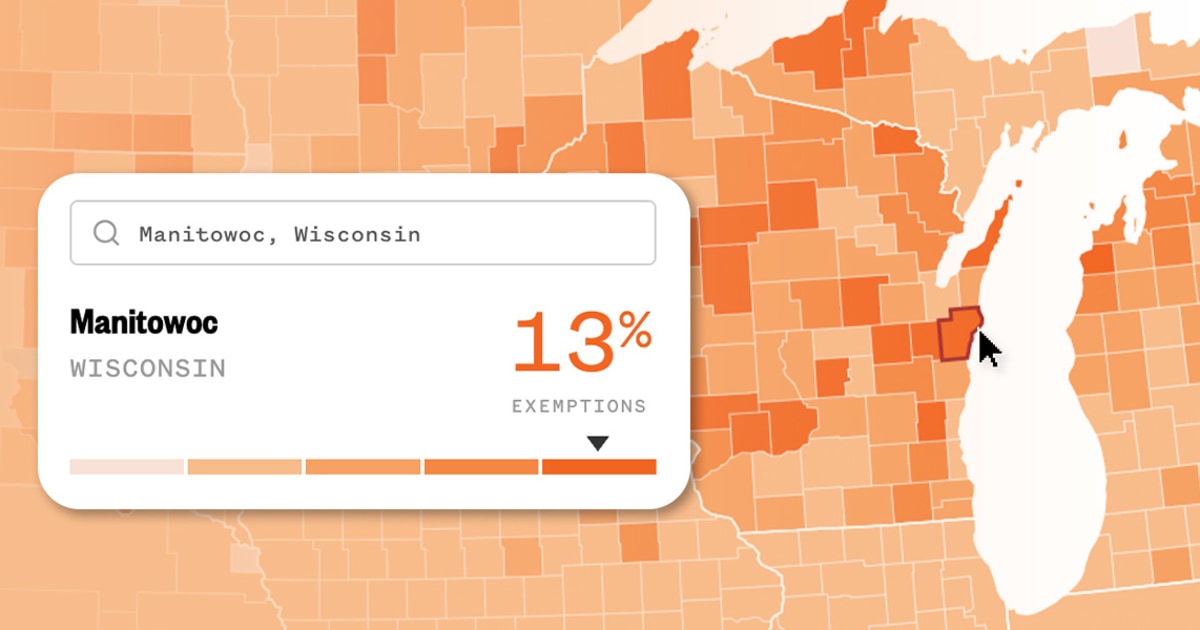
The COVID-19 pandemic has highlighted the importance of vaccination in protecting communities from the spread of infectious diseases. However, tracking vaccination percentages and data has been a challenge, with information scattered across state health department files or not tabulated at all. This has made it difficult to determine the level of protection in different communities. Fortunately, NBC News has created a vaccination map that compiles this data in one place, allowing individuals to easily see how protected their community is.
Key Details
The vaccination map shows the percentage of individuals who have received at least one dose of the COVID-19 vaccine in each county in the United States. This data is updated daily, providing the most current information on vaccination rates. It also includes a breakdown of vaccine distribution by age and race, highlighting any disparities in vaccination rates. This tool is not only useful for individuals to see the level of protection in their community, but also for health officials to identify areas that may need more attention in their vaccination efforts.
Impact
The vaccination map not only provides a comprehensive view of vaccination rates in the US, but it also serves as a reminder of the importance of getting vaccinated. With the rise of new variants and the potential for future pandemics, it is crucial for communities to have high vaccination rates to prevent the spread of diseases. This map also highlights any gaps in vaccination rates, bringing attention to the
About the Organizations Mentioned
NBC News
**NBC News: A Legacy of Excellence in Journalism** NBC News is a renowned news division of the National Broadcasting Company (NBC), founded in 1940. As a pioneer in television news, it has been at the forefront of covering major events, shaping American journalism, and influencing global news consumption. ### History and Evolution NBC News began with the first regularly scheduled news program on February 21, 1940, hosted by Lowell Thomas[3][4]. Over the years, it developed iconic shows like *Camel News Caravan* (1949) and the *Huntley-Brinkley Report* (1956), which set standards for modern newscasts[4]. Notable figures such as David Brinkley and Chet Huntley contributed to its success. ### Key Achievements - **Coverage of Historic Events**: NBC News has covered pivotal moments in history, including the Kennedy assassination, Watergate scandal, and 9/11[8]. - **Innovative Programming**: Shows like *Meet the Press* (1947) and *NBC Nightly News* have been staples of American television, offering in-depth analysis and news coverage[1][2]. - **Technological Advancements**: NBC News has embraced digital platforms, providing multi-platform content distribution through streaming services and mobile apps[1]. ### Current Status Today, NBC News continues to be a leading source of news, with a strong presence on cable through MSNBC and digital platforms. It remains a trusted brand in journalism, offering comprehensive coverage of national and international news. ### Notable Aspects - **Global Reach**: With a global audience, NBC News is widely recognized for its commitment to quality journalism. - **Diversified Content**: From business news on CNBC to political analysis on MSNBC, NBC News offers a range of specialized programming. - **Innovative Storytelling**: The organization continuously updates its storytelling techniques to engage modern audiences, leveraging social media and digital platforms effectively. In
State Health Department
The **State Health Department** is the primary public health authority within each U.S. state, responsible for protecting and promoting the health of the population through a wide range of services and regulatory activities. Its core functions include policy development, resource stewardship, legal compliance, partner engagement, continuous improvement, and oversight of public health performance[1]. These departments operate under the authority granted by state constitutions to govern health matters, often working in close collaboration with local health agencies and other state government bodies. Historically, state health departments have evolved to address diverse public health challenges, adapting their structure and functions over time. They may exist as independent agencies reporting directly to the governor or as components within larger umbrella agencies that also oversee mental health, Medicaid, or social services[3][4]. Leadership is typically vested in a State Health Officer (SHO), who manages day-to-day operations, policy setting, legislative engagement, and budget proposals[2]. Approximately 60% of state health departments are governed or advised by boards or councils comprising public health professionals, community members, and other stakeholders, playing a critical role in rulemaking and public health agenda setting[3]. Key achievements of state health departments include the establishment of comprehensive public health policies, disease surveillance and control, health promotion programs, and regulatory oversight of healthcare facilities and professionals. They also lead innovative responses to emerging health threats such as infectious diseases, chronic illnesses, and environmental hazards. For example, the New York City Department of Health and Mental Hygiene, one of the oldest and largest municipal health agencies, exemplifies the scope and impact of state and local health departments by managing disease investigations, health inspections, and public health initiatives with a substantial budget and workforce[5]. Currently, state health departments face complex challenges, including addressing health disparities, adapting to technological advances, enforcing health regulations, and responding rapidly to public health emergencies. They are increasingly leveraging data, research, and partnerships to improve community health outcomes and ensure compliance with evolving legal frameworks[1][