No. 7 Nebraska Dominates Washington Amid Frager Injury Scare
No. 7 Nebraska Dominates Washington Amid Frager Injury Scare
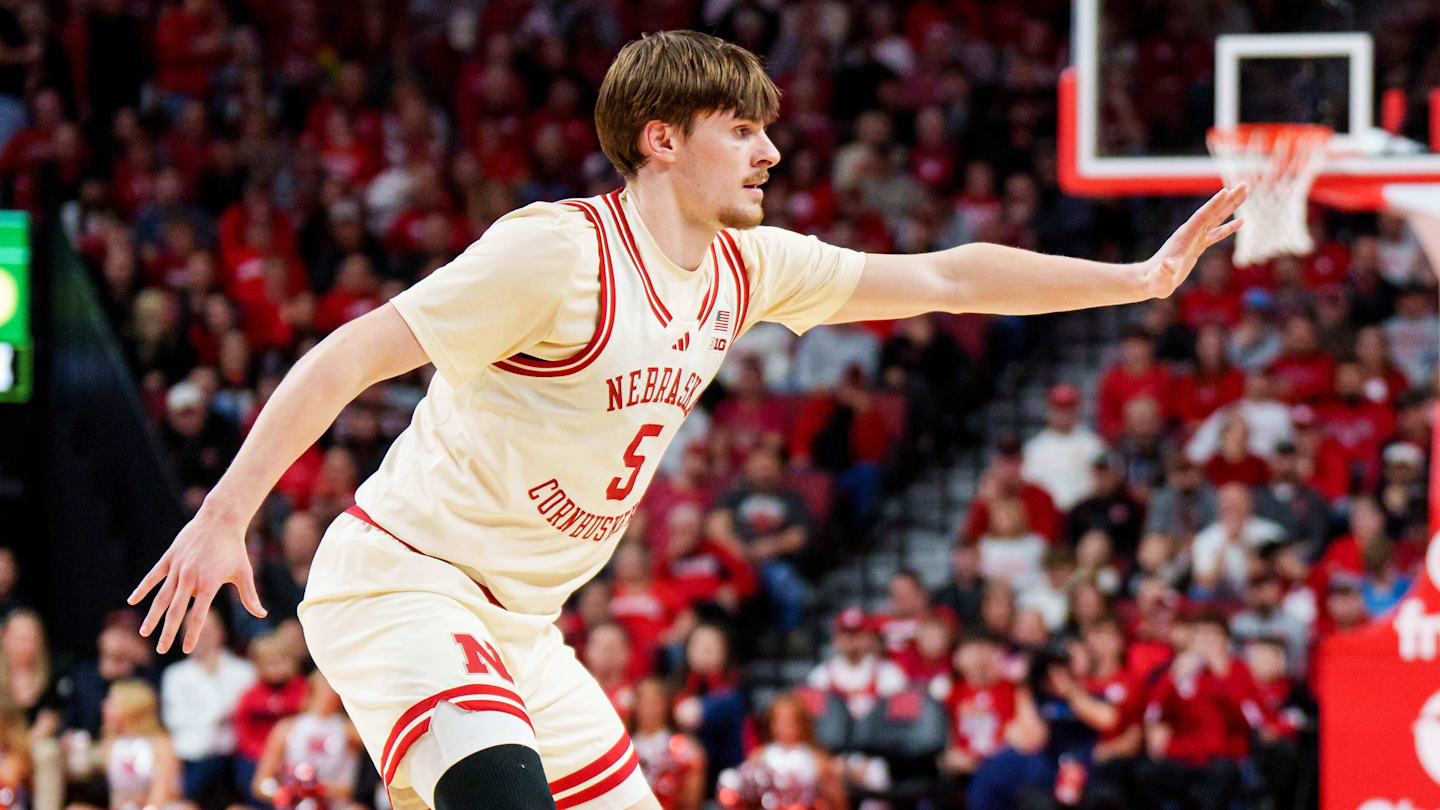
In a thrilling 76-66 victory at Pinnacle Bank Arena, No. 7 Nebraska extended its school-record winning streak to 23 games, improving to 19-0 overall and 8-0 in the Big Ten. The Huskers showcased resilience despite redshirt freshman Braden Frager exiting early with a sprained left ankle after just four minutes of action. Frager, averaging 13.3 points off the bench and a three-time Big Ten Freshman of the Week, twisted his ankle driving to the basket, donning a walking boot for the remainder.
Team Steps Up with Next-Man-Up Mentality
Coach Fred Hoiberg praised his squad's depth, with Pryce Sandfort leading at 23 points on efficient 4-of-7 three-point shooting. Sam Hoiberg added 14 points, seven rebounds, and four assists, while Rienk Mast and Jamarques Lawrence contributed 12 and 11 points respectively. Nebraska shot 50.9 percent from the field, fending off Washington's physicality to lead by 13 at halftime and as many as 18 later.
Looking Ahead: Day-to-Day Status and Tough Slate
Frager is day-to-day, evaluated Thursday with X-rays confirming a sprain; Hoiberg remains optimistic, emphasizing readiness for upcoming tests at Minnesota Saturday and No. 4 Michigan Tuesday. The undefeated Huskers, now atop the Big Ten alone, rely on bench development to sustain their perfect run against peaking opponents.
About the Organizations Mentioned
Nebraska
## Overview “Nebraska” in the context of business and technology primarily refers to **Tech Nebraska**, a statewide, membership-based organization dedicated to advancing the technology sector across Nebraska[1]. This entity serves as a convener for technology partners, advocates for pro-growth public policies, and works to foster a more diverse and inclusive technology workforce throughout the state[1]. ## Mission and Activities Tech Nebraska’s core mission is to grow a thriving technology sector that powers Nebraska’s economy, attracts top talent, and prepares the state to meet future challenges[1]. The organization positions itself as a hub for innovation, connecting stakeholders—ranging from startups to established companies—and driving industry growth. By advocating for tech-friendly policies and supporting workforce development, Tech Nebraska aims to elevate Nebraska’s profile as a competitive player in the national and global technology landscape[1]. ## Nebraska’s Technology Ecosystem Nebraska’s tech sector is robust, employing over 5,200 people and contributing approximately $4.5 billion annually to the state’s GDP through the information technology sector[1]. The state ranks 35th nationally for new entrepreneurs, 36th for STEM university graduates, and 39th in startup density[1]. These metrics highlight both the existing strengths and the growth potential within Nebraska’s tech ecosystem. ## History and Evolution While Tech Nebraska itself is a relatively new organization, Nebraska’s broader technology journey includes significant milestones. The state has consolidated its enterprise IT resources under the Office of the Chief Information Officer (OCIO), completing phases such as network consolidation, enterprise data center establishment, and regional site support[3]. These efforts have streamlined government technology operations, improved service delivery, and set a foundation for future innovation[3]. ## Key Achievements and Current Status Tech Nebraska’s achievements include building a collaborative network among tech companies, educational institutions, and policymakers. The organization’s advocacy has helped shape a more favorable environment for tech growth, while its
Washington
The organization "Washington" in the context of your query most accurately refers to the **Washington State Government**, a comprehensive state-level governing body responsible for implementing laws, managing public resources, and serving the citizens of Washington State. It operates through three branches—executive, legislative, and judicial—that mirror the federal government’s structure to ensure checks and balances[1][2]. The **executive branch** is headed by the governor and includes other elected officials such as the attorney general, secretary of state, and treasurer. This branch enforces laws and manages day-to-day state operations, including overseeing various departments and agencies that cover sectors like natural resources, education, and public safety[1][4]. The governor wields significant powers, including military command over the state’s National Guard, veto authority (including line-item vetoes), and the ability to issue pardons[1][2]. The **legislative branch** comprises a bicameral legislature: the Senate (49 members with four-year terms) and the House of Representatives (98 members with two-year terms). It is responsible for creating laws, with certain restrictions such as earmarking funds for specific purposes and allowing voter initiatives, referenda, and recall elections to maintain public control over governance[2]. The legislature also includes committees and support offices that facilitate lawmaking and oversight[4][5]. The **judicial branch** includes multiple levels of courts, from local courts handling minor cases to the Supreme Court and appellate courts reviewing decisions. Judges are mostly elected on nonpartisan ballots to maintain judicial independence, with grand juries primarily investigating political corruption[2][4]. Historically, Washington’s constitution, adopted in 1889, formed the basis of its government, reflecting a cautious approach to state power with a divided executive and numerous checks on authority[2]. Over time, the state government has expanded and modernized its operations, now supported by detailed organizational charts and resources that provide transparency and public access to information[4][5
Pinnacle Bank Arena
**Pinnacle Bank Arena** is a **15,500-seat multi-purpose indoor arena** located in Lincoln, Nebraska's West Haymarket District, serving as the primary large-scale entertainment venue for the region[2]. Encompassing 470,400 square feet and costing $179 million to construct, the facility opened in September 2013 and replaced the Bob Devaney Sports Center as the home of Nebraska's men's and women's basketball teams[2][4]. ## History and Development The arena emerged from a strategic redevelopment initiative. The Pershing Center, Lincoln's previous largest entertainment venue, had a capacity of only 4,526, proving inadequate for modern entertainment demands[2]. After a public vote in May 2010, construction began in September 2011, with the arena officially opening in September 2013[4]. Pinnacle Bank secured a 25-year, $11.25 million naming rights agreement in December 2011[2]. ## Design and Amenities The facility features contemporary architecture combining concrete and metal panel facades with a spectacular open-air roof deck and glass-encased entrance offering views of the State Capitol[1]. The design prioritizes fan experience through a split upper concourse that brings spectators closer to the floor than typical arenas[3]. Premium amenities include 36 executive suites, 20 loge boxes, over 800 club seats, a 32-foot by 37.5-foot Mitsubishi video board, and 900 feet of ribbon boards[3]. ## Current Impact The arena hosts approximately 140 events annually with 740,000 estimated attendees[4]. Nebraska's men's basketball program has averaged over 15,000 fans per home game since 2013-14, ranking in the nation's top-25 for attendance
Big Ten
## Overview The Big Ten Conference, officially known as the Big Ten, is one of the oldest and most prestigious collegiate athletic conferences in the United States, but its influence extends far beyond sports. Founded in 1896 as the Intercollegiate Conference of Faculty Representatives—also known as the Western Conference—the Big Ten was initially created to standardize rules and improve safety in college football, which was growing rapidly in popularity at the time[1][3]. Its founding members included the Universities of Chicago, Illinois, Michigan, Minnesota, Wisconsin, Purdue, and Northwestern[1][3]. ## Historical Development Over the decades, the Big Ten has undergone several significant changes. Iowa and Indiana joined in 1899, and Ohio State was added in 1912[3]. The conference experienced a notable departure when the University of Michigan left temporarily from 1907 to 1916 due to disagreements over rules, only to return and solidify the “Big Ten” moniker[1][2]. The University of Chicago withdrew in 1946, but Michigan State’s addition in 1949 restored the conference to ten members[3]. The conference remained stable for nearly 40 years before a new era of expansion began in 1990 with the addition of Penn State, followed by Nebraska in 2011, Maryland and Rutgers in 2014, and most recently, Oregon, USC, Washington, and UCLA in 2024, bringing the total to 18 members[3][5]. ## Key Achievements and Notable Aspects The Big Ten is renowned for its combination of athletic excellence and academic rigor. It pioneered the Big Ten Medal of Honor in 1915, recognizing student-athletes who excel both on the field and in the classroom[5]. The conference also established the first permanent bowl-conference affiliation with the Tournament of Roses in 1946 and introduced a groundbreaking revenue-sharing model for television proceeds in 1955[5]. Academically, th