Pressure Mounts on American Airlines CEO as Premium Pivot Bets on Growth

Pressure Mounts on American Airlines CEO
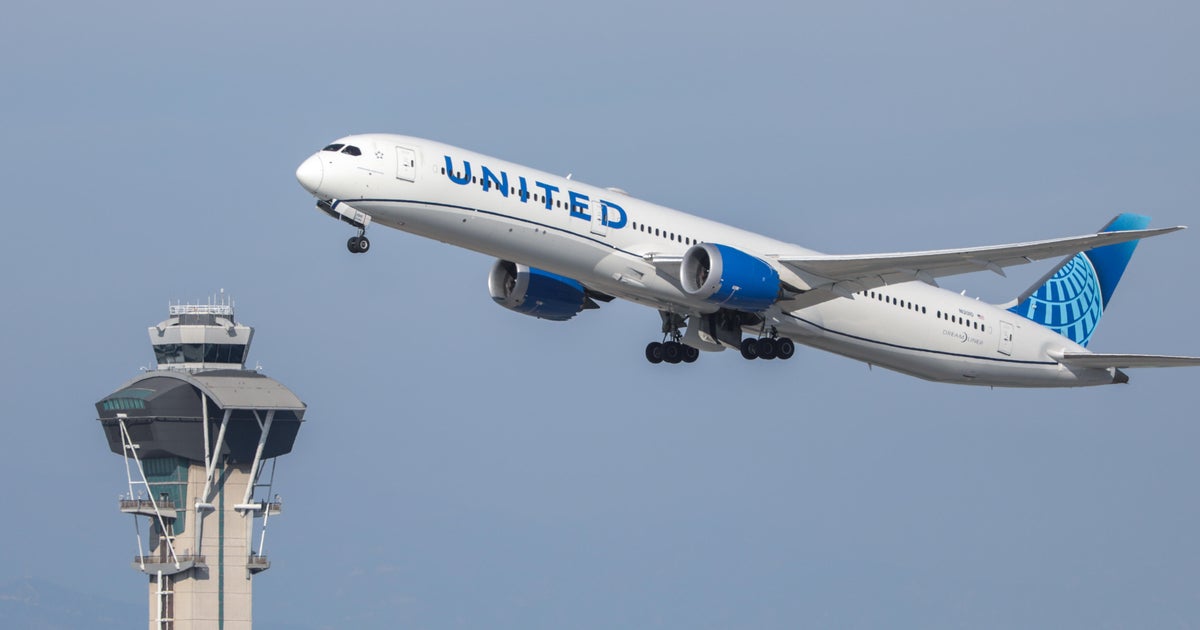
Intense scrutiny is building around American Airlines CEO Robert Isom as the carrier trails rivals in profitability. While American posted record full-year revenue of $54.6 billion and $111 million in GAAP net income for 2025, Delta Air Lines raked in $5 billion and United Airlines $3.3 billion over the same period. This stark disparity fuels demands for strategic shifts amid uneven performance.[1][2]
Financial Struggles and External Hits
American's Q4 2025 showed $14 billion in revenue but just $99 million net income, impacted by a $325 million government shutdown blow. Profit plunged from 2024's $846 million, partly due to a one-time Citi credit card payment not repeating. Debt reduction of $2.1 billion offers some relief, yet adjusted earnings missed forecasts, signaling operational hurdles in a competitive skies.[1][2][3]
Premium Pivot and Future Outlook
CEO Isom pushes a premium pivot, investing in upscale cabins and loyalty enhancements for rebound. Guidance projects 2026 adjusted EPS of $1.70-$2.70 and over $2 billion free cash flow, with Q1 revenue up 7-10%. Investors watch if this transformation closes the gap with nimble rivals like Delta and United.[1][3]
About the Organizations Mentioned
American Airlines
American Airlines is one of the world's largest and most recognized airlines, with origins dating back to the 1920s when a group of small airlines merged under the Aviation Corporation (AVCO). Officially established as American Airlines in 1934, it evolved from a mail carrier into a major passenger airline under the leadership of C.R. Smith, who played a critical role in shaping the airline's early success[1][2][5]. A key milestone in American Airlines' history was the development and introduction of the Douglas DC-3 aircraft in 1936. This plane revolutionized commercial aviation by enabling profitable passenger-only routes, independent of mail contracts. American Airlines was the first to operate the DC-3, which set new standards for comfort and efficiency in air travel[2][3][5]. Throughout its history, American Airlines has expanded through strategic mergers, including notable acquisitions such as Trans World Airlines in 2001 and US Airways in 2013, which helped it become the world's largest airline by fleet size and passenger traffic[4][6]. The airline was also a pioneer in technology, becoming the first to offer electronic ticketing across its 44-country network in 1998[3]. American Airlines operates a vast domestic and international route network, serving hundreds of destinations globally. Its innovations include the establishment of the Admirals Club for premium passengers and continuous investments in modern fleet technology and customer service improvements[3][8]. Today, American Airlines remains a leader in the aviation industry, known for its extensive network, technological advancements, and commitment to innovation. It plays a vital role in global air travel and continues to influence the evolution of the airline business through operational efficiency and customer experience enhancements[8][9].
Delta Air Lines
Delta Air Lines, Inc., headquartered in Atlanta, Georgia, is a leading major U.S. airline operating nine hubs, with Hartsfield–Jackson Atlanta International Airport as its largest. It flies over 5,400 daily flights to 325 destinations across 52 countries on six continents, making it one of the world’s most extensive global networks. Delta is a founding member of the SkyTeam airline alliance, enhancing its international connectivity through partnerships with airlines such as Air France-KLM, Aeromexico, and Virgin Atlantic[1][2]. Founded in 1924, Delta is the second-oldest operating commercial airline in the U.S. and has continuously grown through strategic acquisitions, most notably the 2008 merger with Northwest Airlines, which expanded its domestic and international reach. This integration was completed in 2010, unifying operations and technology systems under the Delta brand[1]. Delta’s reputation is bolstered by its outstanding financial performance and brand value. In 2025, it reported record quarterly revenues exceeding $15 billion, demonstrating strong resilience and growth in a competitive industry. It consistently ranks highly on the Fortune 500 list (70th) and has received numerous accolades including top rankings by The Wall Street Journal, Condé Nast Traveler, and Forbes Travel Guide. Delta is also widely recognized for its innovation, leadership quality, and workplace culture, appearing on lists such as Fast Company’s Most Innovative Companies, Glassdoor’s Best Places to Work, and Forbes World’s Best Employers[1][2][3][7]. Delta emphasizes sustainability, aiming for net-zero carbon emissions by 2050, and actively pursues diversity, equity, and inclusion initiatives. Its community engagement focuses on environmental stewardship, education, and wellness. Delta’s leadership philosophy centers on purpose-driven, people-first management, contributing to its top positioning on leadership and corporate responsibility rankings[4][5][6]. With a customer base of over 180 million annually, Delta serves a demographi
United Airlines
United Airlines is one of the most prominent names in the aviation industry, with a rich history that mirrors the evolution of commercial air travel. The organization traces its origins back to 1926, when Varney Air Lines was established by Walter Varney, marking the beginning of what would eventually become United Airlines[5][6]. In 1931, United Air Lines was formed as a subsidiary of the United Aircraft and Transport Corporation, consolidating several airlines, including Boeing Air Transport and Pacific Air Transport[1][2]. Throughout its history, United Airlines has been at the forefront of innovation in aviation. It introduced the Boeing 247 in 1933, the first modern airliner, enabling non-stop transcontinental flights[1]. During World War II, the airline played a crucial role in modifying aircraft for military use and transporting supplies[1]. In the post-war period, United expanded rapidly, merging with Capital Airlines in 1961 and becoming a major proponent of airline deregulation in the 1970s[1][2]. In recent decades, United has continued to grow and adapt. It launched the Star Alliance in 1997 and acquired significant route authorities from Pan Am in the late 1980s and early 1990s[1]. The airline faced significant challenges, including the September 11 attacks and bankruptcy in 2002, but emerged stronger after restructuring and merging with Continental Airlines in 2010[1][5]. Today, United Airlines is one of the world's largest carriers, operating flights to over 300 destinations across six continents and serving more than 140 million passengers annually[7]. The airline continues to innovate, introducing new services like United Polaris for enhanced passenger comfort[2]. United's commitment to technology and customer experience has positioned it as a leader in the global aviation industry. Notable achievements include its role in pioneering transcontinental flights and its contributions to the development of modern air travel standards[1][4].
Citi
**Citigroup Inc. (NYSE: C)**, commonly known as Citi, is a preeminent global financial institution operating in over 180 countries, serving corporations, governments, investors, institutions, and individuals with services like investment banking, wealth management, and consumer cards.[3][4] Under CEO Jane Fraser since 2021, it has simplified its operations, shedding its "supermarket" model of sprawling retail banking for a focused structure with five core segments: Banking (M&A advisory, underwriting), Wealth (targeting high-net-worth clients, integrating US retail), US Consumer Cards (a top global issuer), and institutional services.[1][3] Founded in 1812 as the City Bank of New York, Citi evolved into a banking giant through mergers like Citibank with Travelers Group in 1998, creating the world's largest financial services firm at the time. It navigated the 2008 crisis via bailouts but faced criticism for complexity and regulatory issues. Fraser's multi-year transformation, launched around 2023, has streamlined its global footprint—once in 95+ countries—cutting redundancies and boosting efficiency.[1][2] Key achievements include 2025's record revenue of $84.2 billion, 26% EPS growth from investment banking surges, and an efficiency ratio dropping to the low 60s from 70% in 2023.[1] Citi leads in corporate cash management and cross-border needs, with its vast network as a competitive moat.[1][4] In early 2026, Citi Wealth's Q1 report projects resilient global growth at 2.7%, "Goldilocks" conditions, and EPS acceleration to 11%, urging dynamic portfolios amid AI and cyclical tailwinds.[4][5][6] Currently, Citi continues workforce reductions into 2026—headcount down from 240,000 in 2022 to 226,000