Roomba Bankruptcy Shocker: iRobot Files Chapter 11 Amid Tariffs
Roomba's Bankruptcy Shocker
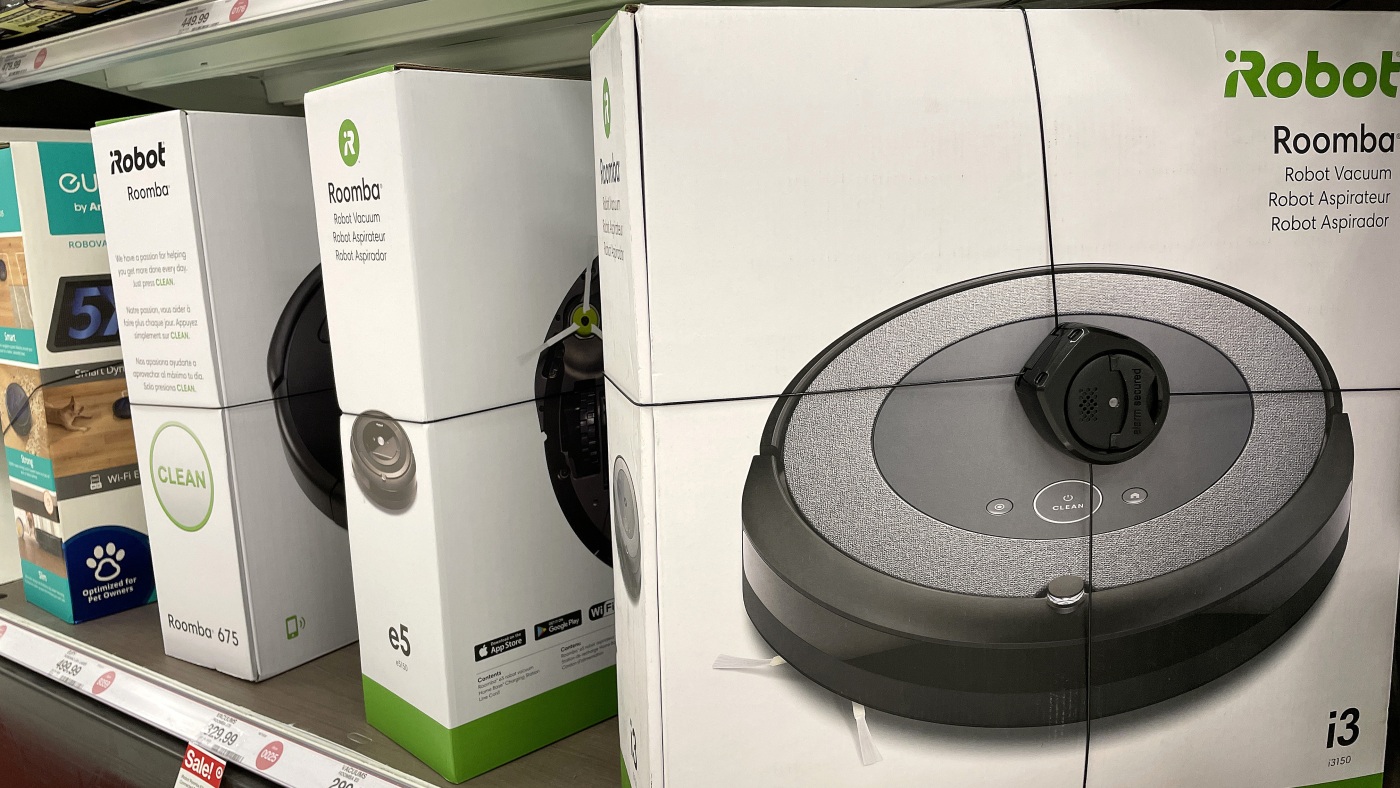
iRobot, the iconic maker of Roomba robot vacuums, has filed for Chapter 11 bankruptcy protection, burdened by massive debt and escalating tariffs. This move sends ripples through the smart home industry, as the U.S. pioneer transitions from public trading to private ownership under its Chinese supplier. Once a household name for revolutionizing cleaning with autonomous bots, iRobot now faces a pivotal restructuring to stay afloat.
Root Causes of the Downfall
Fierce competition from brands like Roborock, Dreame, Shark, Eufy, and Narwal has eroded iRobot's edge. These rivals deliver superior suction, advanced mopping, smarter navigation, and budget-friendly prices, outpacing iRobot's slower innovation. Compounding woes include rising production costs and tariff pressures, culminating in overwhelming debt that forced the bankruptcy filing on December 15, 2025.
What It Means for Roomba Owners
Reassurance abounds: devices will function normally, with ongoing operations under new private ownership. Third-party parts and cloud services should sustain maintenance, ensuring your Roomba keeps vacuuming reliably. This shift promises continuity amid uncertainty, potentially revitalizing iRobot's future in the cutthroat robot vacuum market.
About the Organizations Mentioned
iRobot
## Overview iRobot is a pioneering American robotics company renowned for making practical robots a household reality, most famously through its Roomba robot vacuum[1][5]. Founded in 1990 by MIT roboticists Colin Angle, Helen Greiner, and Rodney Brooks, the company initially focused on developing robots for space exploration, military defense, and hazardous environments[1][3][6]. Today, iRobot is a global leader in consumer robotics, with over 50 million robots sold worldwide by 2024 and annual revenues approaching $700 million[3][6]. ## History and Evolution iRobot began as a research-driven venture, with early projects including “Genghis,” a six-legged robot inspired by insect locomotion, and collaborations with NASA and the Pentagon[3]. The company’s first major commercial breakthrough came in 2002 with the launch of the Roomba, an autonomous vacuum cleaner that revolutionized home cleaning and created an entirely new consumer electronics category[1][4]. The success of Roomba was followed by other home products like the Scooba mopping robot and the Braava floor-mopping series[2][5]. Beyond the consumer market, iRobot’s PackBot series gained acclaim for military and disaster-response applications, including bomb disposal in Iraq and Afghanistan and radiation monitoring at Fukushima[1][2]. However, in 2016, the company divested its defense and security division to focus exclusively on the high-growth home robotics sector[1][4]. ## Key Achievements - **Market Creation:** iRobot’s Roomba defined the robot vacuum category, achieving over 30 million units sold by 2020 and 50 million by 2024, making it a household name worldwide[1][3][6]. - **Technological Innovation:** The company holds hundreds of patents in robotics, mapping, navigation, and human-robot interaction, continuously advancing smart home ecosystems[3][5]. - **Military and Disaster Response:** PackBot robots have saved lives
Roborock
**Roborock**, founded in July 2014 in Beijing by CEO Richard Chang, is a leading Chinese consumer electronics company specializing in intelligent robotic vacuums, mops, cordless stick vacuums, and emerging appliances like washing machines.[1][2][3][7] Backed initially by Xiaomi as a key investor and partner, it started as a subsidiary focused on AI-driven household cleaning to simplify daily chores through innovation, efficiency, and sustainability.[1][3][4] The company's journey began with the 2016 launch of its first product, the Xiaomi Mi Robot Vacuum (under Xiaomi branding), featuring pioneering LiDAR navigation and 12 sensors—breakthroughs that elevated industry standards for mapping and suction power up to 2000Pa.[2][5] In 2017, the self-branded Roborock S5 debuted as the world's first LDS vacuuming-mopping robot, followed by rapid expansions: overseas markets in 2018 (doubling sales), the game-changing S7 in 2021 (ultrasonic mopping with mop-lifting, named a TIME Best Invention), and S7 MaxV Ultra in 2022.[1][2] Crowdfunding successes, like $1.5 million in hours for early models, fueled growth.[4] Key achievements include a 2019 IPO on Shanghai's STAR Market raising 1.5 billion RMB (~$220 million), with revenues hitting 3.5 billion RMB that year and climbing to ~¥8.65 billion recently.[1][3][6] By late 2024, products reached over 20 million households in 170+ countries, boasting 20.1% market share in South Korea and strong footholds in Europe and Southeast Asia.[2][6] Innovations like ReactiveAI 2.0 obstacle avoidance and AI SmartPlan cleaning solidified its premium positioning (products >$500).[6] Today, Roborock thrive
Dreame
**Dreame Technology** is a leading global innovator in smart home cleaning appliances, specializing in high-performance vacuums, robotic cleaners, and related devices powered by advanced high-speed digital motors and intelligent algorithms.[1][2][3] Founded in 2017 by Yu Hao, an aerospace engineering graduate from Tsinghua University, Dreame traces its roots to 2015 when Hao's team pioneered high-speed digital motors through the "Sky Factory" (or "Sky Workshop") project at Tsinghua, which drew Boeing investment.[1][2][6] Hao, a self-taught inventor since age 12, applied astrodynamics expertise to everyday cleaning, initially as a ToB supplier for Xiaomi's Mijia brand before launching its own global line.[1][4][6] Headquartered in Suzhou, Jiangsu, China, the company boasts an R&D-heavy structure—80% of staff focused on tech—with over 4,256 patents filed worldwide by late 2023, 2,206 authorized.[3][6] Dreame's core products include **robotic vacuums and mops**, **cordless stick vacuums**, **wet/dry vacuums**, **smart floor scrubbers**, and **high-speed hair dryers**, now expanding into robotic lawn mowers, pool cleaners, and commercial robots.[1][3][5] These blend cutting-edge tech with aesthetic design via top institutes, serving 21+ million households in 120+ countries through 4,000+ stores and 7.5 million brand members.[1][3] Key achievements include an **18% market share in China's vacuum sector** (H1 2024), rapid international growth in 80+ markets by mid-2025, and premium disruption against iRobot/Roborock via cost advantages (20-30% lower), fast 6-9 month cycles, and loyal app ecosystems.[1][4
Shark
Shark (commonly presented as the Shark brand within SharkNinja) is a global consumer‑product design and technology company focused on home appliances and lifestyle solutions, known for translating engineering-led product innovation into widely adopted retail products and platforms. SharkNinja operates two flagship consumer brands — **Shark** for cleaning and homecare and **Ninja** for kitchen appliances — and combines product design, electronics, software and manufacturing to bring new devices to market rapidly[4][6]. Founded as a high‑tech cleaning‑product brand in 1998 with an R&D focus on improving vacuum and floor‑care performance, Shark developed breakthrough hardware and user‑centered features that disrupted incumbents in the category[3]. Signature technologies include DuoClean®, a dual‑roller system combining a soft roller and a bristle roller for simultaneous floor and carpet cleaning, and ZERO‑M self‑cleaning brush heads that address hair‑tangling — innovations that helped the brand scale across corded, cordless, robotic and handheld segments[3]. Beyond core mechanical design, the company emphasizes integrated electronic engineering, embedded systems and product packaging to accelerate time‑to‑market and manufacturing readiness — capabilities highlighted across its product development and market research practices[1][6]. SharkNinja’s combination of rapid concept‑to‑consumer execution and portfolio diversification has driven strong retail presence and growth; the company reported expanding global distribution and over 3,600 associates while receiving industry recognition, including a 2025 Technology Company of the Year award from the Mass Technology Leadership Council[4][6]. Notable business aspects are its R&D‑led disruption of established competitors, frequent product cadence (dozens of new products annually), and a cross‑functional product‑design model that blends mechanical, electronic and software engineering with brand and packaging design to own the entire consumer experience[4][1]. Today Shark remains a prominent
Eufy
**Eufy** is a leading smart home brand under Anker Innovations, specializing in affordable, innovative devices like robot vacuums, security cameras, video doorbells, smart locks, scales, and lighting to enhance home security, cleaning, and automation.[1][2][4] Launched in 2016 from Anker's Shenzhen, China headquarters, Eufy (pronounced "you-fee") emerged as a sister brand to Anker's mobile accessories, founded by ex-Google engineer Steve Yang in 2011.[1][2][3] It debuted with the RoboVac series, challenging iRobot's Roomba at aggressive prices via Amazon and direct sales, while introducing smart lights and humidifiers.[1][3] By 2020, expansion hit security systems (eufyCam, S4 Max NVR), health gadgets, and Kickstarter hits like the EufyMake E1 3D printer, building a unified ecosystem for self-monitoring users.[1][2][4] Key achievements include serving over 65 million Anker customers across 100+ countries, earning a solid reputation for value-driven tech despite early cable recalls under Anker.[2] Eufy's no-subscription model, local storage emphasis, and AI features like radar-activated lights position it as a budget rival to Nest, with consistent line expansions.[2][7] Currently, Eufy thrives in a competitive market, rated 7.5/10 for security systems ideal for DIY enthusiasts, though limited voice assistant integration persists.[2] Products sell globally through Amazon, Best Buy, and eufy.com, targeting tech-savvy homeowners.[1] A 2022 privacy scandal dented trust when cameras uploaded data to clouds despite local-only claims, prompting apologies, policy updates, end-to-end encryption, and regulatory scrutiny—highlighting IoT vulnerabilities.[1] Yet, Anker's track record and innovations like eufyCa
Narwal
Narwal is a technology services firm focused on **AI, data, automation, cloud, and quality engineering**, helping enterprises modernize systems and deploy intelligent solutions that drive measurable business outcomes[4][3].[4][3] Founded in 2017 and headquartered in Cincinnati, Ohio, Narwal describes itself as a niche digital-transformation partner that combines data engineering, machine learning, automation and quality assurance to accelerate product delivery and improve ROI for mid‑market and Fortune‑class clients[1][2].[1][2] The company is a certified Minority Business Enterprise and emphasizes a people‑first culture oriented around value creation, adaptability, and learning[1][2].[1][2] Early growth centered on cloud migrations, data modernization and test automation; over time Narwal expanded into advanced AI offerings (ML lifecycle management, generative AI, multi‑agent systems), MLOps/DataOps, cloud FinOps and AI governance tools according to the company’s service descriptions and industry profiles[3][4].[3][4] Narwal also maintains offshore development capabilities and multiple global branches to serve customers across sectors such as financial services, retail and manufacturing[4][5].[4][5] Key achievements reported in company and industry listings include recognition on fast‑growth lists (Inc. 5000 referenced in profiles), a strategic expansion into the UK/Europe announced in 2023, and an increasing slate of enterprise engagements delivering AI- and data‑driven transformations for large customers[3][5].[3][5] Public-facing profiles indicate headcount in the tens to low‑hundreds and revenue under $5M in some directories, suggesting a growth-stage firm scaling both technical capability and geographic reach[2][5].[2][5] Notable aspects: Narwal combines engineering rigor (quality engineering and test automation) with applied AI and cloud economics (FinOps


![YouTube TV has fixed ‘restricted’ problem that broke recorded content [U] - 9to5Google](https://i0.wp.com/9to5google.com/wp-content/uploads/sites/4/2024/02/youtube-tv-logo-2.jpg?resize=1200%2C628&quality=82&strip=all&ssl=1)