Senators Push Toward Obamacare Subsidy Talks Amid Funding Debates

Senators Warm to Obamacare Subsidy Talks
Republicans and Democrats are engaging in preliminary discussions about the future of Affordable Care Act premium subsidies, which expire on December 31, 2025. While both parties expressed interest in reaching a deal during recent hearings, significant ideological differences continue to complicate negotiations. Republicans are exploring alternative approaches centered on Health Savings Accounts and insurance pooling mechanisms, whereas Democrats advocate for a straightforward extension of current subsidies.
Negotiation Challenges
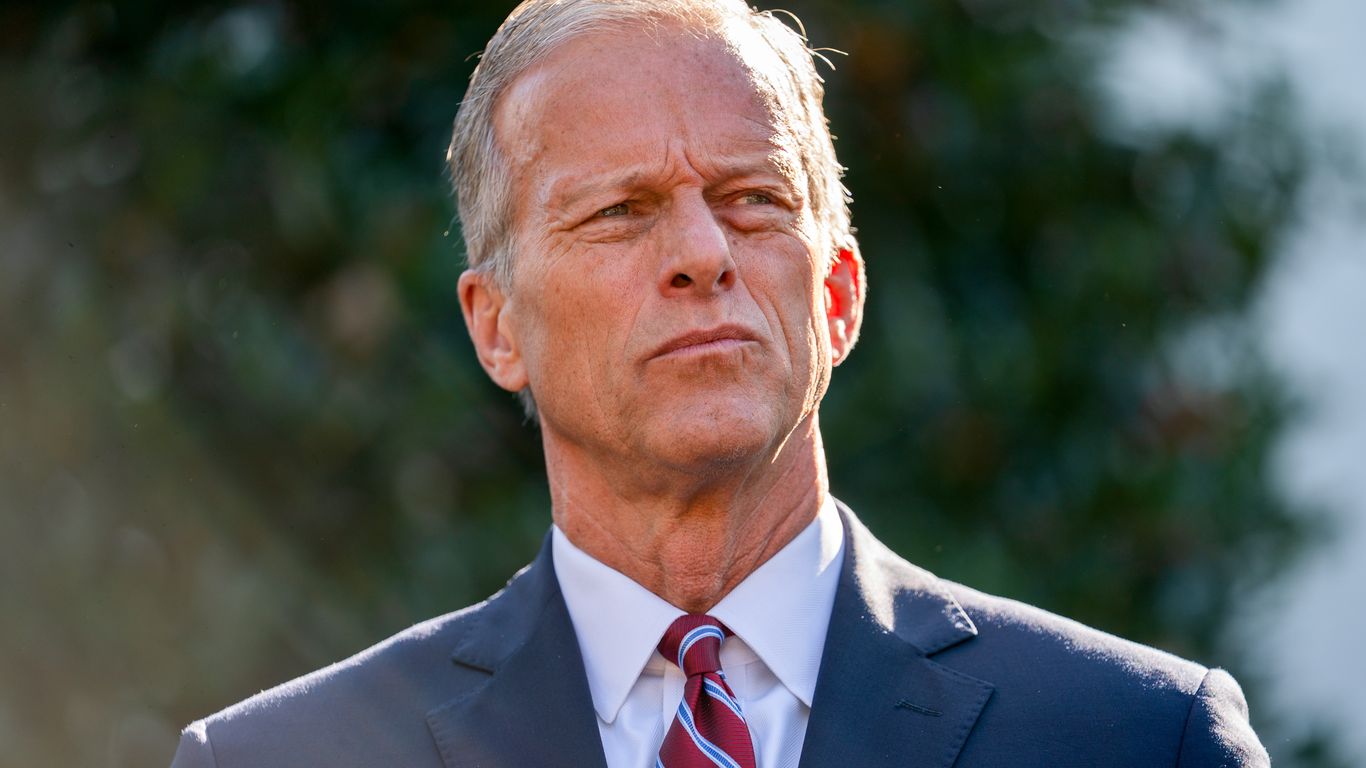
Senate Majority Leader John Thune has committed to holding a vote next week on potential solutions. However, neither party's proposed approach currently commands the necessary 60 votes for passage. The Senate HELP Committee is scheduled to examine competing proposals, with House Republican leaders considering whether to introduce their own healthcare package this December.
Path Forward
Despite mutual interest in addressing the subsidy expiration, fundamental disagreements persist regarding implementation and funding mechanisms. The tight legislative calendar and competing priorities create additional pressure for swift resolution before the year-end deadline.
```About the People Mentioned
John Thune
John Thune is a U.S. Senator from South Dakota and the Senate Majority Leader as of 2025. Born in 1961 and raised in Murdo, South Dakota, Thune's interest in politics began early, influenced by a chance meeting with then-Rep. Jim Abdnor. He earned an undergraduate degree from Biola University and an MBA from the University of South Dakota. Early in his career, he worked for Senator Abdnor and the Small Business Administration under President Ronald Reagan. Returning to South Dakota in 1989, he held leadership roles including executive director of the state Republican Party and director of the State Railroad Division. Thune was first elected to the U.S. House of Representatives in 1996, serving three terms and gaining recognition for securing funding for state projects and advocating for smaller government and tax cuts. After narrowly losing a 2002 Senate race, he won a U.S. Senate seat in 2004 by defeating then-Senate Democratic Leader Tom Daschle, marking a historic upset. He has been reelected multiple times, including an unopposed Senate race in 2010. Throughout his Senate career, Thune has served on key committees such as Agriculture, Commerce, and Finance, and has held significant leadership positions including Senate Republican Whip and Chairman of the Senate Republican Conference. Known as a conservative Republican, he has focused on energy, agriculture, tax reform, and social issues. Notably, he introduced legislation to limit EPA regulatory authority and to repeal the federal estate tax. In 2024, Thune was elected Senate Majority Leader, assuming the role in 2025. He resides in Sioux Falls with his wife Kimberley; they have two daughters and six grandchildren. Outside politics, he enjoys pheasant hunting, running, and spending time with family[1][2][4][5][6].
About the Organizations Mentioned
Senate HELP Committee
# The Senate HELP Committee: Shaping America's Health, Education, and Labor Policy The United States Senate Committee on Health, Education, Labor and Pensions (HELP) stands as one of Congress's most influential committees, wielding significant authority over policies affecting millions of Americans across multiple sectors.[1][4] This 23-member committee, currently chaired by Bill Cassidy (R-LA) with Bernie Sanders (I-VT) as Ranking Member, comprises 12 Republicans and 11 Democrats.[4] ## Historical Evolution Originally established on January 28, 1869, as the Committee on Education, the panel has undergone substantial transformation.[3] It became the Committee on Education and Labor in 1870 when labor jurisdiction was added from the Committee on Naval Affairs.[3] The modern "HELP" designation officially adopted in 1999 reflects the committee's expanded scope under then-Chairman James Jeffords.[4] ## Core Responsibilities The HELP Committee maintains jurisdiction over critical federal agencies including the Food and Drug Administration, Centers for Disease Control and Prevention, and National Institutes of Health.[1][2] Its responsibilities span four major domains: health policy, education and workforce development, labor standards and employment law, and private pension plans.[2] In health matters, the committee oversees public health programs and medical regulations.[1] On education, it addresses higher education funding, student loans, and workforce development initiatives.[5] The labor portfolio encompasses workplace safety, wage regulations, union-management relations, and employment discrimination enforcement.[2] Additionally, the committee manages private retirement plans and railroad retirement programs through the Employee Retirement Income Security Act of 1974.[2] ## Current Impact Today, the HELP Committee continues addressing pressing contemporary issues, from maternal mortality prevention to workforce preparation for 21st-century challenges.[5][9] Its subcommittees
House Republican leaders
The **House Republican leaders** comprise the top echelon of the Republican Party within the U.S. House of Representatives, responsible for guiding the party’s legislative agenda, strategy, and communication. Their primary role is to lead and organize Republican members in the House, manage the party’s legislative priorities, and act as the principal spokespersons for Republican policies on the House floor. The key positions include the **Speaker of the House**, the **Majority Leader**, the **Majority Whip**, and the **House Republican Conference Chair**, among others. The Speaker, currently Rep. Mike Johnson, is the highest-ranking Republican in the House and presides over House proceedings, sets the legislative agenda, and represents the party both institutionally and publicly. The Majority Leader, Rep. Steve Scalise, manages day-to-day legislative business and builds consensus among Republicans, while the Majority Whip, Rep. Tom Emmer, assists in managing party discipline and vote counting. The Conference Chair, Lisa McClain, oversees the organization of all Republican House members and coordinates messaging[1][2][3][6]. Historically, the House Republican leadership has included prominent figures such as Gerald Ford, John Boehner, and Kevin McCarthy, reflecting its central role in shaping U.S. policy and governance. The leadership structure adapts depending on whether Republicans hold the majority or minority in the House, with the Speaker leading when in the majority[3]. In the current 119th Congress, Republicans hold a narrow majority with 219 seats, the smallest majority since 1931, which poses significant challenges for maintaining party unity and passing legislation. This slim majority makes the leadership’s role in managing intra-party dynamics and legislative strategy crucial[4][5][8]. Notably, the House Republican leadership influences key committee assignments and policy directions that impact business and technology sectors, particularly in areas like energy, healthcare, and regulatory reform. Their control of the House enables them to shape legislative priorities that affect economic and technological innovation