Spurs Rally to Edge Pelicans 135-132 in Narrow Win

Spurs Overcome Third Quarter Struggles
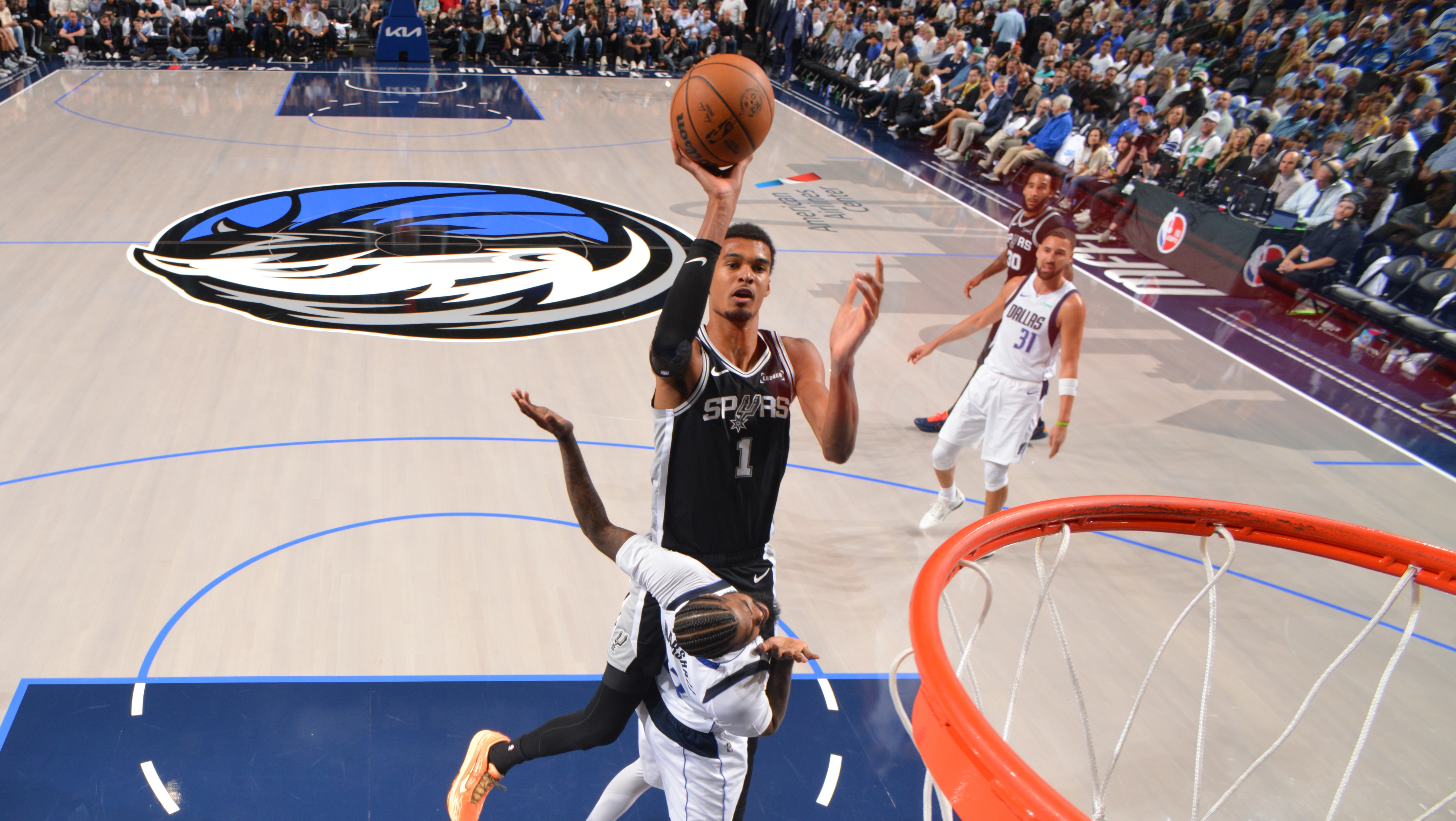
The San Antonio Spurs secured a hard-fought 135-132 victory over the New Orleans Pelicans despite a challenging third quarter. After building a commanding 20-point halftime lead, the Spurs faced a fierce comeback as the Pelicans outscored them 45-25 in the third, overturning the deficit and seizing a brief lead. This tumultuous quarter tested the Spurs' resilience and resolve on the road.
Dylan Harper's Clutch Performance
Rookie Dylan Harper emerged as the hero late in the game, capping a 22-point performance with a decisive driving floater with just nine seconds remaining. Harper’s composure under pressure was critical in holding off the Pelicans, who were energized by Trey Murphy’s 32 points and Derik Queen’s near triple-double effort. Harper’s leadership on the court exemplified the Spurs’ tenacity throughout the contest.
Looking Ahead
With this win, the Spurs improved to 16-7, demonstrating their ability to withstand adversity and close out tight games. Their next challenge awaits against the Los Angeles Lakers in the NBA Cup quarterfinals, where maintaining focus after a volatile third quarter will be key to continued success.
About the People Mentioned
Dylan Harper
Dylan Harper is a highly accomplished American basketball player, currently a guard for the NBA's San Antonio Spurs, known for his exceptional scoring, playmaking, and versatility on the court.[5][6] Born in Franklin Lakes, New Jersey, the 6-6 left-handed guard rose to prominence during his high school career at Don Bosco Prep, where he earned accolades such as McDonald's All-American Co-MVP (2024), Morgan Wootten National Player of the Year, MaxPreps National High School Player of the Year, Gatorade New Jersey Player of the Year, and MVP of the Jordan Brand Classic and John Wall Holiday Invitational.[1][2][3] Harper committed to Rutgers University, his home-state school, and as a freshman in the 2024-25 season, he shattered records by setting the program's freshman scoring mark with 564 points, ranking third nationally among freshmen at 23.5 points per game while leading the Scarlet Knights in scoring and assists (117).[1][2][4] He achieved standout performances, including a 36-point overtime win over Notre Dame (with 6 rebounds and 6 assists), back-to-back 30-plus point games against Alabama (37 points) and Washington (34 points)—the first Division I freshman in 20 years to do so—and Rutgers' first freshman triple-double since 1983 (16 points, 11 rebounds, 12 assists vs. Columbia).[1][2] In December 2024, he was named Division I Men’s Player of the Week by the Met Basketball Writers Association after key wins over Penn State and Seton Hall, including a buzzer-beating 28-foot three-pointer.[4] Internationally, Harper excelled on the Nike EYBL circuit (19.5 points, 6.7 rebounds, 4.9 assists per game) and with USA Basketball at the FIBA U-19 World Cup (9.3 points, 4.6 rebounds, 3.0 assists).[2] Selected by the Spurs, he has quickly made an impact in the NBA, scoring in double digits in six of his last seven games as of early 2026, participating in Rising Stars events, and contributing in highlight-reel plays like alley-oops and and-ones during recent matchups, including against the Lakers.[5] Harper remains a rising star with strong current relevance in professional basketball.[5][6]
About the Organizations Mentioned
San Antonio Spurs
The **San Antonio Spurs** are a professional basketball team competing in the NBA's Western Conference, known for their rich history and consistent success. The franchise originated as the Dallas Chaparrals in the American Basketball Association (ABA) in 1967 before relocating to San Antonio in 1973 due to poor attendance. After a fan contest, the team was renamed the Spurs. They joined the NBA in 1976 following the ABA-NBA merger[1]. The Spurs gained prominence in the late 1970s and 1980s, highlighted by star player George Gervin, known as the "Iceman." Their golden era spanned from 1999 to 2014, during which they won five NBA championships (1999, 2003, 2005, 2007, and 2014). This period was marked by the leadership of legendary players Tim Duncan, David Robinson, Tony Parker, and Manu Ginobili. Coached by Gregg Popovich, one of the most respected coaches in NBA history, the Spurs became synonymous with a strategic, defense-oriented style of play that emphasized teamwork and discipline[1]. Key individual achievements include Tony Parker’s 2007 NBA Finals MVP award and franchise record for career assists, Manu Ginobili’s franchise records in steals and three-pointers, and Kawhi Leonard’s 2014 Finals MVP award. Since Leonard's departure, LaMarcus Aldridge led the team before the Spurs entered a rebuilding phase[1]. As of the 2020s, the Spurs are focusing on developing young talent, notably holding the top pick in the 2023 NBA Draft to select Victor Wembanyama, a highly touted prospect expected to shape the team’s future competitiveness. The Spurs continue to emphasize innovation and adaptability while maintaining their legacy of excellence. In the 2025 season, they have started strong with a 4-0 record, signaling positive momentum in this new chapter[1][2][
New Orleans Pelicans
The New Orleans Pelicans are a professional basketball team based in New Orleans, Louisiana, competing in the NBA's Western Conference. The franchise originally began as the Charlotte Hornets in 1988 before relocating to New Orleans in 2002. After Hurricane Katrina in 2005, the team temporarily played as the New Orleans/Oklahoma City Hornets for two seasons before returning full-time to New Orleans. In 2013, the franchise rebranded as the New Orleans Pelicans, adopting a name reflecting Louisiana’s state bird and regional identity[1]. The Pelicans have experienced varying success over their history. A franchise highlight came in the 2007-08 season, led by star point guard Chris Paul, when they achieved their best record of 56–26 and won their first division title. The team has often been a developing ground for young talent, with recent seasons featuring rising stars and draft picks. However, their performance has fluctuated, as seen in recent records hovering below .500, including a 21-61 season in 2024-25 and a slow start in 2025-26[3]. Currently, the Pelicans are integrating promising players like Jordan Poole, who contributed 17 points in his 2025-26 debut, and are managing injury challenges affecting key players including point guard Dejounte Murray (Achilles injury). The team’s offense ranks competitively mid-tier in the league, averaging 119 points per game but allowing 124 points defensively, indicating areas for improvement[2]. Beyond basketball, the Pelicans are significant to New Orleans’ economy and culture, blending sports business with local identity. Their home, the Smoothie King Center, is a hub for sports and entertainment in the city, illustrating how the franchise supports both community engagement and commercial growth. The Pelicans’ ongoing efforts to build a competitive roster and deepen fan engagement position them as a dynamic organization within both NBA sports and the broader business landscape of professional athletics[
Los Angeles Lakers
The **Los Angeles Lakers** are a premier professional basketball team in the National Basketball Association (NBA), based in Los Angeles, California. Founded in 1947 as the Minneapolis Lakers, the franchise relocated to Los Angeles in 1960, becoming the NBA's first West Coast team. The Lakers compete in the Pacific Division of the Western Conference and play their home games at the Staples Center. Known for their iconic purple, gold, and black colors, the Lakers have a storied history of basketball excellence and cultural impact[1][2][4]. The organization is renowned for its **17 NBA championships**, tied for the most in league history, and its legacy of legendary players such as Magic Johnson, Kareem Abdul-Jabbar, Kobe Bryant, and LeBron James. The team's "Showtime" era in the 1980s epitomized their fast-paced, entertaining style of play, contributing to a global fanbase and significant brand equity[1][2][5]. After a period of struggle in the late 2010s, the Lakers rebounded by acquiring LeBron James in 2018 and Anthony Davis in 2019, culminating in winning the 2020 NBA Finals, a season notably disrupted and resumed in a pandemic "bubble"[2]. From a business perspective, the Lakers rank among the most valuable sports franchises worldwide, with a valuation around $6.4 billion as of 2023, and were sold in 2026 to billionaire Mark Walter for over $10 billion. Their financial success is bolstered by global brand recognition, lucrative partnerships, and a strong community presence through initiatives like the Lakers Youth Foundation[1][5]. The team continues to be a flagship franchise in sports, blending tradition with innovation, including embracing sports technology and analytics to maintain competitive advantage. Currently, the Lakers feature a star-studded roster including LeBron James, Anthony Davis, and rising talents like Luka Dončić and Bronny James, aiming for their 18th championship
NBA Cup
The **NBA Cup** is an innovative in-season basketball tournament organized by the National Basketball Association (NBA) as part of its regular season, designed to add competitive excitement and fan engagement beyond the traditional format. Now in its third edition for the 2025–26 NBA season, it features all 30 NBA teams competing in a multi-stage format that blends group play and knockout rounds[2]. The tournament divides the 30 teams into six groups—three per conference—with five teams each. Group assignments are based on previous season records, using a "pot" system to balance competitiveness. Each team plays four group-stage games (two home, two away) against group opponents, with results counting towards both the NBA Cup standings and the regular season. The group winner from each group, plus one wild card team per conference with the best record among non-winners, advance to an eight-team knockout stage[1][2]. The knockout phase is a single-elimination tournament culminating in a championship held at a neutral venue—in 2025, the T-Mobile Arena in Las Vegas. The quarterfinals and semifinals are hosted at local markets, offering a mix of home court advantage and high-stakes play. Teams not advancing to the knockout stage continue with regular season games to complete the standard 82-game schedule[2]. Key achievements of the NBA Cup include successfully integrating a high-stakes, mid-season tournament within the NBA's existing structure, increasing fan interest and viewership. The tournament also introduces strategic variations for teams, blending traditional regular season play with a tournament mindset. Sponsored as the Emirates NBA Cup, it reflects the NBA’s business innovation in sports marketing and partnership development[2][3]. Currently, the NBA Cup stands as a notable experiment in professional basketball, combining competitive sport with entertainment and commercial appeal, drawing attention from business and technology sectors interested in sports innovation, fan engagement, and event management[1][2][3].