Early Warning Signs Ignored: FBI Missed Epstein Trafficking Clues

Early Warning Signs Ignored
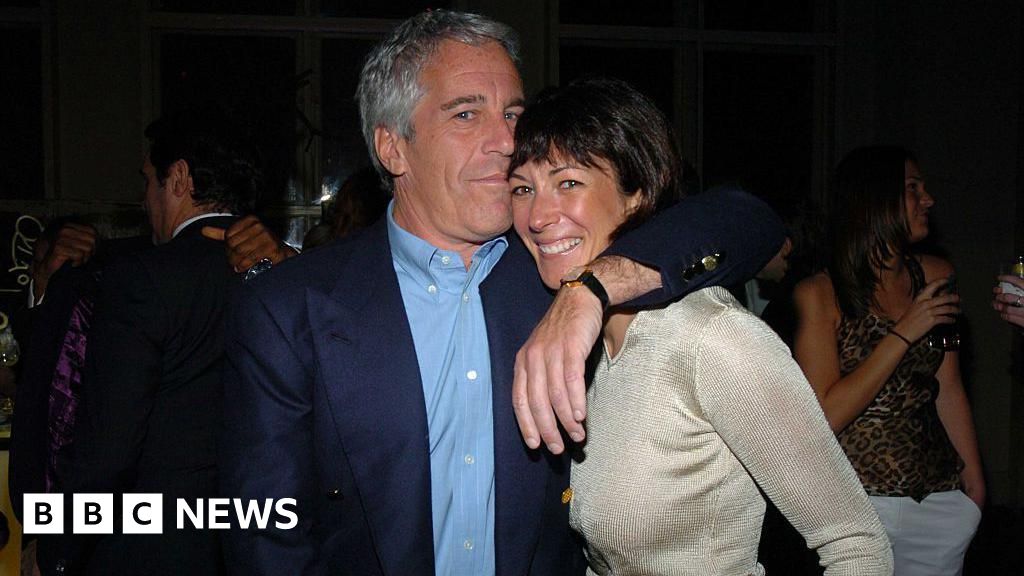
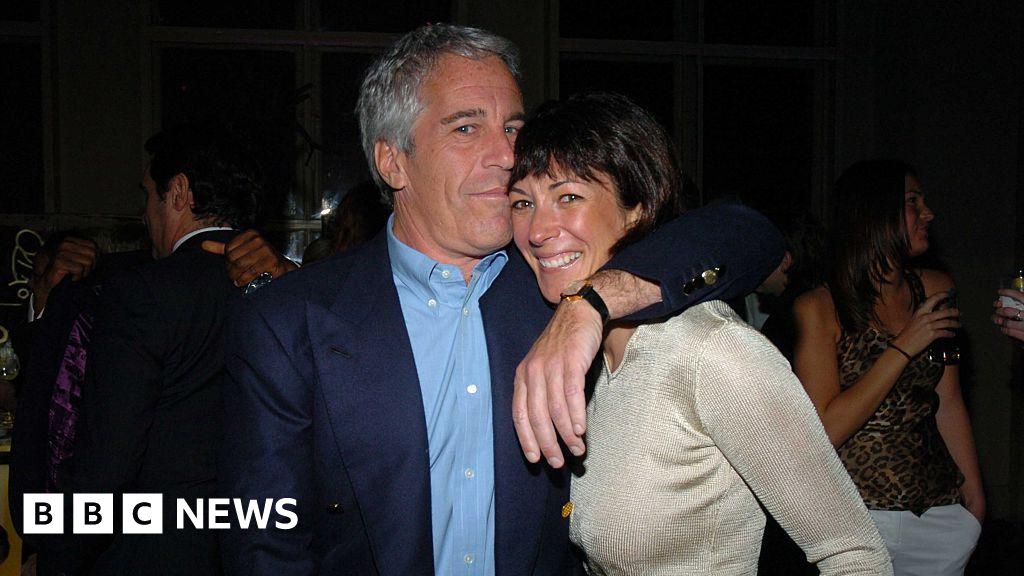
Newly released documents confirm that Maria Farmer, an artist who worked for Jeffrey Epstein, reported him to the FBI in 1996 for possessing child pornography. Her complaint came after she had already alerted the New York Police Department about sexual assault allegations involving both Epstein and Ghislaine Maxwell. Despite providing firsthand knowledge of a sex trafficking operation, her warnings were dismissed by federal authorities.
Decades of Delayed Justice
Farmer's attorney, Jennifer Freeman, emphasized that immediate FBI action could have prevented decades of trauma for numerous victims. The agency's failure to investigate represents a critical missed opportunity to halt criminal activity before it expanded. Major redactions in the newly released documents continue to obscure full transparency regarding the FBI's handling of the initial complaint.
Ongoing Legal Accountability
Farmer has since filed a lawsuit against the United States government, detailing how an FBI agent allegedly hung up on her during her attempt to report the crimes. This case highlights systemic failures in protecting vulnerable individuals and demonstrates the importance of taking early victim reports seriously in trafficking investigations.
```About the People Mentioned
Maria Farmer
Maria Farmer is an American visual artist and whistleblower, best known as the first person to report Jeffrey Epstein's sexual abuse to authorities in 1996.[1][2][6] Born in 1969 in Paducah, Kentucky, she earned a B.A. from Santa Clara University in 1992 and an M.A. from the New York Academy of Art in 1995, where she first encountered Epstein and Ghislaine Maxwell.[1][2] In the mid-1990s, Farmer sold paintings for over $20,000 and was hired by Epstein to collect art for him, leading to her staying at his Ohio property where she alleges abuse occurred.[1][2] She filed complaints with the New York Police Department and the FBI, marking her as the original whistleblower in the Epstein case, though her reports received little immediate action.[1][2][6] Her sister, Annie Farmer, is also a survivor who later testified publicly.[5] Farmer's career as an artist focuses on symmetrical faces in surreal environments; she briefly paused creating art to sell antiques and restore houses but resumed with notable works like "The Survivors Project" in 2020, exhibited at Gavlak Gallery in Los Angeles.[1][2] She has appeared in documentaries including *Jeffrey Epstein: Filthy Rich* (2020), *Who Is Ghislaine Maxwell?* (2022), and *Ghislaine: Partner in Crime* (2022).[5] Health challenges include a 2019 brain tumor diagnosis and Hodgkin's lymphoma in 2020.[2] Currently, at age 56, she continues painting and selling art, maintains an active Instagram highlighting Epstein victims and criticizing the Wexner family, and is suing Epstein's estate.[1][2] Her advocacy keeps her relevant in discussions of Epstein's crimes and survivor justice.[1][2][5]
Jeffrey Epstein
Jeffrey Edward Epstein (January 20, 1953 – August 10, 2019) was an American financier and convicted sex offender whose life and crimes attracted intense media scrutiny and public controversy[1][3]. Born and raised in Brooklyn, New York, Epstein initially worked as a teacher at the Dalton School in Manhattan before transitioning to a career in finance, joining Bear Stearns and later establishing his own investment firms[1][2]. He managed the wealth of billionaire Leslie Wexner, amassing significant personal fortune and cultivating a social circle that included politicians, celebrities, business leaders, and even royalty[2][3]. Epstein’s professional achievements were overshadowed by criminal allegations. In 2005, police in Palm Beach, Florida, began investigating him after a parent reported he had sexually abused her 14-year-old daughter[1]. Federal authorities later identified dozens of girls, some as young as 14, whom Epstein had allegedly abused[1][6]. In 2008, he pleaded guilty in Florida state court to procuring a child for prostitution and soliciting a prostitute as part of a controversial plea deal, serving nearly 13 months in custody with work release privileges[1][2]. Despite his conviction, Epstein avoided more severe federal charges at the time. In July 2019, Epstein was arrested again on federal charges for sex trafficking minors in Florida and New York[1][2]. While awaiting trial in a Manhattan jail, he was found dead in his cell on August 10, 2019; the medical examiner ruled his death a suicide by hanging[1][3]. The circumstances surrounding his death, including missing and modified CCTV footage, fueled widespread public skepticism and conspiracy theories[1]. In July 2025, the FBI released surveillance footage supporting the suicide ruling, though questions about the investigation persist[1]. Epstein’s case remains highly relevant due to ongoing lawsuits by his victims, investigations into his associates, and the release of thousands of previously sealed documents in early 2024 that renewed public interest in his network and alleged co-conspirators[2]. His former associate, Ghislaine Maxwell, was convicted of related charges, underscoring the lasting impact of his crimes[2]. Discussions about accountability, the influence of wealth and power, and the treatment of survivors continue to shape the public dialogue around Epstein’s legacy[2][5].
Ghislaine Maxwell
Ghislaine Maxwell is a British-born former socialite and convicted sex offender, primarily known for her association with financier Jeffrey Epstein. Born on December 25, 1961, in Maisons-Laffitte, France, she was raised in Oxford, England, and attended Balliol College, Oxford. She is a naturalized American citizen and holds British and French citizenship[2]. Maxwell is the youngest daughter of Robert Maxwell, a media mogul and controversial figure whose death in 1991 sparked significant public intrigue. She initially worked in various roles connected to her father's business empire and later became a prominent socialite in New York City[1][2]. In 2012, she founded the TerraMar Project, a non-profit focused on ocean conservation, which ceased operations in 2019 amid legal scrutiny[2]. Her notoriety increased dramatically due to her involvement with Jeffrey Epstein, a convicted sex offender. In July 2020, Maxwell was arrested and charged by U.S. federal authorities with multiple crimes related to sex trafficking of underage girls, acting as Epstein's recruiter and accomplice. She was denied bail due to concerns about her finances and flight risk[2]. In December 2021, Maxwell was found guilty on five of six charges, including sex trafficking of a minor, and in 2022 she was sentenced to 20 years in prison[2][6]. Maxwell's trial revealed extensive evidence of her role in Epstein's abuse network, drawing significant media attention due to her high-profile social connections. She faces a separate pending trial for charges of perjury related to her testimony about Epstein’s activities[2][3]. Her case remains a focal point in discussions about sex trafficking and accountability among elite social circles.
Jennifer Freeman
Jennifer Nicole Freeman is an American actress and producer born on October 20, 1985, in Los Angeles, California.[1][4] She is best known for her role as Claire Kyle in the ABC sitcom *My Wife and Kids*, which she joined in the show's second season and appeared in for 111 episodes from 2001 to 2005.[1][4] This role established her as a recognizable figure in family-friendly television comedy. Freeman's film career includes notable appearances in *You Got Served* (2004), where she played Liyah, and *Johnson Family Vacation* (2004), in which she portrayed Jill.[1][4] She also appeared in *The Visit* (2000) and has maintained a steady presence in television through guest appearances on shows such as *7th Heaven*, *One on One*, *The O.C.*, and *Switched!*.[1] Early in her career, she appeared in B2K's "Girlfriend" music video and served as a spokesmodel for Neutrogena skincare products.[1] Freeman's career evolved significantly beginning in 2020, when she was cast in multiple original television movies and series for BET and BET+.[1] Between 2022 and 2023, she starred as Kimberly in the NAACP Image Awards-nominated drama series *The Black Hamptons*.[1] More recently, she has taken on leading roles in holiday-themed productions, including *A Royal Surprise* and its sequel *A Royal Christmas Surprise*, as well as *Blended Christmas* in 2025.[1] In her personal life, Freeman was married to basketball player Earl Watson in early 2009 and had a daughter together.[1] The couple separated in August 2010, briefly reconciled in 2011, and ultimately divorced in March 2015.[1] Freeman continues to work as an actress and producer, maintaining relevance in television and film production, particularly in the made-for-TV movie space where she has built a substantial recent body of work.
About the Organizations Mentioned
FBI
The Federal Bureau of Investigation (FBI) is a premier law enforcement agency in the United States, renowned for its role in protecting the nation from domestic and international threats. Founded on July 26, 1908, as the Bureau of Investigation, it was initially tasked with addressing land fraud and corporate malfeasance under President Theodore Roosevelt[1][2]. Over time, its mandate expanded significantly, particularly with the passage of the Mann Act in 1910, which allowed federal jurisdiction over certain moral offenses[1][4]. ### History and Evolution The FBI underwent significant transformation under J. Edgar Hoover, who became its director in 1924. Hoover implemented strict hiring standards and enhanced operational capabilities, transforming the agency into a robust investigative force[1][4]. The FBI's name was officially changed to the Federal Bureau of Investigation in 1935[5][6]. Throughout its history, the FBI has faced challenges, including concerns about potential abuses of power, but it has consistently demonstrated its value in national security and law enforcement[3][4]. ### Key Achievements The FBI has been instrumental in combating various crimes, including white-collar offenses, civil rights violations, and national security threats. Notable achievements include its role in enforcing the Espionage Act during World War I and its investigations into organized crime throughout the 20th century[2][4]. ### Current Status Today, the FBI is a sophisticated agency with over 37,100 employees, including special agents and professionals in various fields such as intelligence analysis and cybersecurity[5]. It operates in 55 field offices across the U.S. and has an international presence in 81 nations[5]. The FBI continues to evolve, addressing emerging threats like cybercrime and terrorism while maintaining its commitment to justice and integrity. ### Notable Aspects The FBI is known for its rigorous training programs at the FBI Academy in Quantico, Virginia, and its advanced forensic capabilities at the FBI Laboratory. Its work in business and technology includes
New York Police Department
The New York City Police Department (NYPD), established in 1845, is the largest and one of the oldest municipal police forces in the United States, serving a city of approximately 8.5 million residents[4]. Originating from earlier forms of policing dating back to the Dutch era in 1625, the NYPD evolved from a patchwork of smaller forces into a unified, professional organization modeled on London's Metropolitan Police[1][2][3]. This transformation included the replacement of the inadequate night watch system and the consolidation of 18 smaller departments in 1898 following the city's expansion to include Brooklyn[1][2]. The NYPD’s core mission is to protect constitutional rights while ensuring public safety across a vast urban landscape, with responsibilities spanning law enforcement, crime investigation, traffic management, counterterrorism, and emergency response[4][5]. Its structure is hierarchical, led by a police commissioner and supported by deputy commissioners overseeing specific bureaus such as Patrol Services, Detective, Transit, and Counterterrorism[5]. The department operates 78 precincts, 12 transit districts, and nine police service areas, reflecting a broad operational scope that includes protecting the subway system's millions of daily riders and public housing residents[4]. Historically, the NYPD has undergone significant reforms and modernization efforts, notably under leaders like Theodore Roosevelt in the late 19th century and through ongoing professionalization in the 20th century[1][3]. The department has also embraced community policing since the early 1990s, balancing rapid response with improved police-community relations[2]. Technologically, the NYPD has integrated innovations such as early computing in the 1980s to enhance operations[8]. The department has achieved remarkable crime reductions in recent decades, positioning New York City as one of the safest major U.S. cities[4]. Notably, the NYPD played a critical role during and after the 9/11 attacks, with officers among the casualties and the
United States government
The United States government is a federal republic established by the Constitution in 1787, designed to balance power among three co-equal branches: legislative (Congress), executive (President), and judicial (Supreme Court and federal courts)[1][2][3]. This structure, known as the system of “checks and balances,” ensures that no single branch can dominate, protecting individual liberties and promoting stable governance[1]. Powers not delegated to the federal government are reserved for the states and the people, fostering a dynamic interplay between national and local authority[2]. ## Historical Foundations and Key Achievements The U.S. government’s origins lie in the American Revolution and the subsequent adoption of the Constitution, which replaced the weaker Articles of Confederation. Key historical achievements include the Bill of Rights (the first ten amendments), which enshrined fundamental freedoms such as speech, religion, and assembly[2]. Over two centuries, the federal government has driven technological and economic transformation—from the Louisiana Purchase and the Transcontinental Railroad to the creation of the internet (originally a Defense Department project) and the moon landing. Landmark legislation, such as the Civil Rights Act and the Affordable Care Act, reflects its evolving role in addressing societal challenges. ## Current Status and Functions Today, the U.S. government is the world’s largest economy and a global leader in technology, defense, and innovation. The executive branch, led by the President, manages federal agencies and implements laws; the legislative branch (Congress) writes laws and controls spending; and the judicial branch interprets laws and ensures constitutional compliance[1][3]. The government regulates industries, funds research, and shapes international policy, directly influencing business and technology sectors through agencies like the FCC, FDA, and DARPA. ## Notable Aspects for Business and Technology The U.S. government’s role in business and technology is multifaceted: it enforces antitrust laws, protects intellectual property, and invests in cutting-edge research. Initiatives lik