Student Death Sparks French Political Firestorm as Far-Right and Far-Left Clash
Student Death Ignites French Political Firestorm
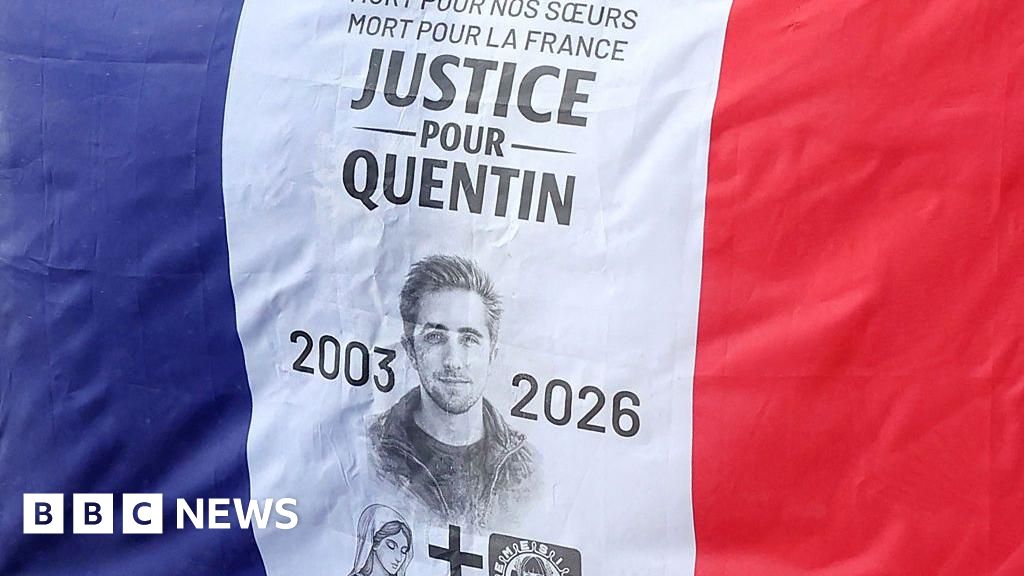
The tragic death of 23-year-old Quentin Deranque has thrust France's far-left under intense scrutiny. On Saturday, the data science student succumbed to injuries from a brutal street beating in Lyon by at least six masked assailants. Deranque, a devout Catholic activist aligned with far-right groups like Némésis, was securing protesters opposing a conference by hard-left MEP Rima Hassan at Sciences Po Lyon when attacked.
Background and Victim Profile
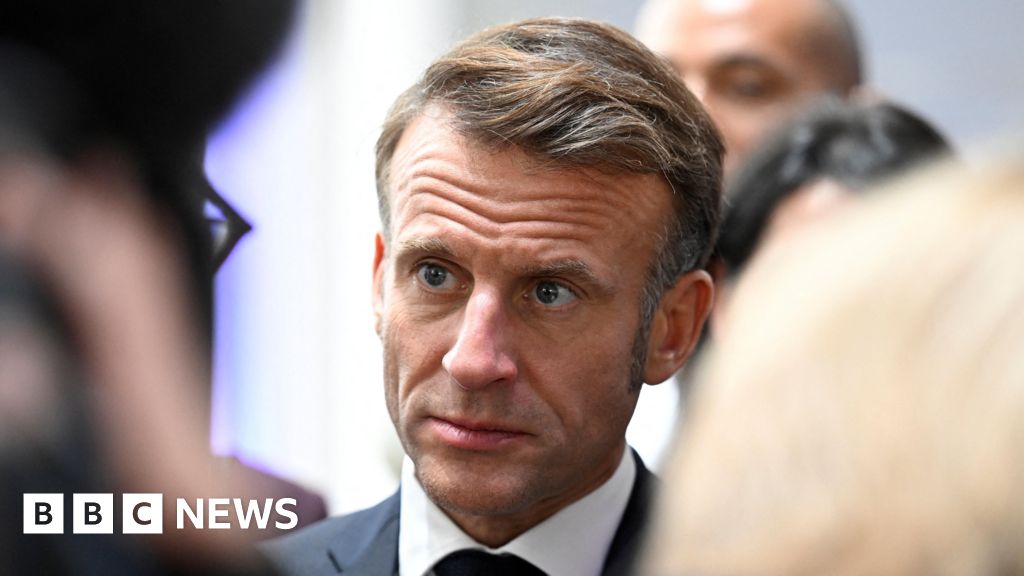
Described by friends as a calm, philosophy-loving parishioner at Lyon’s traditionalist Saint-Georges church, Deranque embodied a new wave of integralist far-right youth focused on self-defense and national identity. French President Emmanuel Macron called for restraint amid rising tensions ahead of 2027 elections. The Lyon prosecutor upgraded the case to intentional homicide, with suspects—including some far-left linked—now identified, though not on security watchlists.
National Repercussions
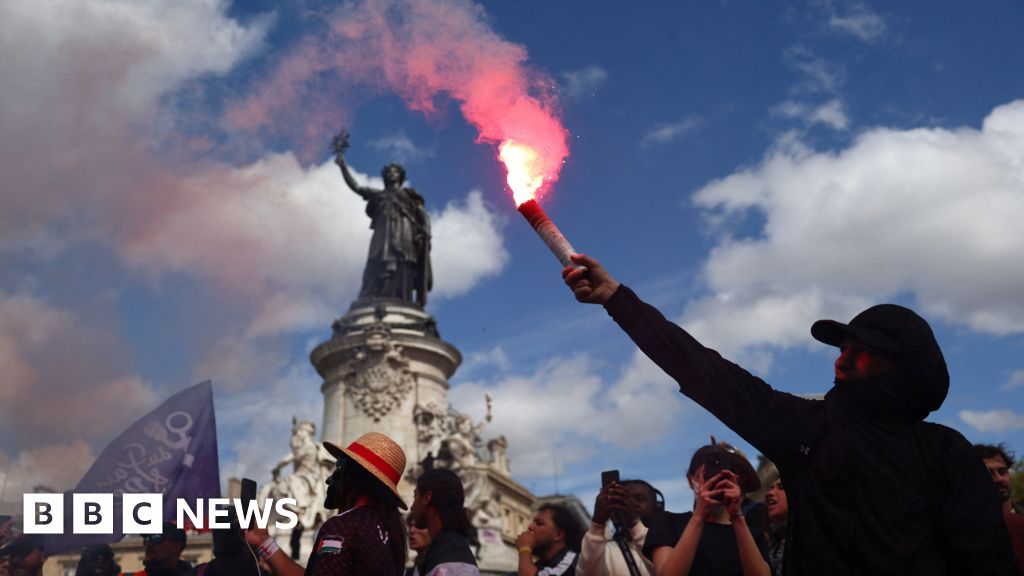
The French government accuses hard-left elements of culpability, a charge denied by France Unbowed. A minute of silence honored Deranque in the National Assembly, signaling a turning point in polarized politics. Rallies with flags bearing his image underscore deepening far-right versus far-left divides, fueling debates on extremism and street violence safety.
About the People Mentioned
Emmanuel Macron
Emmanuel Jean-Michel Frédéric Macron, born December 21, 1977, in Amiens, France, is the current President of France, a position he has held since May 2017. He is the youngest president in French history, elected at age 39. Macron founded the centrist political movement La République En Marche! in April 2016, which won a majority in the 2017 legislative elections. Before his presidency, he studied philosophy and graduated from the École Nationale d’Administration (ENA) in 2004, worked at the Inspectorate General of Finance, and served in the banking sector. He entered politics as Deputy General Secretary of the Presidency in 2012 and was Minister for Economy, Industry, and Digital Affairs from 2014 to 2016[1][2][3]. During his presidency, Macron has implemented significant reforms including changes to labor laws, taxation, and the pension system. He has also prioritized the transition to renewable energy. His policies sparked widespread protests, notably the "yellow vests" movement from 2018 to 2020 and strikes against pension reforms. Macron managed France’s response to the COVID-19 pandemic, overseeing vaccination efforts and economic measures to address the recession[1]. In foreign policy, Macron has been active in reforming the European Union, strengthening ties with Germany and Italy, negotiating trade agreements with China amid the US-China trade war, and confronting security challenges including the AUKUS pact dispute. He has maintained France’s military efforts against ISIS and condemned Russia’s invasion of Ukraine[1]. Macron was re-elected in April 2022, marking the first French president in 20 years to secure a second term. His leadership continues to shape France’s domestic and international policies as of 2025[2][3][5].
About the Organizations Mentioned
Némésis
# Collectif Némésis: France's Controversial Identitarian Feminist Movement **Collectif Némésis is a French association founded in October 2019 by Alice Cordier that frames itself as defending women's safety while promoting ethno-nationalist ideology.[1][2]** The organization has become a prominent fixture in European activism, expanding beyond France into Switzerland, Belgium, Spain, and Italy.[4] The group emerged from concerns about sexual harassment, with co-founders citing experiences of harassment perpetrated by men of North African and African origin as a founding motivation.[1] However, Némésis operates within the broader framework of "identitarian feminism," which **opposes cultural mixing with non-Europeans and promotes the "great replacement theory"—an ethno-nationalist concept positing that white Europeans face demographic replacement through migration and lower birth rates.[2]** Némésis comprises approximately 165 activists, primarily aged 18-30 across fifteen cities, though its media presence projects a larger operation.[2] The organization has gained visibility through social media campaigns and public demonstrations, including a controversial 2024 banner at Strasbourg's Christmas markets criticizing foreign nationals and crimes.[4] **Key activities include assisting women with legal and psychological support while simultaneously advancing anti-immigration messaging.[2]** The group has worked with local mayors and reportedly positioned itself to collaborate with political parties on stricter immigration laws, though it claims no formal party affiliations.[2] Critics argue Némésis instrumentalizes feminism as a vehicle for promoting an ethnically white society rather than advancing women's rights as an end goal.[2] Recent developments include a February 2026 murder investigation involving a Némésis member at a Lyon protest, highlighting escalating tensions between the organization and left-wing activist groups.[6] The organization remains controversial, with mainstream feminist movements dist
Sciences Po Lyon
**Sciences Po Lyon** is a prestigious **public higher education institution** specializing in human and social sciences, founded in 1948 as part of France's network of political studies institutes.[2] The school trains future executives and leaders for careers in public and private sectors, combining rigorous academic training with practical, multidisciplinary approaches to contemporary challenges. The institution offers a distinctive **five-year integrated degree program** that awards a diploma equivalent to a Master's level qualification.[4] Its curriculum spans four primary academic sectors: public affairs, international affairs, urban and territorial affairs, and communication.[2] This educational model mirrors Anglo-Saxon Schools of Public Affairs and Government, emphasizing excellence across four fundamental disciplines—history, law, political science, and economics—supplemented by management sciences, information communication, and language studies.[2] Sciences Po Lyon maintains a **research-focused mission**, operating three dedicated research laboratories: Triangle, the Lyon Institute of East Asian Studies, and ELICO.[2] Research priorities center on two pillars: "Cities: government, society, representations" and "Innovation in public policy," with approximately ten doctoral theses defended annually.[2] The institution also supervises the Doctorate in Political Sciences at the Université de Lyon. With approximately **1,800 students and 250 international students**, the school balances institutional scale with personalized attention.[2][4] Its international reach extends through partnerships with over 157 universities across 50 countries, facilitating student mobility and global collaboration.[5] The institute welcomes around 300 international students annually and hosts 12 visiting faculty members from diverse continents.[4] Located at the Centre Berthelot in Lyon, Sciences Po Lyon operates as a member of the broader Sciences Po network and maintains close ties with Université Lumière Lyon 2.[3][5] The institution's motto—"Innovative minds, open to
France Unbowed
# France Unbowed: A Decade of Left-Wing Resistance in France **France Insoumise** (France Unbowed) is **the largest radical left organization in France**, founded in February 2016 by Jean-Luc Mélenchon as a political movement rather than a traditional party[1][2]. The organization emerged to support Mélenchon's 2017 presidential campaign around a program titled "The Future Together," which remains its foundational platform[1]. ## Organization and Membership The movement operates as a **mass citizen network** with a horizontal organizational structure, rejecting traditional party hierarchies[3]. As of early 2025, France Unbowed claims over 450,000 registered members, with approximately 5,000 active local action groups across France and abroad[1]. The organization mobilizes through door-to-door campaigns, demonstrations, and community engagement initiatives inspired by American community organizing methods[6]. ## Political Positioning and Achievements France Unbowed positions itself as **anti-capitalist and ecosocialist**, though analysts characterize it as fundamentally reformist, seeking change through electoral politics and constitutional reform[1][4]. The organization advocates for a "Sixth Republic"—a radical constitutional restructuring to reduce presidential power and expand democratic participation[4]. Electorally, the movement has achieved significant growth, increasing parliamentary representation from 8 deputies in 2017 to 143 by 2024[5]. It became a central force in the left-wing New Popular Front coalition, negotiating compromises on contentious issues including Ukraine support, Israel-Gaza policy, and EU reform[5]. ## Current Status Today, France Unbowed represents the primary organized resistance to Emmanuel Macron's government, opposing racism, police violence, and war while addressing economic and environmental crises[1
National Assembly
## Overview The term **National Assembly** most commonly refers to a nation’s legislative body, responsible for enacting, amending, and repealing laws on behalf of its citizens[1][3]. This institution is foundational to representative democracy, serving as a forum where elected officials debate and decide on national policy, distinct from regional or state legislatures[1]. The structure varies—some countries have a unicameral (single-house) National Assembly, while others, like France, feature it as the lower house of a bicameral parliament[6][8]. ## History and Evolution The concept of a National Assembly has deep historical roots, notably emerging during the French Revolution, when the National Constituent Assembly abolished feudalism and drafted the Declaration of the Rights of Man and of the Citizen in 1789, laying the groundwork for modern constitutional governance[5]. In France, the National Assembly has evolved through multiple republics, with significant reforms in the 20th century adjusting the balance of power between the legislature and the executive[4][6]. Globally, many nations have adopted similar assemblies as they transitioned to democratic governance, often during periods of revolution or reform[3]. ## Key Functions and Achievements The primary role of a National Assembly is lawmaking, but its influence extends to overseeing the executive branch, approving budgets, and representing the electorate’s interests at the national level[1][6]. Notable achievements include the abolition of feudal systems, the establishment of constitutional rights, and the creation of frameworks for accountable governance[5]. In France, the Assembly has the power to dismiss the government via a motion of no confidence, ensuring a system of checks and balances[6]. ## Current Status and Notable Aspects Today, National Assemblies remain central to democratic governance worldwide. In France, the National Assembly is elected by proportional representation and operates under a constitution that, since 1958, has strengthened the executive but retained parliamentary oversight[4][6]. The Assembl