End of Minnesota Immigration Enforcement Surge: Federal Pullback and Aftermath

Minnesota Immigration Enforcement Surge Comes to an End
The Trump administration's intensive immigration enforcement operation in Minnesota is concluding after more than two months of intensive activity. White House border czar Tom Homan announced Thursday that federal agents will be withdrawn from the state, marking a significant shift in the administration's approach to immigration enforcement in the region.
Aftermath of Controversial Operations
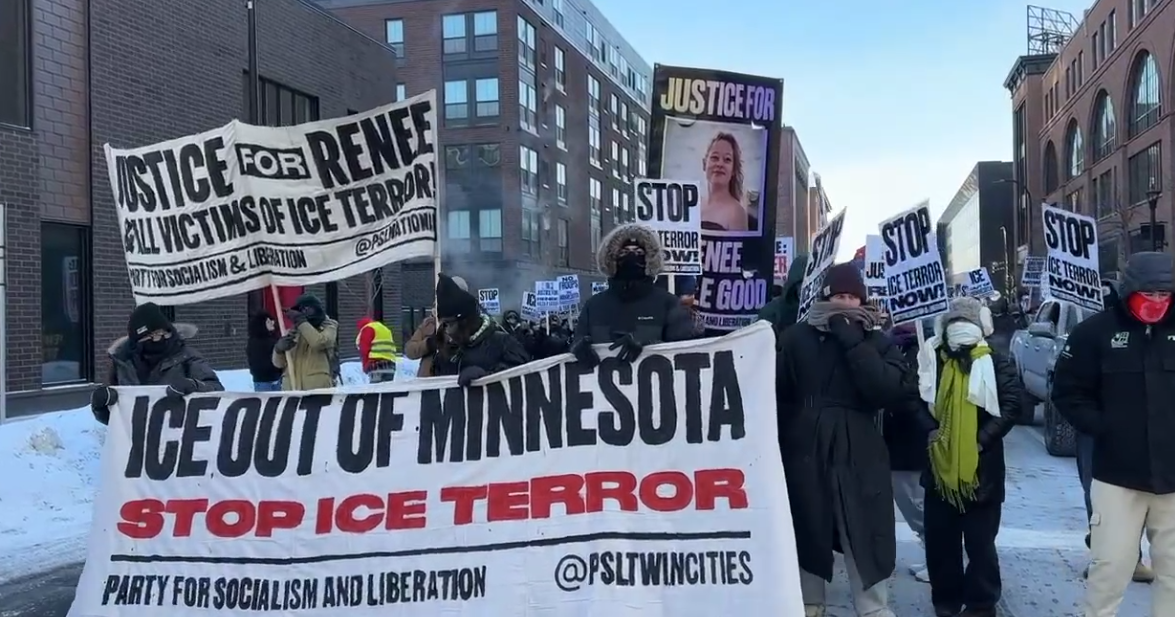
The drawdown follows the fatal shootings of protesters Alex Pretti and Renee Nicole Good during confrontations with federal agents in Minneapolis. These incidents sparked widespread protests and prompted state officials to challenge the operation's legality. Governor Tim Walz and Minneapolis Mayor Jacob Frey collaborated with federal authorities to facilitate the withdrawal, emphasizing the need for healing and recovery.
Moving Forward
Homan credited the pullback to successful coordination between state and local law enforcement, suggesting the administration achieved its enforcement goals. The conclusion of Operation Metro Surge leaves Minnesota facing significant economic recovery challenges ahead.
```About the People Mentioned
Tim Walz
Timothy James Walz (born April 6, 1964) is an American politician, former educator, and Army National Guard veteran who has served as the **41st governor of Minnesota** since January 2019.[1][6] A member of the Democratic–Farmer–Labor Party (DFL), he was elected governor in 2018 and re‑elected in 2022.[1][6] Walz was born in West Point, Nebraska, and raised in a rural community.[1][5] He enlisted in the **Army National Guard** at age 17 and served for 24 years, retiring as a command sergeant major.[2][5] He earned a bachelor’s degree in social science education from Chadron State College and later a master’s in educational leadership from Minnesota State University, Mankato.[2][4] Walz worked as a high school teacher and football coach, including at Mankato West High School, and previously taught on the Pine Ridge Reservation and in China through a Harvard-affiliated program.[2][4][5] Entering politics, Walz was elected in 2006 to the U.S. **House of Representatives** for Minnesota’s 1st Congressional District, a largely rural and traditionally conservative area, and served six terms from 2007 to 2019.[1][2] In Congress he served on the Agriculture, Armed Services, and Veterans’ Affairs committees, and held leadership roles on subcommittees dealing with farm policy and veterans’ issues.[2][5] As governor, Walz has overseen Minnesota’s responses to the **COVID‑19 pandemic** and the civil unrest following the 2020 murder of George Floyd.[1] His administration has emphasized education, health care, and economic support for working families, and he has signed legislation expanding paid leave, cutting certain fees, and lowering some prescription drug costs.[3][6] In 2023 he approved a public safety bill establishing **universal background checks** and “red flag” laws for firearms.[1][3] Minnesota under Walz also codified abortion rights in state law after the overturning of Roe v. Wade, keeping the state a regional access point for reproductive health services.[3] Walz was identified as a **vice‑presidential candidate in the 2024 election cycle**, raising his national profile beyond Minnesota politics.[2][3]
Jacob Frey
Jacob Frey, born July 23, 1981, is an American politician, lawyer, and the 48th mayor of Minneapolis, Minnesota, serving since January 2, 2018.[1][3][4] A member of the Minnesota Democratic–Farmer–Labor Party, he previously represented Ward 3 on the Minneapolis City Council from 2014 to 2018 after winning election in 2013.[1][2][3] Raised in northern Virginia, Frey graduated with a government degree before attending Villanova University Law School, where he became a competitive long-distance runner and developed interests in social justice and civil rights.[5][6] As an attorney specializing in employment and civil rights, Frey co-founded the Big Gay Race in 2011 to support marriage equality and advocated for homeless tenants in North Minneapolis, earning the city's inaugural Martin Luther King, Jr. Award in 2012.[2][6] On the council, he focused on affordable housing, small business growth, neighborhood improvements, and expanding early voting, increasing sites from one to five before 2016.[1][3][7] Elected mayor in 2017 at age 36—making him one of the city's youngest and its second Jewish mayor—Frey was reelected in 2021 and reportedly secured a third term in 2025.[1][2][3][5] His administration prioritizes affordable housing (with production up 8.5 times), community-police relations (including crisis response expansion and use-of-force revisions), climate action, inclusive economic growth, and governance.[1][2][4] Key achievements include the Stable Homes Stable Schools program aiding thousands of students, seven Cultural Districts, the Ownership and Opportunity Fund for entrepreneurs of color, downtown revitalization with strong post-pandemic recovery, and a new city government structure approved in 2021 and enacted in 2022 for better efficiency.[1][2] Frey lives in Northeast Minneapolis with his wife, Sarah Clarke, daughter Frida (born 2020), and anticipates a second child.[1][7] His leadership remains central to Minneapolis's ongoing housing, equity, and recovery efforts.[1][2]
About the Organizations Mentioned
White House
The **White House Office** is a central organizational component within the Executive Office of the President of the United States (EOP), tasked with supporting the President in managing day-to-day operations, policy formulation, and political affairs. It is headed by the White House Chief of Staff and staffed by senior aides who report directly to the President, including those with titles such as Assistant to the President and Deputy Assistant to the President. These staff members are mostly political appointees without the need for Senate confirmation, allowing the President considerable discretion in shaping the office to suit each administration's priorities[1]. Historically, the White House Office was established in 1939 through Reorganization Plan 1 and Executive Order 8248 to provide immediate assistance to the President. It functions as the nerve center for presidential staff, physically located primarily in the West Wing, and plays a pivotal role in managing the President’s policy agenda, communications, and political strategy. Its flexible organization allows each President to tailor the staff composition and roles according to their governance style and objectives[1]. In the current context of 2025, the White House Office operates under the administration of President Donald J. Trump, who returned to office after the 2024 election. His administration emphasizes rejecting prior policies deemed extremist and focuses on enhancing quality of life, economic growth, and American energy dominance. The administration includes Vice President JD Vance and First Lady Melania Trump, among others, with a Cabinet advising on various governmental functions[4][6]. Recent initiatives linked to the White House’s operational sphere include the establishment of a new **Department of Government Efficiency (DOGE)** aimed at modernizing federal technology and software to boost government productivity. The DOGE agenda is implemented through the renamed United States DOGE Service within the Executive Office, reflecting a concerted push to leverage technology for administrative modernization[5]. Notably, the White House Office also coordinates national security and homeland security functions through the National Security Council staff, underscoring its central role